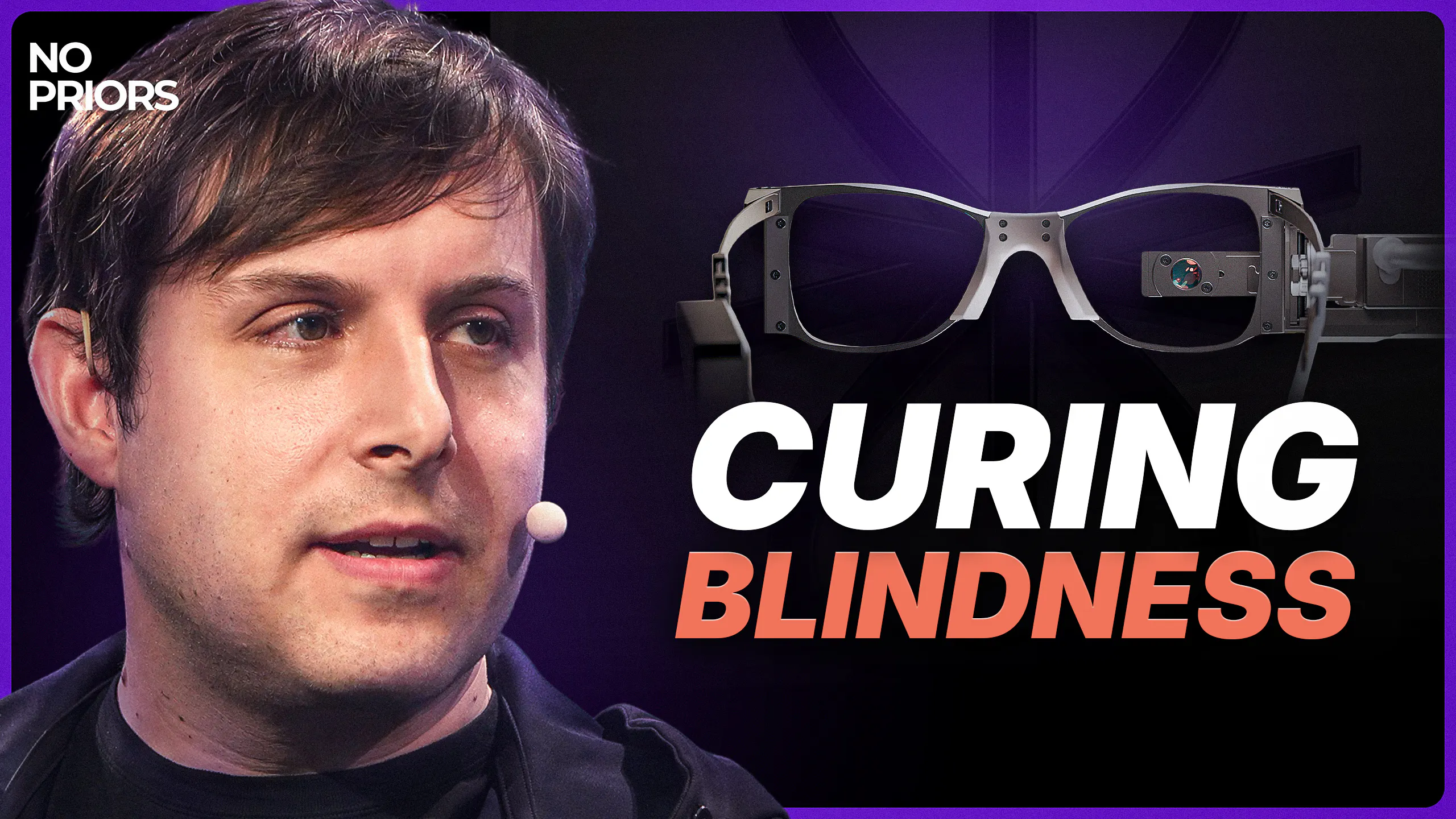
While many focus on BCI for high-bandwidth communication with AI, the more profound goal is "substrate independence." This means separating the human experience from its fragile biological hardware, allowing us to repair, replace, and upgrade parts of ourselves, fundamentally reducing human fragility.
The premise of a BCI that rapidly downloads fully-formed thoughts is likely flawed. The process of articulating thought through language *is* the thinking process itself. Research suggests a fundamental cognitive bottleneck of about 10 bits per second that a BCI cannot simply bypass.
Treating the brain as a computational device allows for an engineering-driven approach to solving neurological issues. This yields more predictable results and faster progress compared to the "random walk" of small molecule drug discovery, which often ends in failure after years of research.
Given the strong parallels in how AI models and brains represent information, studying AI provides a powerful, accessible, and faster proxy for neuroscience research. As Max Hodak's friends at top AI labs joke, it is simply "way easier to do neuroscience on the models."
The geometric similarities between how AI models and the brain represent concepts are a strong signal that both fields are converging on a fundamental truth. This alignment provides a practical tool for BCI development and a deeper understanding of intelligence itself, suggesting it's like a law of physics.
The term "moonshot" is often misused in tech to justify high-risk ventures that are likely to fail. The original Apollo moonshot, however, was a success. Ambitious BCI projects should be framed as achievable engineering challenges with a clear path, not just long-odds bets.
There's a spectrum of BCI applications. One end offers "hand substitutes," like silent speech for app control, which may offer only marginal utility. The more transformative end focuses on restoring core sensory channels like vision and hearing, which fundamentally augments the human experience.