/
© 2026 RiffOn. All rights reserved.
  1. The Marketing Millennials
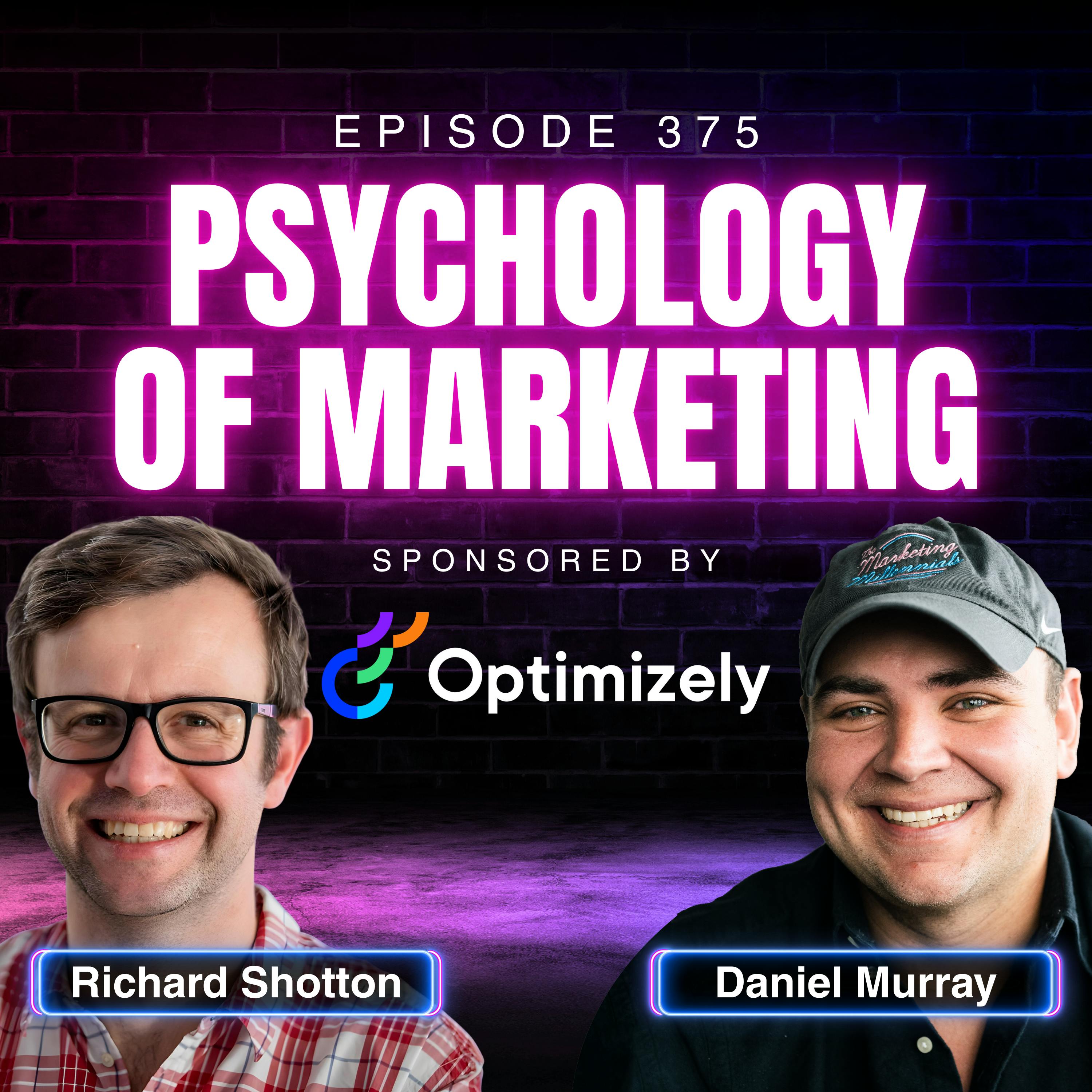
  2. The Marketing Psychology Secrets Behind the World’s Best Brands with Richard Shotton | Ep. 375
The Marketing Psychology Secrets Behind the World’s Best Brands with Richard Shotton | Ep. 375

The Marketing Psychology Secrets Behind the World’s Best Brands with Richard Shotton | Ep. 375

The Marketing Millennials · Dec 17, 2025

Behavioral scientist Richard Shotton reveals how to leverage social proof, humor, and the 'stolen thunder' effect to build trust and drive sales.

Tailor Social Proof by Highlighting Similar Users to Increase Influence

We are most influenced by people like ourselves. Instead of general popularity claims like '10,000 users,' specify how many customers are in the user's specific state or city. This tailored social proof creates a much stronger connection and is more persuasive.

The Marketing Psychology Secrets Behind the World’s Best Brands with Richard Shotton | Ep. 375 thumbnail

The Marketing Psychology Secrets Behind the World’s Best Brands with Richard Shotton | Ep. 375

The Marketing Millennials·2 months ago

Counteract AI's 'Labor Illusion' by Highlighting the Human Effort Behind the Output

Consumers equate effort with quality and devalue work perceived as instant, like AI output. To combat this 'labor illusion,' stress the human expertise, years of research, or complex system development that enables the AI. Focus on the effort invested in the process, not just the speed of the result.

The Marketing Psychology Secrets Behind the World’s Best Brands with Richard Shotton | Ep. 375 thumbnail

The Marketing Psychology Secrets Behind the World’s Best Brands with Richard Shotton | Ep. 375

The Marketing Millennials·2 months ago

Admit a Minor Flaw That Secretly Highlights Your Core Strength

To build trust, admit a weakness using the 'stolen thunder' effect. The most advanced application is admitting a flaw that is the mirror image of a strength. For example, Buckley's cough syrup's slogan, 'It tastes awful. And it works,' uses its bad taste to imply potent medicinal effectiveness.

The Marketing Psychology Secrets Behind the World’s Best Brands with Richard Shotton | Ep. 375 thumbnail

The Marketing Psychology Secrets Behind the World’s Best Brands with Richard Shotton | Ep. 375

The Marketing Millennials·2 months ago

Let Customers Infer Your Popularity to Bypass Skepticism

Direct claims of popularity can trigger skepticism. Instead, create scenarios where customers conclude your popularity on their own. For example, a subtly messy (but clean) environment can imply heavy, recent foot traffic. Inferred popularity is given far more weight than stated popularity.

The Marketing Psychology Secrets Behind the World’s Best Brands with Richard Shotton | Ep. 375 thumbnail

The Marketing Psychology Secrets Behind the World’s Best Brands with Richard Shotton | Ep. 375

The Marketing Millennials·2 months ago

Frame Out-of-Stock Items as 'Sold Out' to Imply High Demand

Labeling a product 'Sold Out' instead of 'Out of Stock' or 'Unavailable' reduces customer irritation by 15%. 'Sold Out' implies popularity and high demand (social proof), whereas 'Out of Stock' suggests logistical failure and company ineptitude. This simple, costless language change reframes the entire situation.

The Marketing Psychology Secrets Behind the World’s Best Brands with Richard Shotton | Ep. 375 thumbnail

The Marketing Psychology Secrets Behind the World’s Best Brands with Richard Shotton | Ep. 375

The Marketing Millennials·2 months ago

Use Humor in Ads to Create a 'Halo Effect' That Boosts Trust and Perceived Quality

Instead of making direct, often unbelievable claims about quality or trust, use humor. The positive feeling from being amused creates a 'halo effect' that transfers to all other brand metrics. Ads are a powerful medium for demonstrating wit, which is more effective than claiming hard-to-prove attributes.

The Marketing Psychology Secrets Behind the World’s Best Brands with Richard Shotton | Ep. 375 thumbnail

The Marketing Psychology Secrets Behind the World’s Best Brands with Richard Shotton | Ep. 375

The Marketing Millennials·2 months ago

Concrete, Visualizable Language Is 4x More Memorable Than Abstract Concepts

Our brains remember tangible information we can visualize four times better than abstract ideas like 'quality' or 'trust.' Instead of describing MP3 player storage in 'megabytes,' Apple used the concrete, visual phrase '1,000 songs in your pocket,' making the benefit sticky and easy to recall.

The Marketing Psychology Secrets Behind the World’s Best Brands with Richard Shotton | Ep. 375 thumbnail

The Marketing Psychology Secrets Behind the World’s Best Brands with Richard Shotton | Ep. 375

The Marketing Millennials·2 months ago