Get your free personalized podcast brief
We scan new podcasts and send you the top 5 insights daily.
Rather than a serious policy goal, the extreme proposal to halt all data center construction is likely a political tactic. By anchoring the conversation on a far end of the spectrum, it creates negotiating room for more moderate, yet still significant, AI regulations to be accepted as a compromise.

Related Insights
Bernie Sanders' call for a moratorium on AI data centers, aimed at curbing billionaire power and job loss, is viewed as a strategic blunder. Critics argue it would unilaterally halt U.S. progress, effectively handing AI leadership to China, which would continue its development unabated.
Broad, high-level statements calling for an AI ban are not intended as draft legislation but as tools to build public consensus. This strategy mirrors past social movements, where achieving widespread moral agreement on a vague principle (e.g., against child pornography) was a necessary precursor to creating detailed, expert-crafted laws.

A new bill proposes halting all data center construction, using quotes from figures like Elon Musk and Demis Hassabis about AI risks as justification. This shows how AI leaders' public caution can be repurposed by politicians to push for extreme regulatory measures that could cripple the industry.

The US President's move to centralize AI regulation over individual states is likely a response to lobbying from major tech companies. They need a stable, nationwide framework to protect their massive capital expenditures on data centers. A patchwork of state laws creates uncertainty and the risk of being forced into costly relocations.

Venture capitalist Josh Wolfe highlights a growing risk to AI's expansion: local politics. With over 300 bills for moratoriums on data centers across 30 states, rising electricity costs are fueling a political backlash that threatens the physical infrastructure required for AI growth.

Public opinion polls show strong opposition to data centers based on environmental and cost concerns. Senator Warner suggests these local fights are a tangible outlet for the public's more abstract fears about AI's societal impact, making data centers a key political battleground for the entire industry.
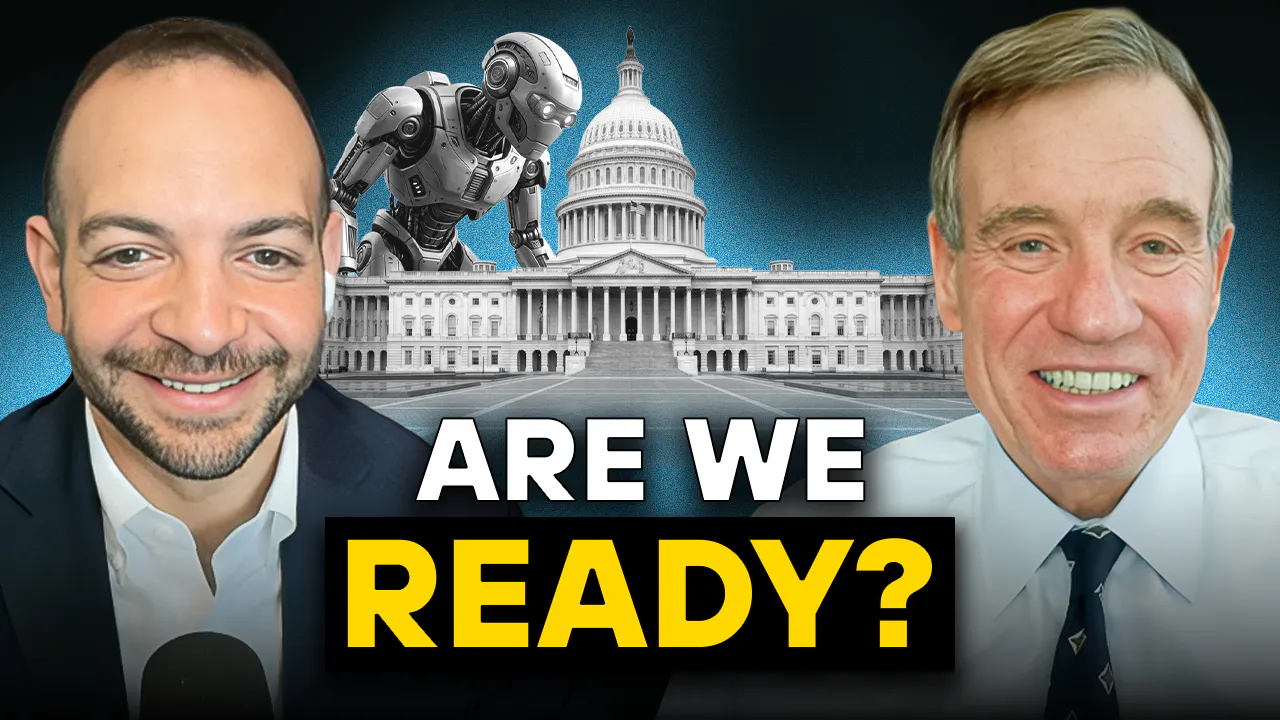
Public support for local AI data centers has collapsed, with opposition now bridging the political spectrum. Left-leaning groups cite environmental strain, while right-leaning groups see big tech overreach. This rare bipartisan consensus makes data centers a tangible and politically potent symbol of AI backlash.

Facing a federal vacuum on AI policy, major players like OpenAI and Google are surprisingly endorsing state-level regulations in California and New York. This counter-intuitive move serves two purposes: it creates a manageable, de facto national standard they can influence, and it pressures a gridlocked Congress to finally act to avoid a messy patchwork of state laws.
Beyond its stated ideals, the White House's AI framework has a key political aim: to preempt individual states from creating a patchwork of AI laws. This reflects a desire to centralize control over AI regulation, aligning with the tech industry's preference for a single federal standard.
The AI Data Center Moratorium Act, proposed by Sanders and AOC, cleverly uses public statements from leaders like Elon Musk and Demis Hassabis expressing AI fears. This political tactic leverages their own words against the industry to make the argument for a development halt more resonant and credible to the public.