Get your free personalized podcast brief
We scan new podcasts and send you the top 5 insights daily.
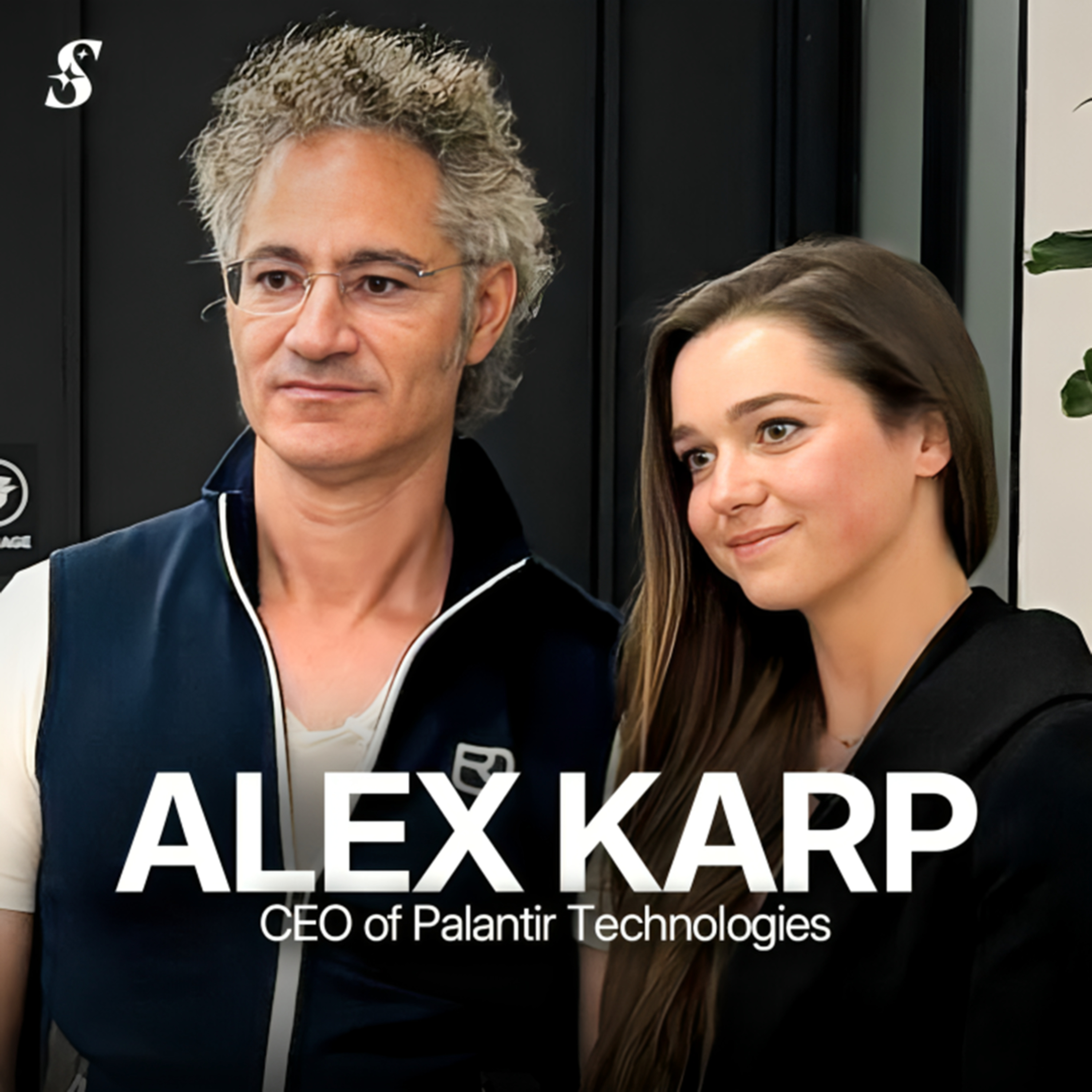
Alex Karp reveals a counterintuitive sales strategy: he encourages prospects to first try working with frontier AI companies. He's confident they will struggle with real-world enterprise problems and then come to Palantir, viewing the competitor's failure as a lead-generation tool.

Related Insights
As its reputation for delivering results grows, Palantir's sales process has flipped. With demand outstripping supply, the company no longer engages in traditional sales cycles. Instead, it requires potential clients to demonstrate their readiness and commitment upfront, making them qualify for Palantir's limited bandwidth.
Meta's new enterprise push, featuring 'forward deployed engineers,' directly emulates Palantir's successful high-touch sales model. The goal is to leverage its vast compute and AI models to solve complex business problems for Fortune 500s. However, it's a late entry into a crowded market where Meta lacks enterprise credibility.

Harvey's early sales strategy was to find a target lawyer's public court filing, use its AI to find flaws in the arguments, and present the critique directly to them. This hyper-personalized "attack" immediately proved the product's value and grabbed the attention of busy, high-value prospects.

Once a point of criticism from investors, Palantir's deep integration with clients via services and forward-deployed engineers (FDEs) is now essential for AI. Karp argues this hands-on implementation and understanding of "tribal knowledge" is a moat that pure-play software models cannot replicate.

Investor Stacy Brown-Philpot advises that to win large enterprise deals, an AI startup must create a solution so compelling it beats the customer's internal team vying for the same budget. The goal is to access the core 15% budget pool, not the 1% 'play money' budget.
With hundreds of AI vendors pitching enterprises weekly, trust is low and differentiation is difficult. The most effective go-to-market strategy is to prove the technology works before asking for payment. Offering a free "solution sprint" for several weeks de-risks the decision for the customer and demonstrates confidence.

Alex Karp argues that the future of enterprise software is not about forcing companies into standardized SaaS workflows. Instead, AI's true power lies in creating custom systems that amplify a company's unique "tribal knowledge" and operational data, turning their specific processes into a competitive advantage that no other enterprise can replicate.

While historically a difficult approach, top-down CEO sales is currently highly effective for AI companies. Boards are pressuring CEOs to be "AI forward," which creates immediate budget and a willingness to buy, even before a clear ROI is established. This makes selling to the C-suite a viable go-to-market strategy.

Karp's pitch at Davos suggests that traditional enterprise SaaS, which standardizes processes across companies, destroys competitive advantage. Palantir’s strategy is to build semi-custom systems that amplify a company's unique "tribal knowledge," betting that differentiation, not commodification, is the future of enterprise software value.

Alex Karp states that the proliferation of defense tech startups is a net positive for Palantir. He argues these companies expand the total addressable market, validate the category, and provide a benchmark that highlights Palantir's strengths.