Get your free personalized podcast brief
We scan new podcasts and send you the top 5 insights daily.
Top surgeons transition from clinical practice to corporate roles for the opportunity to leverage technology and scale their impact on patient lives far beyond what's possible in a single operating room.

Related Insights
Truly transformative healthcare companies often solve "boring" but fundamental problems. Instead of tackling surface-level symptoms (e.g., appointment booking), the best founders dig deep to fix the complex, underlying infrastructure issues of the healthcare system, creating a durable competitive moat.

To humanize R&D and maintain motivation, biotech leaders bring patients into the company. This practice directly connects scientists with the human impact of their work, grounding the entire team in their shared purpose, especially on difficult days.
Conny Kalcher was not looking to join an insurance company after 33 years at Lego. However, the Zurich CEO's inspiring vision for a customer-centric transformation presented a challenge so compelling that it overcame her initial hesitation about the industry's reputation.

A former medic explains that hands-on patient care provides an irreplaceable perspective for executives. It grounds strategic decisions in the reality of the patient experience, which is crucial for communicating value to teams and investors and maintaining a patient-first culture.

Early-stage biotechs prioritize scientists to build the core platform. However, once a lead clinical program is identified, the critical hire becomes a Chief Medical Officer who can design the clinical strategy. This hire is timed to the program's maturation, not the company's age, reflecting a pivotal strategic shift.

In Biotech, risk is removed pre-FDA approval via clinical trials, making a Chief Development Officer (clinical, regulatory, manufacturing) the most critical hire. In many MedTech sectors, risk is removed post-FDA approval via market adoption, making a Chief Commercial Officer paramount.

The most critical role for a physician co-founder extends beyond the initial idea. They must act as the primary evangelist and validator, sharing the engineering progress with their peers to ensure the device's design and function align with the broader clinical community's needs and vision.
Baldo was training to be an orthopedic surgeon but pivoted after co-founding a venture-backed medical software company. He faced a clear inflection point and made a conscious decision to forgo completing his medical training to remain in business, highlighting that successful executive career paths are not always linear.

Deep scientific knowledge is merely the entry fee for an MSL to meet with a physician. Building trust, demonstrating business acumen, and forging a genuine partnership focused on systemic patient care are the critical skills that create lasting value and justify staying in the room.

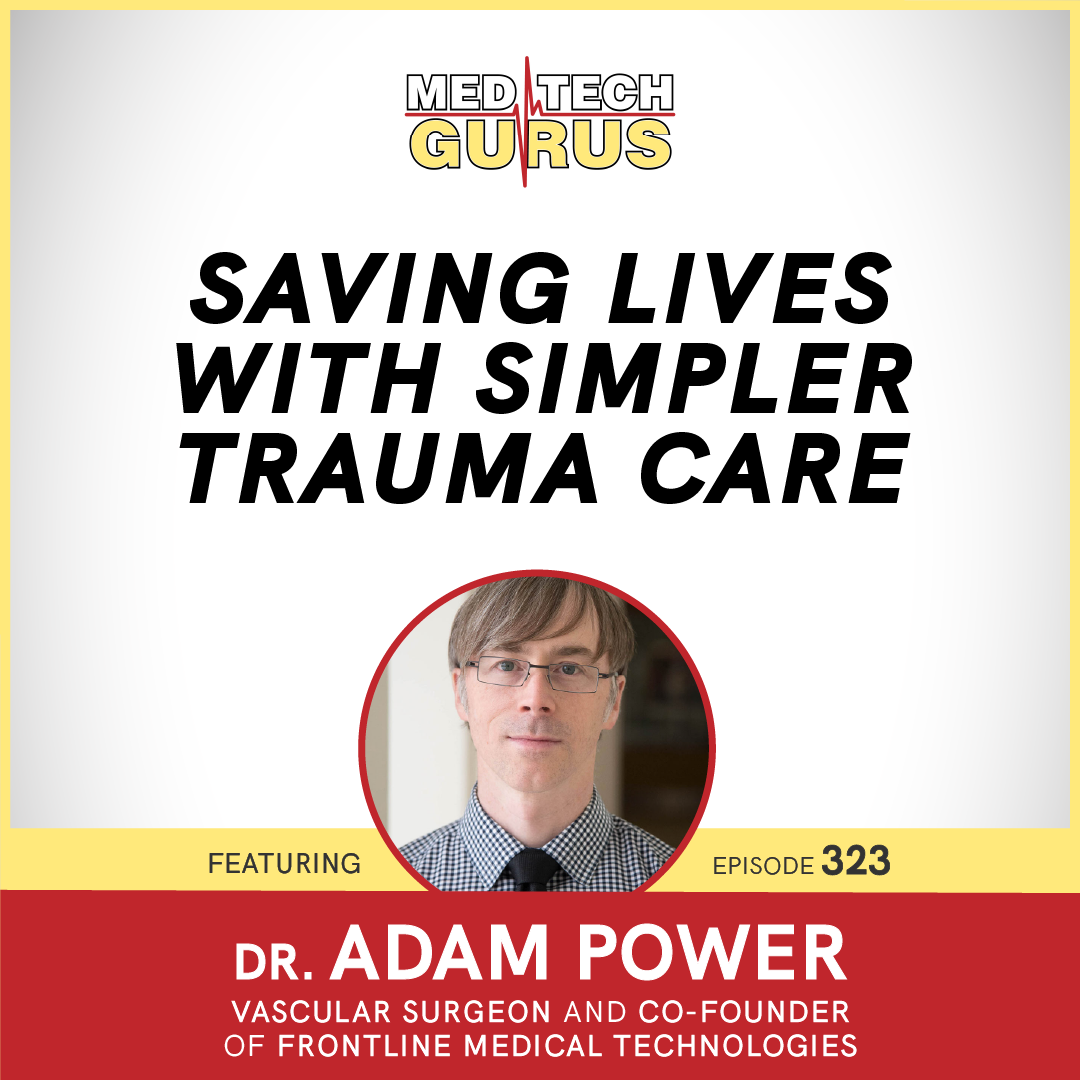
Large medical device companies have rigid innovation cycles that may not align with a clinician's new idea. Dr. Adam Power discovered that to ensure his invention would actually reach patients, he had to commercialize it himself rather than waiting for a large company's timeline.