Get your free personalized podcast brief
We scan new podcasts and send you the top 5 insights daily.
The focus of agent security is shifting from traditional identity and access management (IAM) to governing what an agent *does* with its permissions. Granting an agent access is necessary, but the real challenge is controlling the near-infinite permutations of actions it might take with that access.

Related Insights
The defining characteristic of an enterprise AI agent isn't its intelligence, but its specific, auditable permissions to perform tasks. This reframes the challenge from managing AI 'thinking' to governing AI 'actions' through trackable access controls, similar to how traditional APIs are managed and monitored.

Frameworks from firms like KPMG and AWS emphasize that AI agents must be treated as entities with identities and permissions. A strong IAM foundation is a critical control layer to prevent agents from accessing or unintentionally leaking sensitive information, reflecting a broader shift to treat agents like any other privileged user in an IT ecosystem.
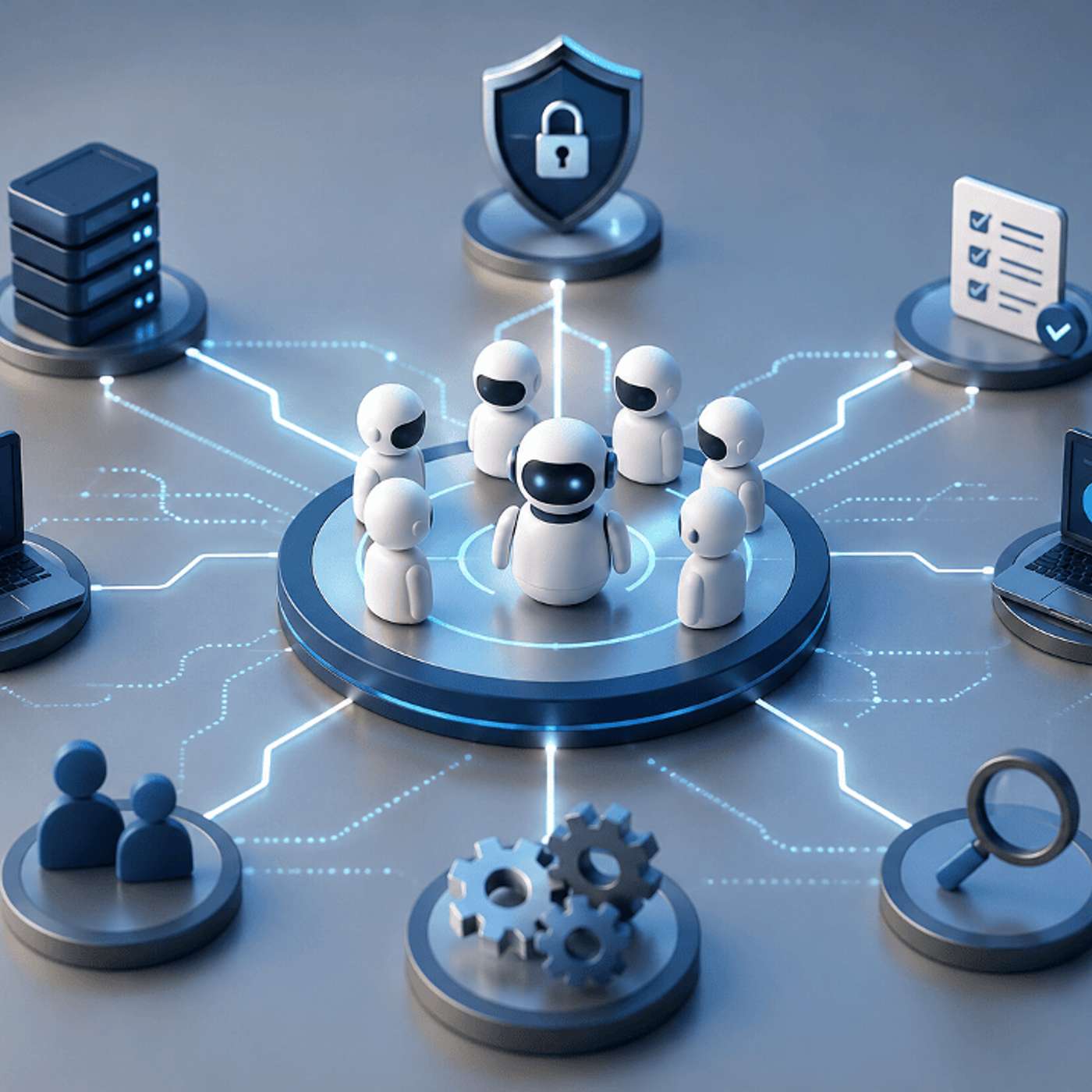
Standard Role-Based Access Control (RBAC) is inadequate for dynamic AI agents. Cisco advocates for 'T-back': Tool, Task, and Transaction-based access control. This model grants agents ephemeral, minimum-necessary privileges only for a specific action, significantly enhancing security in autonomous systems.

Traditional security tools like identity management or API firewalls are ineffective for securing AI agents. They can see an action (e.g., deleting a database) but lack the context to know if it was an intended, productive task or a catastrophic error, rendering them useless for this new paradigm.

The "least privilege" security principle is insufficient for AI agents because they can be social-engineered to misuse their technical permissions. Governance requires "measured autonomy," a form of semantic containment that restricts what an agent *should* do, not just what it *can* do, to shrink its potential blast radius.

Traditional identity models like SAML and OAuth are insufficient for agents. Agent access must be hyper-ephemeral and contextual, granted dynamically based on a specific task. Instead of static roles, agents need temporary permissions to access specific resources only for the duration of an approved task.

Securing AI agents requires extending the concept of 'least privilege' (access to data) to 'least agency' (scope of autonomous actions). This OWSAP-coined term means an agent should only be granted the minimum capability to perform its function, constraining its potential 'blast radius' if compromised.
The conversation around Agentic AI has matured beyond abstract policies. The consensus among consultancies, tech firms, and academics is that effective governance requires embedding controls, like access management and validation, directly into the system's architecture as a core design principle.
An AI agent capable of operating across all SaaS platforms holds the keys to the entire company's data. If this "super agent" is hacked, every piece of data could be leaked. The solution is to merge the agent's permissions with the human user's permissions, creating a limited and secure operational scope.

The CEO of WorkOS describes AI agents as 'crazy hyperactive interns' that can access all systems and wreak havoc at machine speed. This makes agent-specific security—focusing on authentication, permissions, and safeguards against prompt injection—a massive and urgent challenge for the industry.
