Get your free personalized podcast brief
We scan new podcasts and send you the top 5 insights daily.
The true vulnerability in the Strait of Hormuz is not the sinking of a destroyer but the fragility of the global financial system. Skyrocketing insurance rates and force majeure clauses in contracts can halt global trade far more effectively and immediately than a direct military attack.

Related Insights
By attacking just a few ships, Iran creates enough perceived risk to make insurance carriers unwilling to cover vessels transiting the Strait of Hormuz. This effectively disrupts 20% of the world's oil supply without needing a large-scale military blockade, a key tactic in asymmetric economic warfare.

Major container lines will divert entire fleets on longer, more expensive routes around continents based solely on the threat of attack, as seen with the Houthis in the Red Sea. The perception of risk, not just the occurrence of incidents, is a primary driver of costly, system-wide disruptions in logistics.

A likely outcome of the conflict is Iran establishing control over the Strait of Hormuz and charging tolls for passage. This would mirror Russia's control over the Northern Sea Route, fundamentally altering freedom of navigation and creating a new economic reality where a state actor monetizes a critical global chokepoint.

Dr. Anas Al-Hajji asserts that Iran did not militarily close the Strait of Hormuz. The disruption was caused by European insurance companies canceling policies for tankers under EU solvency rules after an attack near Sri Lanka expanded the perceived risk zone, making transit impossible for uninsured ships.

Iran doesn't need a naval blockade to close the Strait of Hormuz. The mere threat of drone and missile attacks is enough to deter shippers and insurers, creating a "de facto closure." This asymmetrical strategy highlights how psychological warfare can be as effective as direct military action in disrupting global trade.
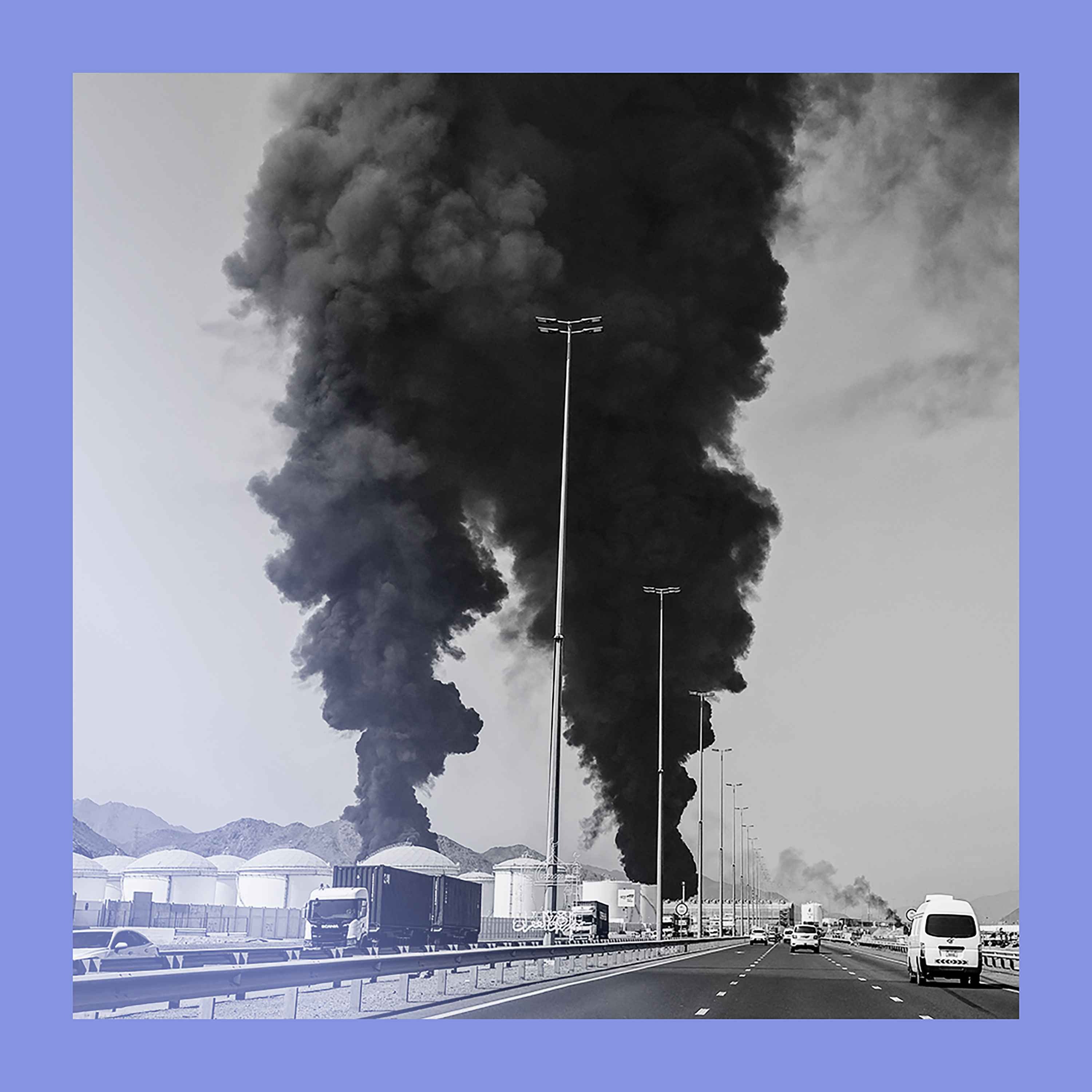
The successful closure of the Strait of Hormuz, a critical global choke point, with relatively little military effort creates a permanent change in risk assessment. This 'black swan' event proves the vulnerability of global supply chains, forcing nations and companies to rethink and de-risk their long-term strategies, regardless of when the strait reopens.
A potential off-ramp for the conflict is not military victory but a bureaucratic financial solution. By massively increasing the US Development Finance Corporation’s political risk insurance limit, the US could underwrite maritime shipping, incentivizing transit despite the military risk.
The critical choke point of the Strait of Hormuz is closed not by military force, but by economics. Commercial shipping requires insurance, which is now either unavailable or prohibitively expensive for the region. Even with naval escorts, ships will not sail without coverage, making this an insurance-driven crisis.
Iran effectively weaponized the Strait of Hormuz not with mines, but by creating enough uncertainty to make UK-based insurance companies pull out. This demonstrates how financial systems can be leveraged as powerful geopolitical choke points.

Iran employs inexpensive weapons against shipping in the Strait of Hormuz. This asymmetric strategy avoids direct military confrontation while making the risk too high for insured commercial vessels, effectively closing the strait without a formal blockade.
