Get your free personalized podcast brief
We scan new podcasts and send you the top 5 insights daily.
The informal rule against offering radical prostatectomy to men over 75 stemmed from the era of highly morbid open procedures. Modern robotic surgery, with less blood loss and quicker recovery, makes the operation feasible for older, fit men, shifting the decision from a rigid age cutoff to a more holistic patient assessment.

Related Insights
For an older patient population, the ultimate goal in prostate cancer treatment might not be a traditional cure, but rather turning it into a quiescent, chronic disease manageable with well-tolerated therapy, similar to HIV. This reframes success as long-term control until a patient dies of other causes.

There's a significant shift in urological practice where high-risk patients, such as an 80-year-old, are now often considered non-candidates for radical cystectomy due to the procedure's high morbidity. This change from the surgical side is a key driver for exploring bladder-preserving treatments like chemoradiation or novel systemic therapies.
After years of successfully intensifying hormonal therapy, the focus in prostate cancer is shifting toward de-intensification. Researchers are exploring intermittent therapy for top responders and developing non-hormonal approaches like radioligands to spare patients the chronic, life-altering side effects of permanent castration.
Historically, bladder-sparing options were primarily for patients unfit for radical cystectomy. Now, with advances in surgical techniques and perioperative care, fewer patients are deemed truly ineligible for surgery. This shift means new bladder-sparing strategies are being developed for a much broader patient population.

Johnson & Johnson's data for its drug Erlita doesn't just offer an incremental improvement; it challenges the century-old practice of immediate radical prostatectomy for high-risk prostate cancer. Integrating pharmaceutical treatment before and after surgery could fundamentally shift the treatment paradigm from a purely surgical approach to a multidisciplinary one.

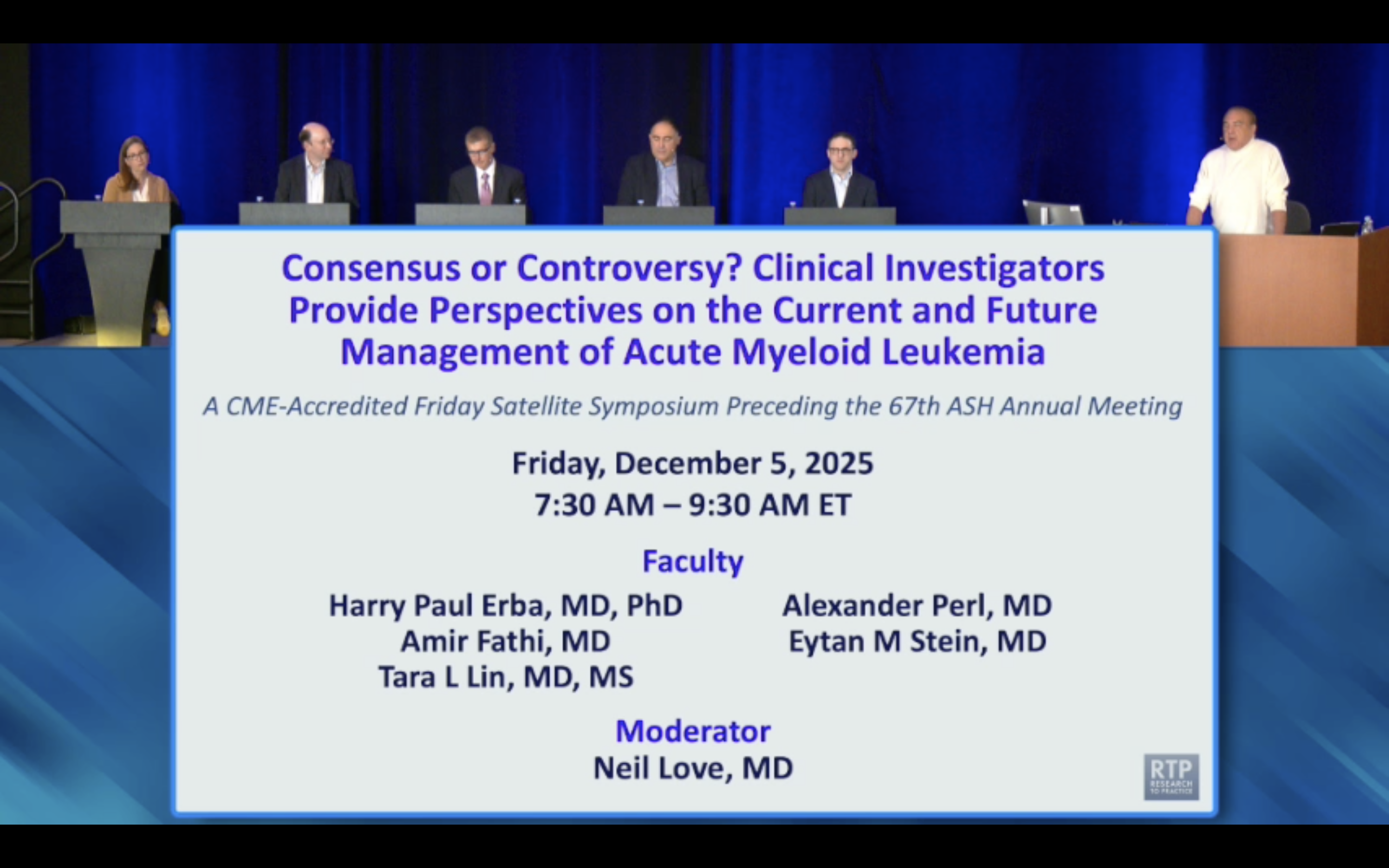
Traditional age cutoffs for AML therapy are becoming obsolete. A comprehensive fitness assessment, not just chronological age, should guide treatment, as some guidelines now classify patients as young as 55 as "older adults," a surprising shift for many clinicians.
While remote procedures are a long-term goal, the immediate drivers for robotic adoption in cardiology are more practical. They solve physicians' "awful" working conditions (radiation, physical strain) and enhance interventions with a level of precision that humans cannot achieve.

Despite guidelines and trial data suggesting low-volume patients may not benefit from chemotherapy, some oncologists offer it to a select subset. This decision is based on factors like young age, fitness, and genomic alterations in tumor suppressor genes, reflecting a personalized, biology-driven approach in an area where consensus is lacking.
A VA study using real-world data confirms that androgen receptor pathway inhibitors (ARPIs) combined with ADT significantly improve survival in elderly (>75), frail, and high-comorbidity prostate cancer patients. This evidence directly addresses clinician hesitancy to treat these vulnerable populations with standard-of-care combination therapy.

The clinical definition of "high-risk" prostate cancer is evolving due to improved diagnostics. The move from digital rectal exams to more sensitive MRI for T-staging means more patients meet the criteria for being high-risk. This "stage migration" makes it challenging to apply findings from older clinical trials to a contemporary patient population.