Get your free personalized podcast brief
We scan new podcasts and send you the top 5 insights daily.
China's deep tech integration is exemplified by the Didi ride-hailing app. When a driver is stopped at a red light, the app displays the light's countdown timer, demonstrating a direct data link between public infrastructure and commercial applications that is rare elsewhere.

Related Insights
Transaction costs for digital payments in China are around 0.25%, an order of magnitude lower than in the US. This economic reality enables frictionless interactions, such as a hotel concierge easily ordering food for a guest on their personal app and being reimbursed instantly with no fees lost.
China is poised to outpace the West in integrating agentic AI into daily life. Its existing super-apps like those from Tencent and Alibaba provide a powerful, ready-made ecosystem for deploying personal AI assistants to handle tasks like booking travel, scheduling, and communication seamlessly.

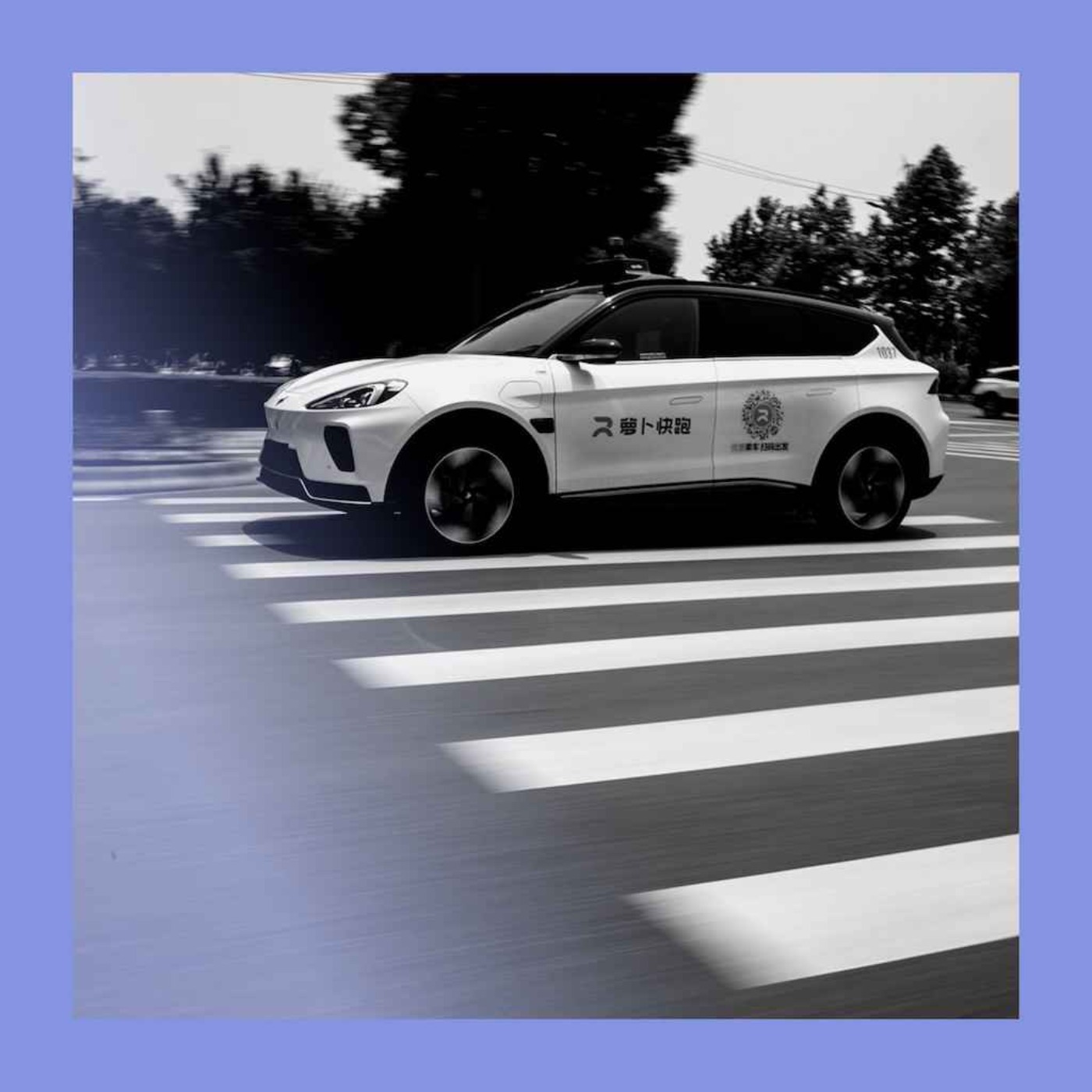
Contrary to perceptions of rigid control, China accelerates tech progress by empowering local regulators to be agile. These regulators create urban "test beds" for technologies like autonomous taxis, which entices talent and investment, turbocharging development cycles far ahead of Western counterparts.
Chinese super apps like WeChat combine messaging, payments, and e-commerce into one interface. This provides a massive advantage for AI agents, which can seamlessly execute complex, multi-service tasks for users, a feat nearly impossible in the siloed US app ecosystem.

China's scale in physical hardware like drones and autonomous vehicles generates a vast dataset of multimodal data (sound, vision, LiDAR). This real-world data, underappreciated in the text-focused West, gives Chinese companies a significant advantage in training intelligent physical AI models.

China's established super-apps like WeChat provide the perfect infrastructure for a rapid transition to AI "super agents." These agents can seamlessly integrate into every facet of a user's digital life, an advantage the fragmented Western app market cannot easily replicate.

China's internet is dominated by mobile super apps that already integrate digital services with physical networks like drivers and warehouses. This existing infrastructure makes it far easier to plug in agentic AI and deliver real-world outcomes, a structural advantage over the more fragmented, desktop-oriented West.

China sees faster, more positive public adoption of AI because the technology is being deployed to improve core public goods like healthcare and education. In contrast, Western AI applications are often confined to consumer entertainment and social media, making the benefits less tangible for the average person.

Chinese companies excel in the EV/AV space because their roots in consumer electronics taught them to treat hardware and software with equal importance. This native "system-level thinking" gives them a significant advantage over traditional automakers who are still learning this integrated approach.

Recognizing that standard maps like Google's failed in Southeast Asia's complex cities, Grab created its own mapping service. By attaching cameras to thousands of driver helmets, they crowdsourced data on informal alleys and shortcuts, building a proprietary, more efficient routing engine.