Get your free personalized podcast brief
We scan new podcasts and send you the top 5 insights daily.
The fear of being left behind by AI is largely unfounded. Unlike the centralized mobile era, AI development is highly distributed, job data contradicts mass displacement, and AI currently improves processes (autocatalysis) rather than achieving runaway recursive self-improvement.

Related Insights
The argument that AI will cause mass unemployment relies on the 'lump of labor fallacy'—the mistaken belief there is a finite amount of work. Historically, technology has always created new jobs and roles, even as it displaces old ones, a pattern likely to repeat with AI.

Like the internet and mobile, AI will automate many jobs. However, this automation historically unlocks new types of work that don't exist yet. While there's short-term frictional pain, the long-term trend repeated over 200 years is job creation and increased prosperity.

Andreessen argues that fears of AI displacing jobs are "100% incorrect." He points out that this is a recurring "lump of labor" fallacy. Instead of replacing humans, AI augments them, increasing their productivity and allowing them to tackle more ambitious problems, ultimately increasing the demand for their work.

Current fears that AI will eliminate all jobs are not new, mirroring panics during the mainframe and PC eras. Historically, these technologies drove massive productivity gains and created new industries rather than destroying the workforce, suggesting a similar outcome for AI.

The fear that AI will replace all jobs ignores history. Technology has consistently eliminated drudgery (e.g., manual farming, factory work) while creating new, unpredictable industries that cater to newly created human wants. AI will accelerate this process, allowing people to focus on more creative and interpersonal pursuits.
Tech leaders' apocalyptic predictions about AI's impact on jobs might not be solely for hype. This perspective suggests their views are shaped by a lack of historical knowledge about technological adoption and a flawed assumption that average people will engage with technology as deeply as they do, leading to overestimations of disruption speed and scale.
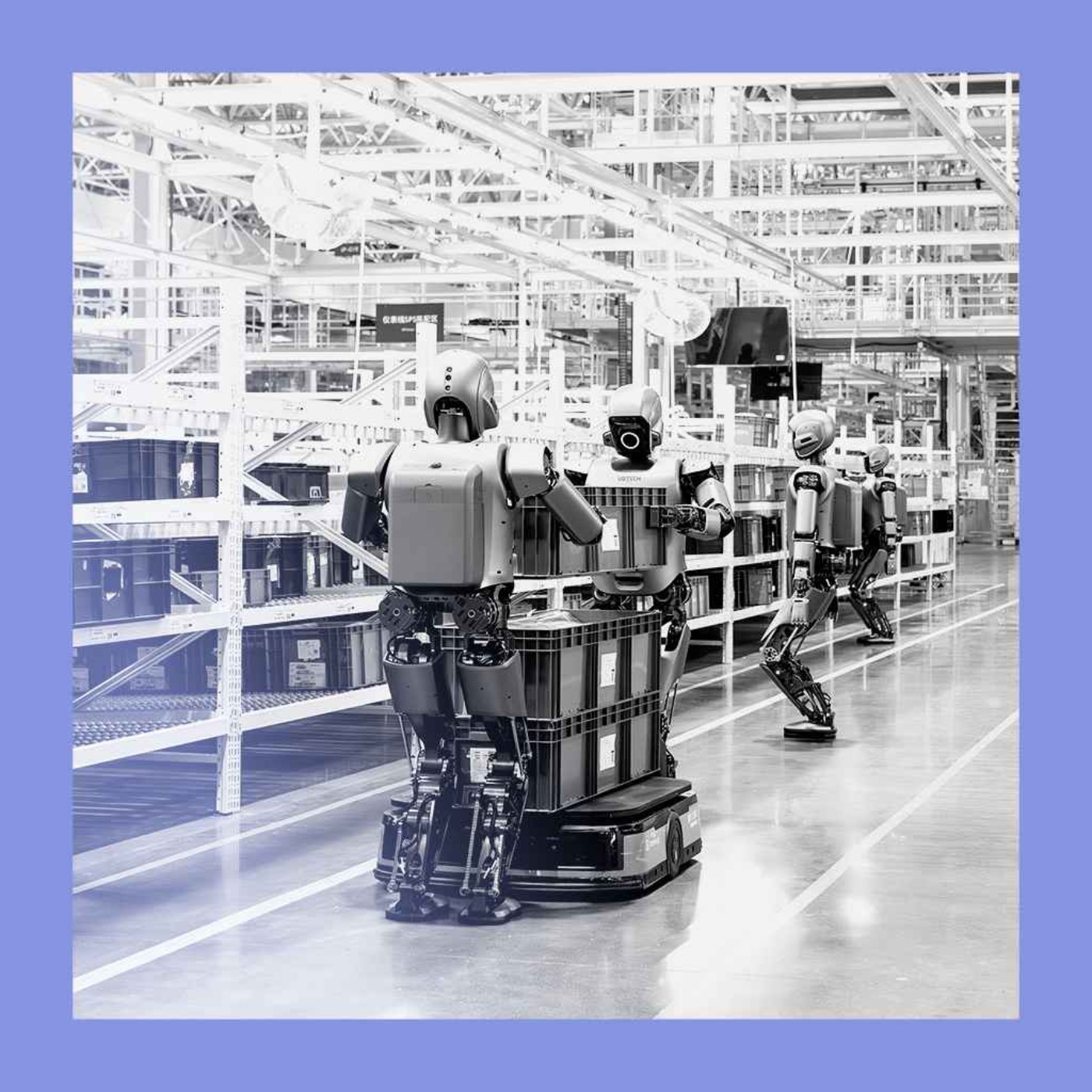
The narrative that AI will eliminate jobs mirrors identical fears during the mainframe revolution of the 1960s and the PC revolution of the 1980s. Historically, such technologies have always increased human productivity and created more, higher-value jobs. The "this time is different" argument has consistently been proven wrong.

The fear of AI-driven mass unemployment is a classic economic fallacy. Like past technologies, AI is a tool that raises the marginal productivity of individual workers. More productive workers don't work less; they take on more ambitious projects and create new kinds of jobs, increasing the overall demand for labor.
The popular fear of falling behind due to AI is a 'dark fantasy.' This fear overlooks that the AI stack is highly decentralized (not winner-take-all), the real-world economic diffusion of technology is slow, and most business problems are not purely limited by intelligence.
Contrary to widespread predictions of mass unemployment, top AI experts, including Sam Altman, admit their surprise that AI has been net job-creating to date. This expert surprise suggests that current models for predicting AI's economic disruption are inadequate and that the transition may be more about job transformation than outright job loss.
