Get your free personalized podcast brief
We scan new podcasts and send you the top 5 insights daily.
Ørsted's CEO makes a crucial distinction about supply chain dependence. While the company does not source turbines from China, he notes that the broader offshore wind industry is global and relies on Chinese manufacturing for other essential components like monopiles (foundations), cables, and vessels.

Related Insights
Aggressive local content requirements, meant to build a domestic supply chain, backfired by making components two to three times more expensive due to a lack of scale. This destroyed project profitability, causing international developers to pull out of Taiwan's offshore wind market.
![Taiwan's War on Renewables [Fully Produced Radio Show!] thumbnail](https://megaphone.imgix.net/podcasts/ea2b2a28-6bfc-11f1-861d-dbb1c081b969/image/6e2a7fb9b3341e0e4138f617d8c58e86.png?ixlib=rails-4.3.1&max-w=3000&max-h=3000&fit=crop&auto=format,compress)
The move toward a less efficient, more expensive global supply chain is not a failure but a strategic correction. Over-prioritizing efficiency created a dangerous dependency on China. Diversification, while costlier in the short term, is a fundamental principle of long-term risk management.

The trend of moving manufacturing to countries like Mexico or Vietnam to avoid China tariffs is often driven by Chinese companies themselves. They establish clone factories abroad, sometimes with Chinese labor, meaning the economic benefits largely still flow back to China.
China's dominance isn't limited to rare earths; it accounts for 35% of global manufacturing—three times the US. This industrial might gives it the theoretical ability to apply similar coercive licensing regimes in sectors from EVs to renewable energy, posing a systemic risk.
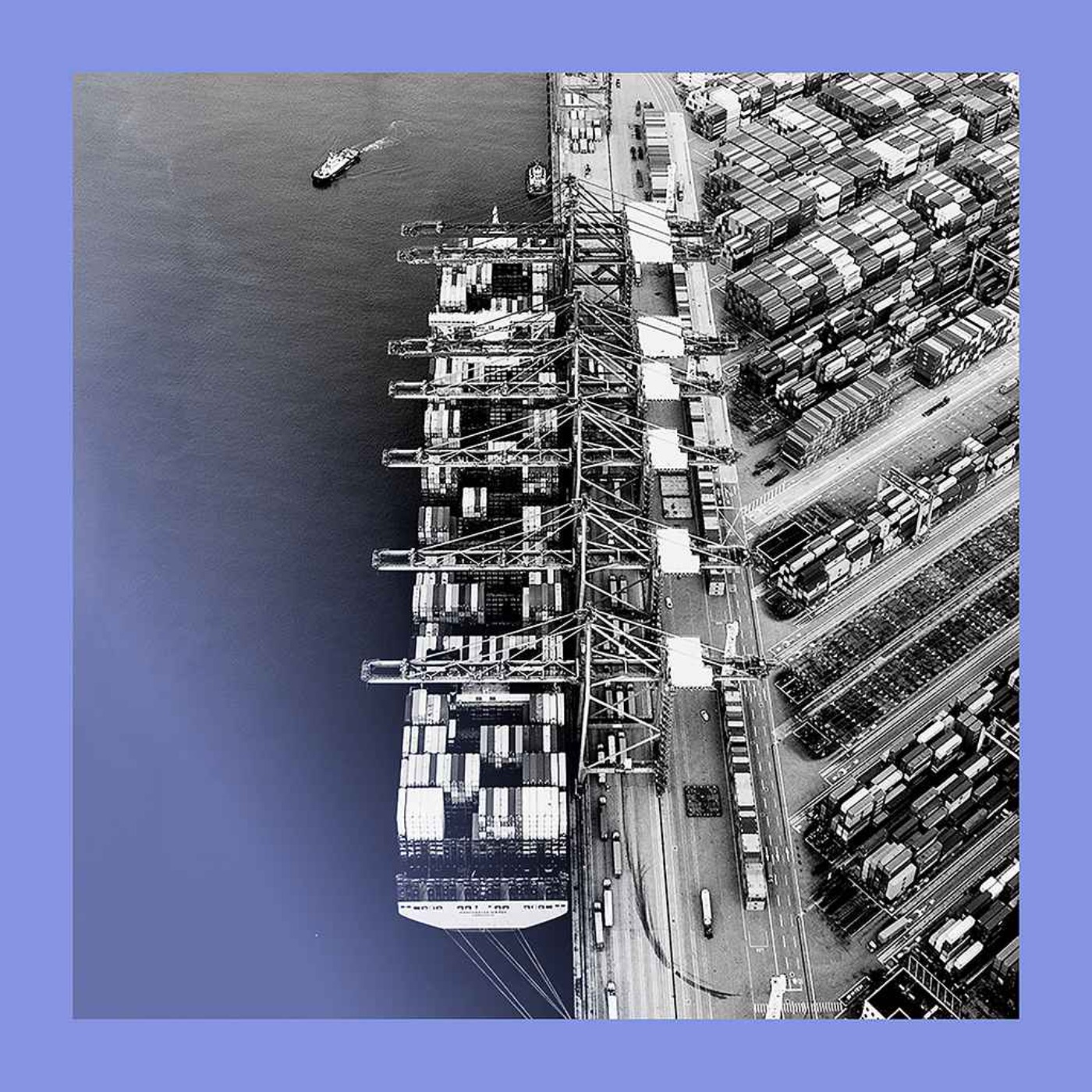
Blockades in critical waterways like the Strait of Hormuz force nations to seek energy independence through renewables. This structural shift primarily benefits China, which controls the majority of the global supply chain for windmills (60%), EVs (70%), and solar panels (80%), solidifying its long-term strategic advantage.

Companies are moving away from single, hyper-efficient global supply chains. The new strategy involves setting up parallel, regional manufacturing locations (e.g., China plus the US, or China plus Mexico and Vietnam) to create redundancy and mitigate risks from disruptions like pandemics, natural disasters, or geopolitical events.

While headlines focus on advanced chips, China’s real leverage comes from its strategic control over less glamorous but essential upstream inputs like rare earths and magnets. It has even banned the export of magnet-making technology, creating critical, hard-to-solve bottlenecks for Western manufacturing.

China's leadership in renewables isn't just in manufacturing. It has strategically secured control over the entire supply chain—from owning international mines and refining raw ore to producing the final solar panels and batteries—giving it immense geopolitical and economic leverage.

The economic realities and deep dependencies on China make complete decoupling impractical. Companies will not accept the massive cost disadvantages of reshoring unless forced by conflict, leaving the US perpetually vulnerable.
![Ben Thompson on Big Tech, China, and the AI Boom Running Out of Money - [Invest Like the Best, EP.487] thumbnail](https://megaphone.imgix.net/podcasts/b0356202-9aa0-11f1-b3c3-6bc8a0cf3d6f/image/772d31a372a483035b6fc678729cae0b.jpg?ixlib=rails-4.3.1&max-w=3000&max-h=3000&fit=crop&auto=format,compress)
A toymaker CEO explains China's advantage isn't just cost. It's the critical mass of engineers, toolmakers, ports, and a shared understanding of US quality standards. This creates a fluid, all-in-one market that other countries lack, making it difficult for businesses to reshore or diversify manufacturing.
