Get your free personalized podcast brief
We scan new podcasts and send you the top 5 insights daily.
India is leveraging its domestic successes, such as using AI to diagnose tuberculosis from X-rays, to build influence with other developing nations. Instead of dictating policy, India is sharing a practical playbook for how to use AI to solve public service challenges, boosting its soft power.

Related Insights
Unlike the exclusive UK Bletchley summit, India's AI Impact Summit adopted a maximalist approach with 400+ sessions, an industry expo, and country pavilions. This chaotic but inclusive model successfully positioned India as a central hub for global AI conversations, deal-making, and national showcases.
Indians are more optimistic about AI than Westerners because AI is seen less as a threat to the workforce (which has proportionally fewer white-collar jobs) and more as a crucial national opportunity. AI is viewed as a "leapfrog" technology to accelerate development and close the economic gap.
Instead of competing to build sovereign AI stacks from the chip up, India's strategic edge is in applying commoditized AI models to its unique, population-scale problems. This leverages the country's deep experience with real-world, large-scale implementation.
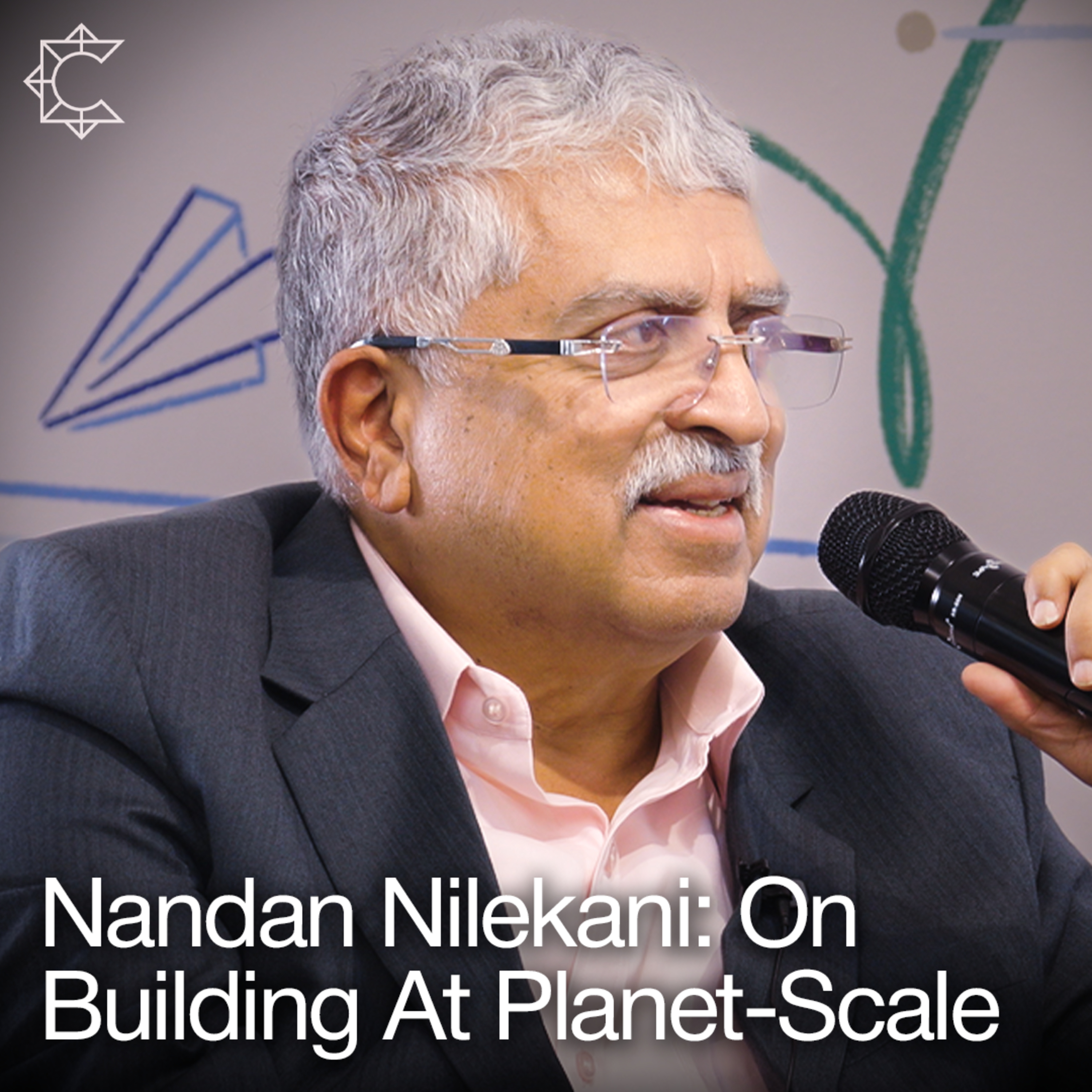
India is leveraging its upcoming AI Impact Summit to establish itself as the voice for the Global South in AI policy. By championing inclusive AI and showcasing successful development applications in healthcare and agriculture, India aims to create an alternative to the Western-centric AI narrative.
The India AI Impact Summit is framed by three principles: people, planet, and progress. This philosophy aims to democratize AI, ensuring it's accessible and beneficial for developing nations, moving beyond the typical safety-focused narrative of Western summits and championing Global South inclusion.
Indian startups are carving a competitive niche by focusing on the AI application layer. Instead of building foundational models, their strength lies in developing and deploying practical AI solutions that solve real-world problems, which is where they can effectively compete on a global scale.
Contrary to the global trend where consumer applications dominate AI usage (70%), India's adoption is heavily skewed towards productive enterprise use (60%). This business-first approach is driven by a large STEM workforce leveraging AI for efficiency gains in sectors like finance and healthcare.
India's Ministry of Electronics and IT (Meti) acts as a promoter and facilitator for the AI sector, not a traditional regulator. It uses "policy nudges" and strategic programs like the India AI Mission to coordinate and foster collaboration between private companies, academia, and research organizations.
For India, "leapfrogging" with AI means overcoming systemic resource shortages. AI acts as a horizontal productivity multiplier, enabling, for example, a limited number of doctors to deliver better healthcare outcomes through AI-powered diagnostics, thus enhancing sectoral capacity without massive infrastructure investment.
The India AI Impact Summit deliberately shifts the global conversation from regulation to implementation and societal outcomes, as reflected in its name. The goal is to move beyond abstract governance debates to demonstrate AI's practical benefits, focusing on 'impact' across its core themes of people, planet, and progress.