Get your free personalized podcast brief
We scan new podcasts and send you the top 5 insights daily.
The India AI Impact Summit is framed by three principles: people, planet, and progress. This philosophy aims to democratize AI, ensuring it's accessible and beneficial for developing nations, moving beyond the typical safety-focused narrative of Western summits and championing Global South inclusion.

Related Insights
Indians are more optimistic about AI than Westerners because AI is seen less as a threat to the workforce (which has proportionally fewer white-collar jobs) and more as a crucial national opportunity. AI is viewed as a "leapfrog" technology to accelerate development and close the economic gap.
India is building its AI ecosystem across five distinct layers: energy, infrastructure, compute, model development, and deployment. This 'full-stack' approach treats energy as the critical base layer, recognizing that massive compute needs require a robust and scalable power supply, which is a key national advantage.
The democratization of technology via AI shifts the entrepreneurial goalpost. Instead of focusing on creating a handful of billion-dollar "unicorns," the more impactful ambition is to empower millions of people to each build a million-dollar "donkey corn" business, truly broadening economic opportunity.

Instead of competing to build sovereign AI stacks from the chip up, India's strategic edge is in applying commoditized AI models to its unique, population-scale problems. This leverages the country's deep experience with real-world, large-scale implementation.
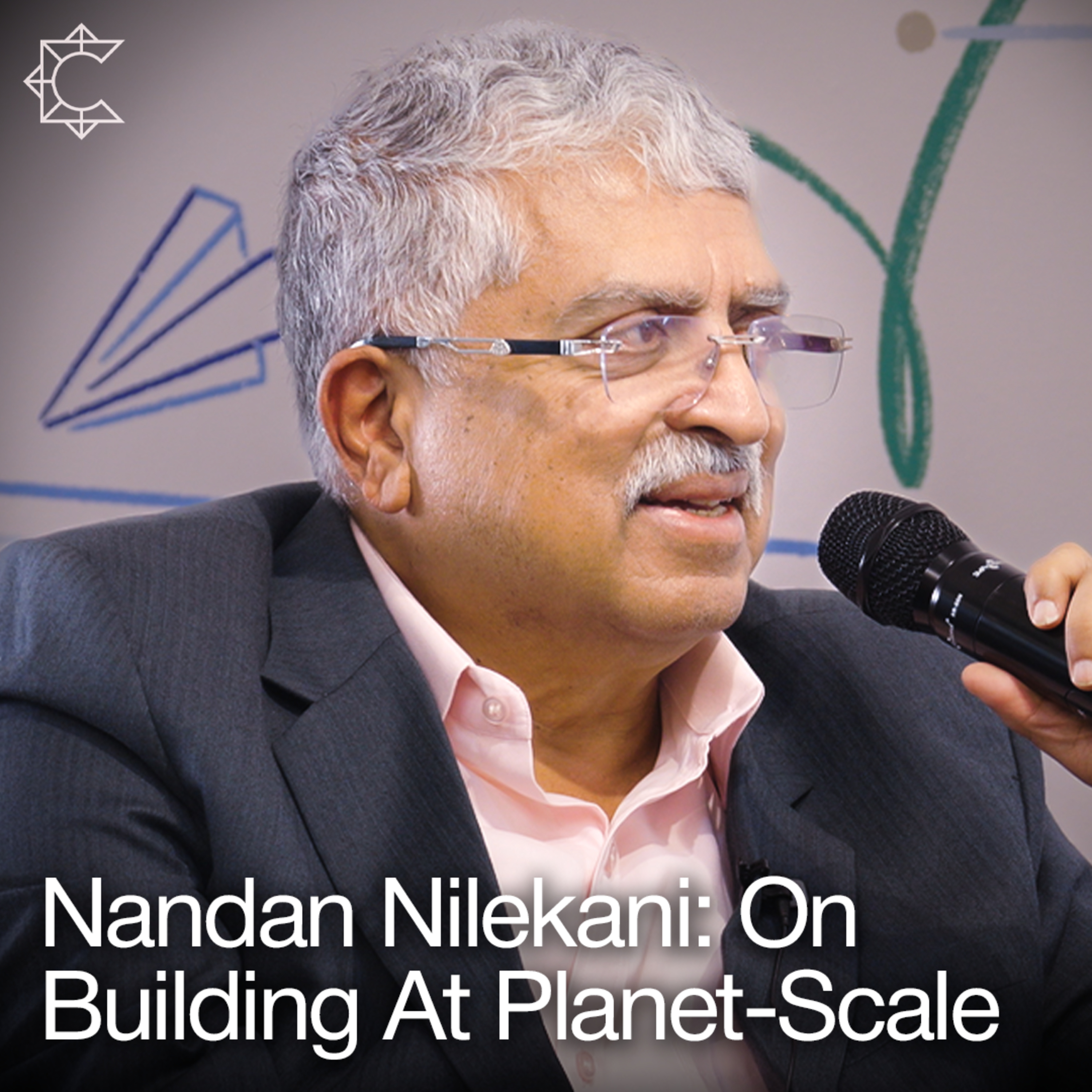
India is leveraging its upcoming AI Impact Summit to establish itself as the voice for the Global South in AI policy. By championing inclusive AI and showcasing successful development applications in healthcare and agriculture, India aims to create an alternative to the Western-centric AI narrative.
India's Ministry of Electronics and IT (Meti) acts as a promoter and facilitator for the AI sector, not a traditional regulator. It uses "policy nudges" and strategic programs like the India AI Mission to coordinate and foster collaboration between private companies, academia, and research organizations.
In its largest user study, OpenAI's research team frames AI not just as a product but as a fundamental utility, stating its belief that "access to AI should be treated as a basic right." This perspective signals a long-term ambition for AI to become as integral to society as electricity or internet access.
For India, "leapfrogging" with AI means overcoming systemic resource shortages. AI acts as a horizontal productivity multiplier, enabling, for example, a limited number of doctors to deliver better healthcare outcomes through AI-powered diagnostics, thus enhancing sectoral capacity without massive infrastructure investment.
The series of global AI summits (Bletchley, Seoul, Paris) have demonstrated a profound ability to steer the international conversation. The focus has progressively shifted from initial concerns about safety (Bletchley) to corporate commitments (Seoul) and then to a more optimistic, pragmatic focus on AI adoption (Paris).
The India AI Impact Summit deliberately shifts the global conversation from regulation to implementation and societal outcomes, as reflected in its name. The goal is to move beyond abstract governance debates to demonstrate AI's practical benefits, focusing on 'impact' across its core themes of people, planet, and progress.