Get your free personalized podcast brief
We scan new podcasts and send you the top 5 insights daily.
Unlike the Western focus on general AI assistants, Chinese firms like Alibaba and Tencent deploy agentic AI within their 'super apps.' The goal is not just user convenience but to direct consumers to their own vast networks of goods and services, boosting retention and monetization within a closed loop.

Related Insights
China is poised to outpace the West in integrating agentic AI into daily life. Its existing super-apps like those from Tencent and Alibaba provide a powerful, ready-made ecosystem for deploying personal AI assistants to handle tasks like booking travel, scheduling, and communication seamlessly.

Chinese super apps like WeChat combine messaging, payments, and e-commerce into one interface. This provides a massive advantage for AI agents, which can seamlessly execute complex, multi-service tasks for users, a feat nearly impossible in the siloed US app ecosystem.

While Western AI labs focus on lucrative enterprise API sales, China's weak B2B software market forces companies like Alibaba and ByteDance to pursue other business models. Their deep expertise in e-commerce means they are better positioned and more motivated to pioneer successful generative commerce applications.

China's established super-apps like WeChat provide the perfect infrastructure for a rapid transition to AI "super agents." These agents can seamlessly integrate into every facet of a user's digital life, an advantage the fragmented Western app market cannot easily replicate.

While AI shopping agents promise to protect consumer privacy by abstracting away direct retailer relationships, this is a false dawn. Power will likely centralize with the major tech companies providing these agents, not empower individual users with decentralized control. The battle for "owning the customer" simply moves to a new layer.

While acknowledging AI's efficiency gains, Joe Tsai emphasizes its most significant impact at Alibaba comes from revenue growth. By infusing AI into consumer-facing products like e-commerce and maps, the company creates a 'massively better experience.' This directly translates to a larger user base and top-line growth, a more valuable outcome than just workforce reduction.
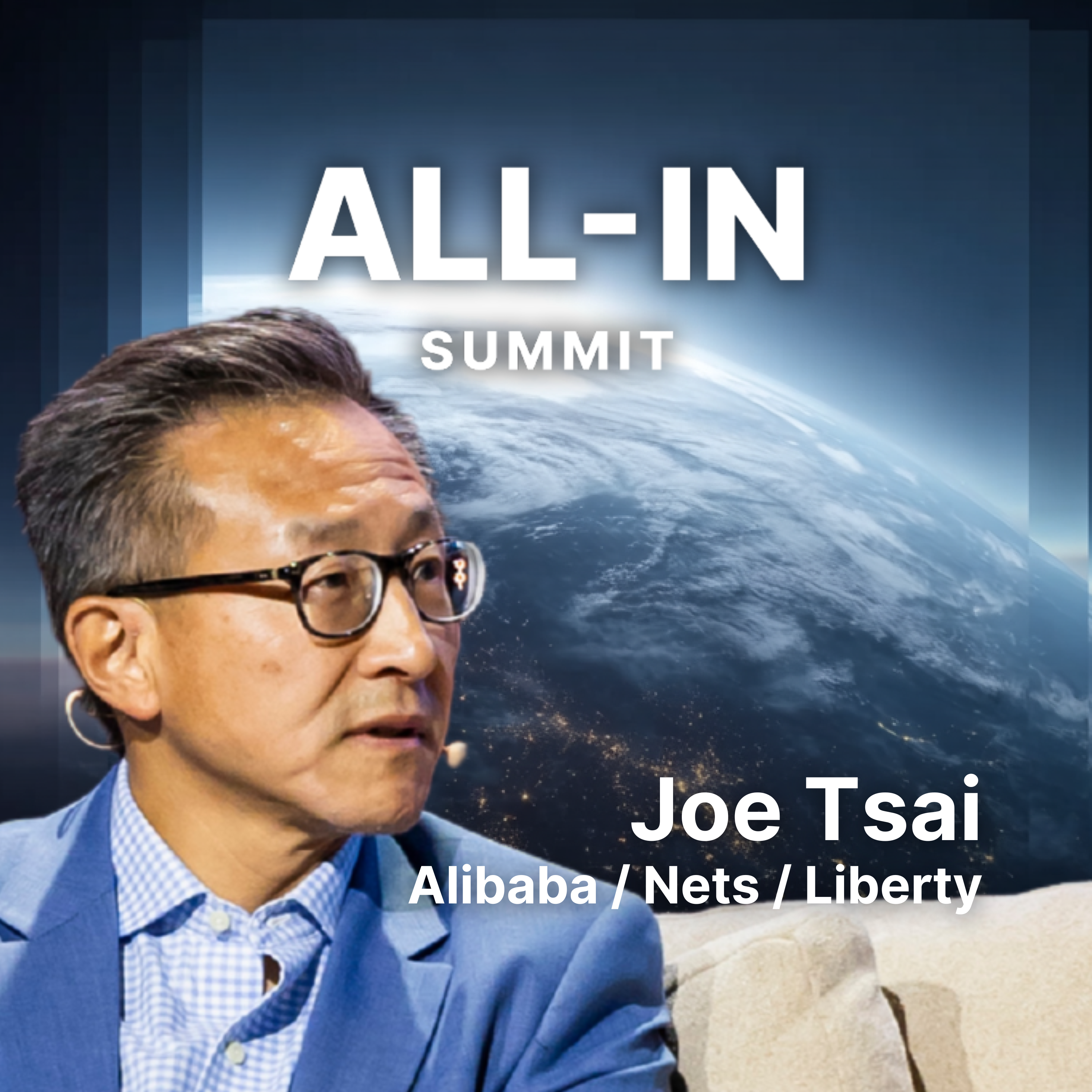
China's internet is dominated by mobile super apps that already integrate digital services with physical networks like drivers and warehouses. This existing infrastructure makes it far easier to plug in agentic AI and deliver real-world outcomes, a structural advantage over the more fragmented, desktop-oriented West.
China's rapid AI adoption is fueled by a focus on "agents" like OpenClaw that execute tasks, not just converse. This shift from simple chat models to action-oriented AI is reshaping enterprise workflows and the cloud economy, giving China a lead in practical AI implementation.
Unlike Western cloud providers, Chinese tech giants like ByteDance and Alibaba are directly integrating and offering hosted versions of agentic AI like OpenClaw. This reflects a hyper-competitive environment that drives faster, more aggressive adoption of the new personal AI agent trend in China.

The role of AI is evolving from passive analysis (e.g., predicting inventory) to active creation. 'Agentic' AI will build assets like brand books, websites, and apps from scratch, enabling unprecedented levels of operational efficiency and lean team structures.
