Get your free personalized podcast brief
We scan new podcasts and send you the top 5 insights daily.
Google is in the 'crawl' phase of implementing agentic AI in its main products. This is a deliberate strategic choice, not a technical limitation. The company feels a stewardship responsibility to its massive user base, prioritizing gradual adoption and user comfort over deploying its most advanced capabilities.

Related Insights
Google has caught up in AI technology, but its biggest hurdle is strategic. Integrating generative AI threatens its core search advertising model, which accounts for 80% of revenue. This creates an innovator's dilemma where they must carefully disrupt themselves without destroying their cash cow.

For years, Google has integrated AI as features into existing products like Gmail. Its new "Antigravity" IDE represents a strategic pivot to building applications from the ground up around an "agent-first" principle. This suggests a future where AI is the core foundation of a product, not just an add-on.

Google is not trying to win on pure LLM benchmarks. Instead, its strategy is to embed "good enough" AI across its massive product suite (Search, Workspace), leveraging its unparalleled distribution as its primary competitive advantage. The focus is on integration, not just frontier research.

Google's strategy involves the core AI model progressively absorbing the surrounding tooling and infrastructure (the "scaffolding"). This creates a standardized, extensible "harness" that accelerates development and ensures a consistent, high-quality agentic experience across Google's vast and diverse product landscape, from Search to consumer apps.

Google is deliberately holding back on integrating ads into its Gemini app. This strategy allows them to leverage their financial strength, let OpenAI absorb the user backlash and make early mistakes, and then copy successful ad formats later with the advantage of their superior data.
Google has shifted from a perceived "fear to ship" by adopting a "relentless shipping" mindset for its AI products. The company now views public releases as a crucial learning mechanism, recognizing that real-world user interaction and even adversarial use are vital for rapid improvement.
By summarizing emails and suggesting 'to-dos', Google is embedding agentic AI into a daily habit for over two billion users. This strategy serves as a massive, low-friction entry point to familiarize consumers with AI assistants that perform tasks on their behalf, potentially driving mass adoption for its Gemini ecosystem.
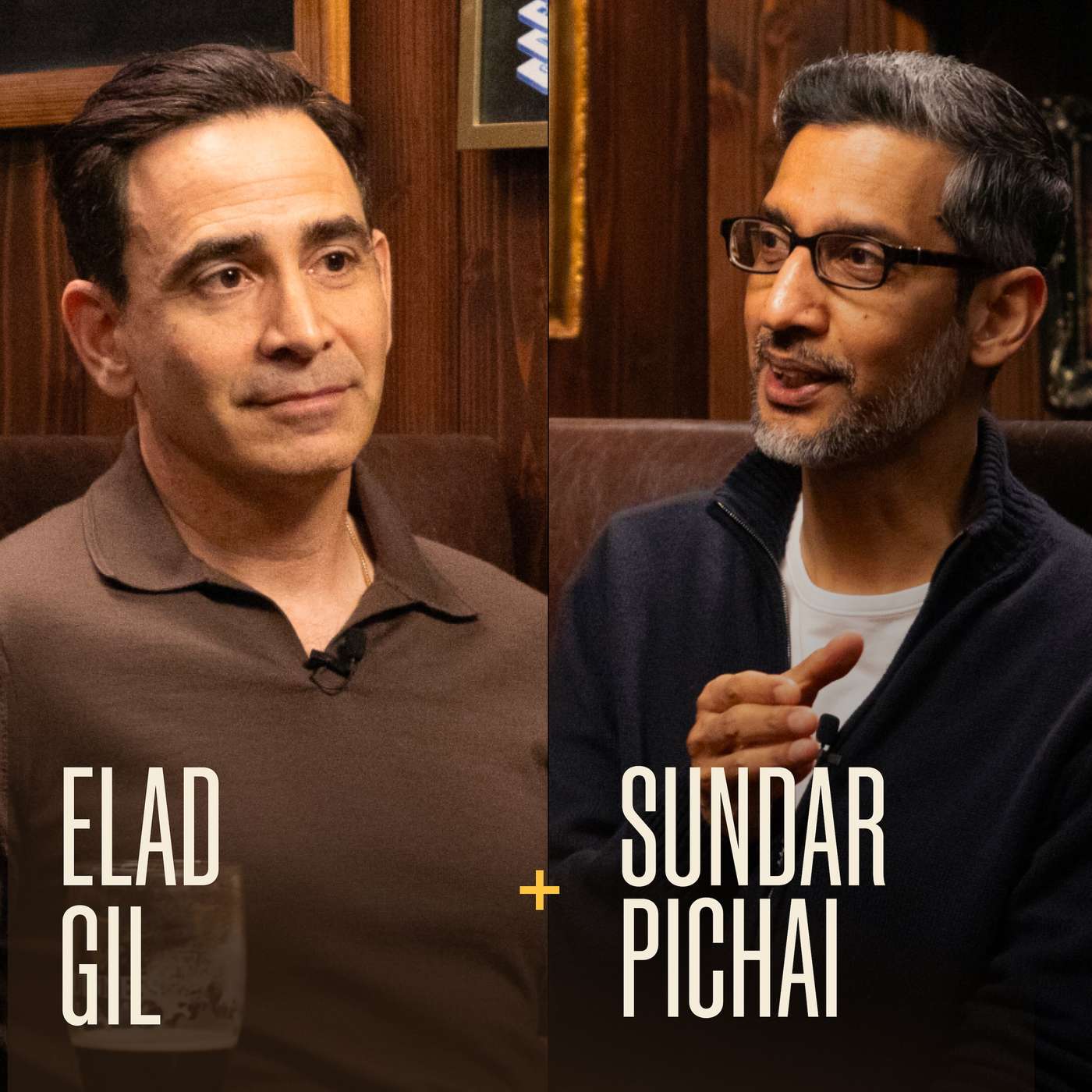
Instead of being replaced by AI chatbots or agents, Pichai believes Search will evolve to manage them. Users will run multiple, long-running tasks, and Search will become the interface to orchestrate these agentic flows, expanding its capabilities rather than becoming obsolete.
Google's direction is pulled between two philosophies. CEO Demis Hassabis favors a long-term, "world models" path to AGI, while a faction reportedly led by Sergey Brin pushes to compete directly with OpenAI and Anthropic on immediate applications like AI coding agents. This internal tension manifests as a confusing product roadmap.

In 2013, Google rolled out its significant 'Hummingbird' search algorithm update a full month before announcing it. No users complained because the experience simply improved. This 'ship then tell' strategy is a powerful playbook for consumer-facing AI products, proving an update's value through tangible benefits before users can form negative opinions based on an announcement.
