Get your free personalized podcast brief
We scan new podcasts and send you the top 5 insights daily.
Differentiation syndrome (DS) in AML treatment clinically mimics infection or relapse. The correct approach is to treat both possibilities concurrently with broad-spectrum antibiotics and steroids. A rapid improvement following steroid administration retrospectively confirms the DS diagnosis.

Related Insights
The differentiation syndrome (DS) from menin inhibitors is often more severe and rapid than seen with other AML drugs. It can escalate into a "crisis" with DIC and heart failure, requiring an immediate drug pause, steroids, and potentially cytoreduction.

When patients on menin inhibitors show worsening symptoms in early weeks, it's hard to distinguish disease progression from differentiation syndrome. The recommended clinical strategy is to default to treating for differentiation syndrome first, as it may be a manageable side effect rather than treatment failure.

Differentiation syndrome with menin inhibitors is more frequent and intense than with IDH inhibitors, meaning clinicians cannot be complacent. It requires an emergency-level response: immediate hospital admission, steroids, holding the drug, and a low threshold to escalate treatment with cytarabine if needed.
To combat the significant myelosuppression from the standard 28-day venetoclax cycle in AML, many clinicians are adopting a strategy of performing a bone marrow biopsy around day 21 and pausing the drug if blast clearance is achieved to allow for hematologic recovery.
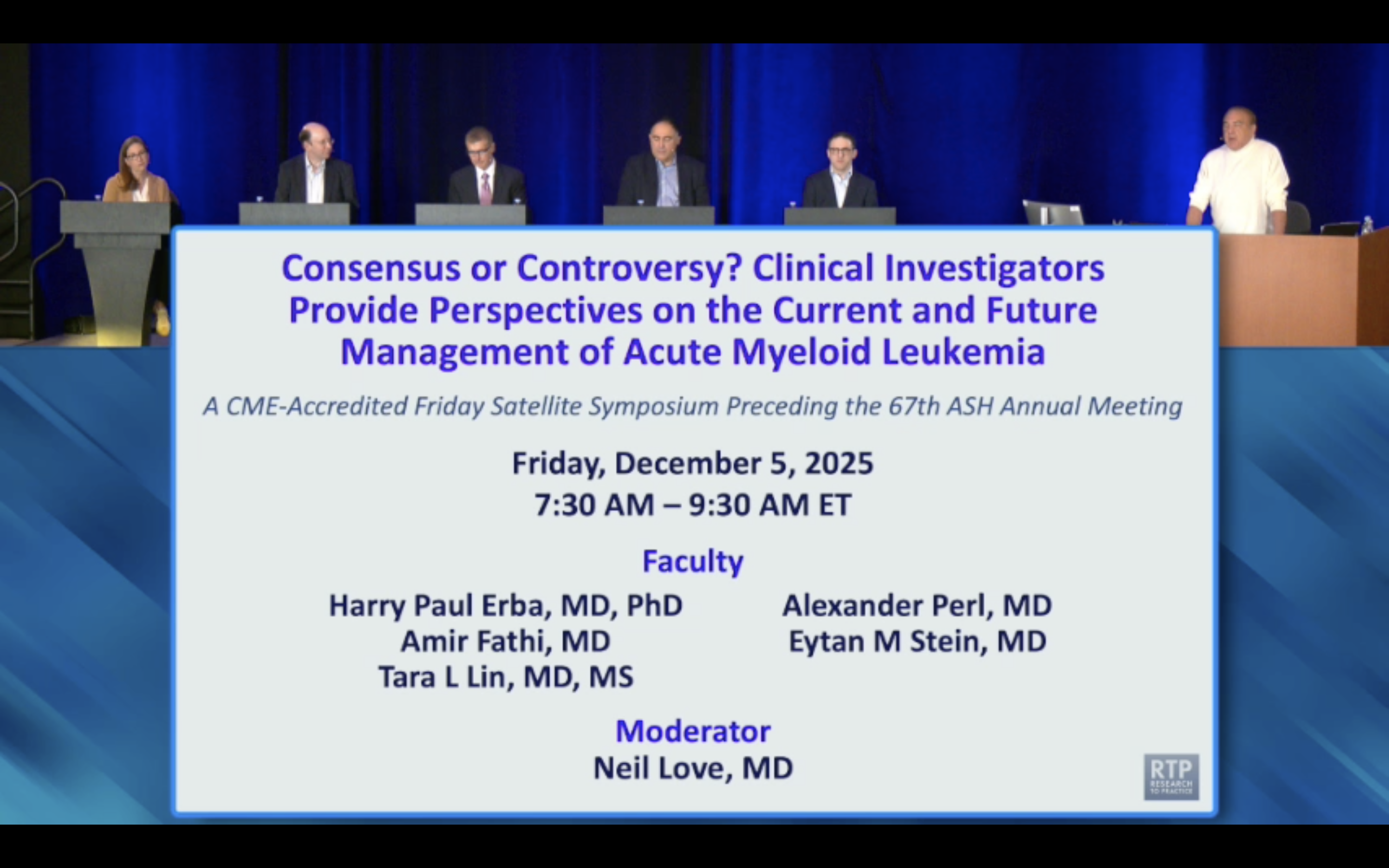
The standard of care for AML has shifted from immediate induction chemotherapy to a "wait and profile" approach. Rushing to treat with a general therapy like HMA-Venetoclax before getting molecular results can be detrimental if the patient has a subtype highly curable with specific intensive chemotherapy.
Combining menin inhibitors with intensive chemotherapy can decrease the risk of differentiation syndrome, a severe side effect. The chemotherapy debulks the tumor, reducing the number of malignant cells available to cause this inflammatory reaction when they differentiate, improving tolerability.

Unlike some immunotherapy guidelines, experts recommend immediate steroid treatment for even Grade 1 (asymptomatic) ADC-induced pneumonitis or interstitial lung disease (ILD) found on scans. This aggressive, proactive approach is considered necessary due to the risk of rapid clinical deterioration, prioritizing safety and the ability to resume cancer therapy.

Clinicians can differentiate side effects based on their profile: "-itis" symptoms (colitis, pneumonitis) suggest immunotherapy, while cytopenias and neuropathy point to chemotherapy. Response to steroids is a key diagnostic clue for immune-related events.

When menin inhibitors are combined with a chemotherapy backbone like induction or Aza/Ven for newly diagnosed AML, the risk of differentiation syndrome (DS) is significantly lower than when they are used as monotherapy in the relapsed setting.
Because menin inhibitors work by inducing cell differentiation rather than immediate cell death, clinicians must not expect rapid blast clearance. Complete remission may take two or more cycles to achieve, a significant departure from cytotoxic therapy timelines.