Get your free personalized podcast brief
We scan new podcasts and send you the top 5 insights daily.
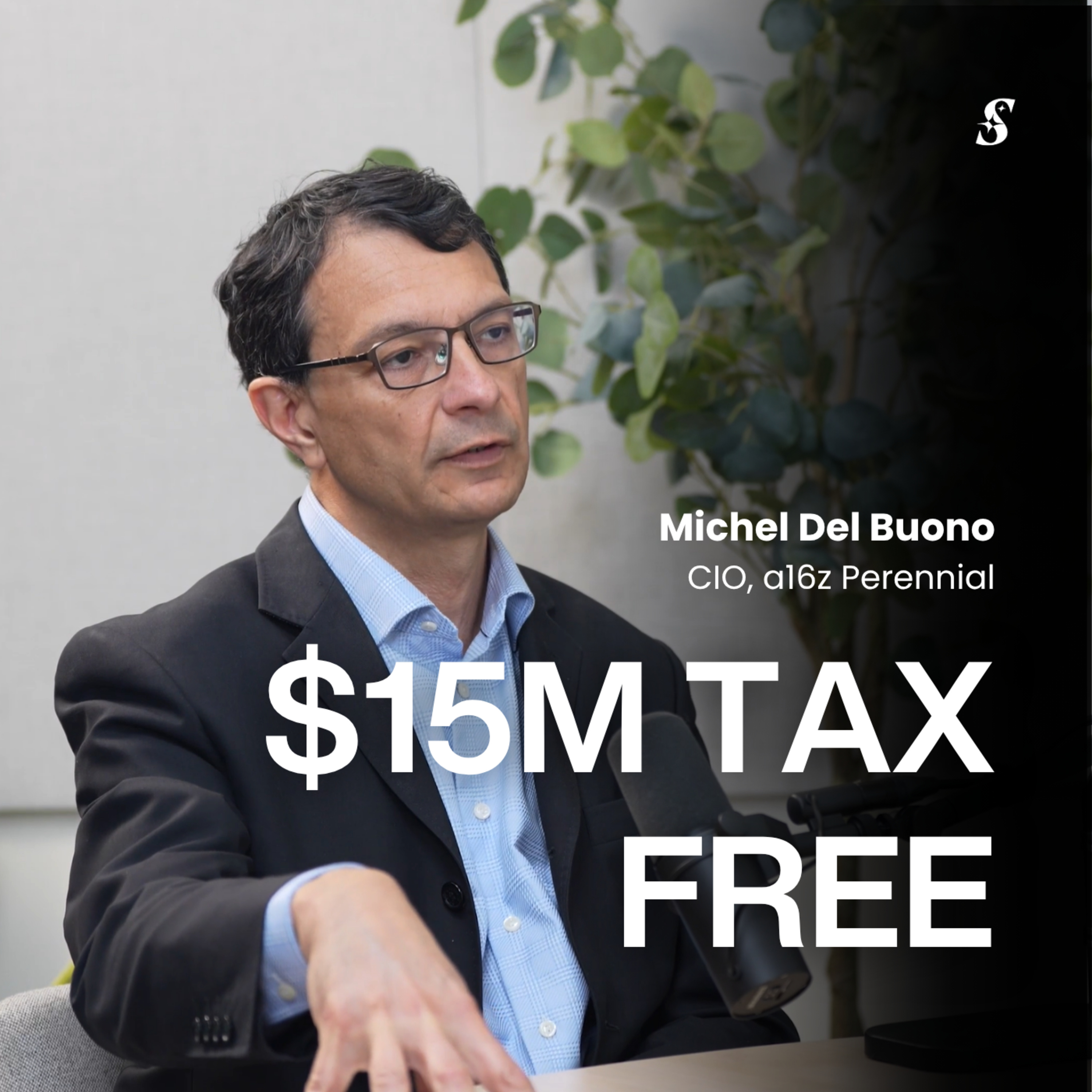
Instead of buying an index ETF, direct indexing involves owning the individual component stocks. This allows an investor to sell specific losing stocks to "harvest" tax losses, which can then be used to offset large capital gains from a business sale or concentrated stock position.

Related Insights
The shift to index funds was triggered not by a belief in market efficiency, but by the surprising discovery that alternative investments are highly tax-inefficient for individuals due to non-deductible fees and ordinary income, creating a tax drag of up to 20%.

Entrepreneurs already take significant, concentrated risk in their own businesses. A public market portfolio should act as a "shock absorber," providing a durable, low-stress foundation. Indexing allows them to focus their energy on their business while their wealth compounds quietly and reliably in the background.

Leveraged long-short strategies can generate 2-10x more tax losses than typical direct indexing. While a long-only portfolio's cost basis depletes over time, the short side of the portfolio provides a theoretically unlimited source of tax losses as the market rises, making it a powerful tax-loss harvesting engine.

Forcing investors to hold concentrated positions due to tax friction increases idiosyncratic risk and raises the economy's overall cost of capital. From a public policy perspective, this creates significant deadweight loss and market inefficiency by preventing capital from being recycled into smaller, growing companies.
Investors with highly appreciated, concentrated stock can use financial products similar to real estate's 1031 exchange. They can pool their stock into a newly created, diversified ETF, deferring the capital gains tax event. This solves the immediate diversification risk, though the original low cost basis carries over.
When contributing assets to a 351 ETF, preserving the individual cost basis of each tax lot is critical. This "granularity" allows investors to strategically sell specific lots to manage tax liability. Averaging the cost basis destroys this information and eliminates a valuable tax asset, a practice followed by at least one large custodian.
Instead of realizing capital gains in the fourth quarter, investors can push the sale into the first quarter of the next year. This provides a full 12-month window to generate offsetting tax losses, though it requires comfort with holding the asset and accepting the associated market risk for an extended period.

Employees with equity in a company going public must proactively calculate their potential tax liability before their lock-up period ends. It is also critical to develop a plan to diversify away from having the majority of their net worth tied up in a single, volatile stock.

While low cost is a key benefit, the core innovation of the ETF is its tax structure. The in-kind creation and redemption process allows ETFs to avoid distributing capital gains to shareholders, unlike most mutual funds. This tax alpha often swamps other sources of return.
Attorneys advocate for trusts while asset managers push tax-loss harvesting, but neither typically understands the other's domain. This creates a critical gap where founders lack a multidisciplinary view to effectively trade off these complex strategies, often leading to suboptimal financial outcomes.