Get your free personalized podcast brief
We scan new podcasts and send you the top 5 insights daily.
While transformers fail, nested learning models (Hope) can learn to translate two previously unseen languages at the same time within a single context. This demonstrates superior memory management, as different frequency layers handle different levels of abstraction, preventing the catastrophic forgetting seen in standard architectures.

Related Insights
The leaked architecture shows a sophisticated memory system with pointers to information, topic-specific data shards, and a self-healing search mechanism. This multi-layered approach prevents the common agent failure mode where performance degrades as more context is added over time.
Contrary to the belief that memorization requires multiple training epochs, large language models demonstrate the capacity to perfectly recall specific information after seeing it only once. This surprising phenomenon highlights how understudied the information theory behind LLMs still is.
![[LIVE] Anthropic Distillation & How Models Cheat (SWE-Bench Dead) | Nathan Lambert & Sebastian Raschka thumbnail](https://substackcdn.com/feed/podcast/1084089/post/189277598/ca7468da5614a246d2906ee8926f6de7.jpg)
Google's Titans architecture for LLMs mimics human memory by applying Claude Shannon's information theory. It scans vast data streams and identifies "surprise"—statistically unexpected or rare information relative to its training data. This novel data is then prioritized for long-term memory, preventing clutter from irrelevant information.

By blending Mamba's linear-time processing for efficiency with a few Transformer layers for high-fidelity retrieval, Nemotron 3 Super makes its 1 million token context window practical, not just theoretical. This 'best-of-both-worlds' design overcomes the typical trade-off between speed and precision in large language models.

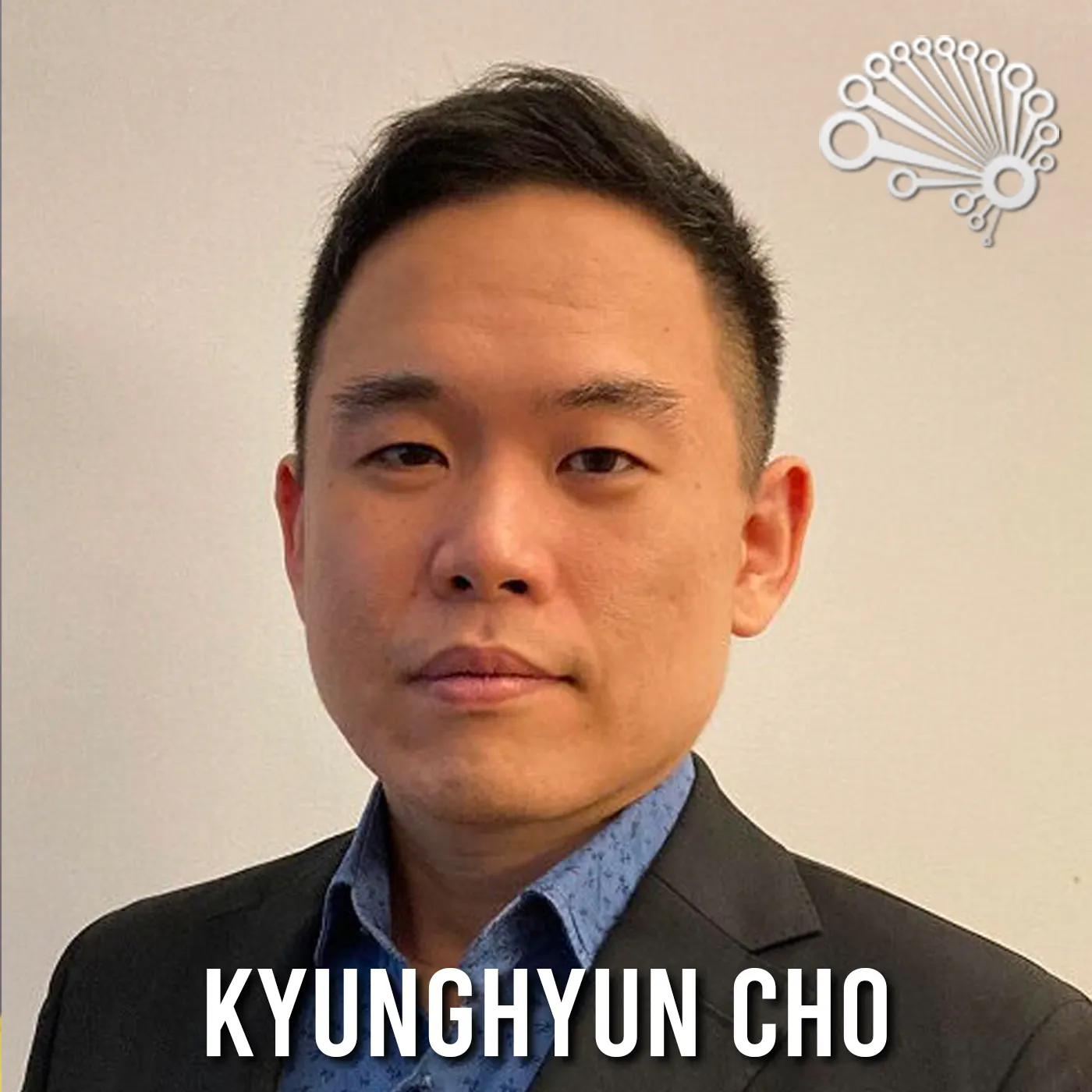
Prof. Kyunghyun Cho recounts that Yoshua Bengio pushed his lab toward machine translation not just for the task itself, but because it exhibited core AI challenges like handling variable-length sequences and vanishing gradients. Solving translation meant solving these deeper, more general problems.
The 2017 introduction of "transformers" revolutionized AI. Instead of being trained on the specific meaning of each word, models began learning the contextual relationships between words. This allowed AI to predict the next word in a sequence without needing a formal dictionary, leading to more generalist capabilities.

The key to continual learning is not just a longer context window, but a new architecture with a spectrum of memory types. "Nested learning" proposes a model with different layers that update at different frequencies—from transient working memory to persistent core knowledge—mimicking how humans learn without catastrophic forgetting.

A major flaw in current AI is that models are frozen after training and don't learn from new interactions. "Nested Learning," a new technique from Google, offers a path for models to continually update, mimicking a key aspect of human intelligence and overcoming this static limitation.

The era of simply scaling up Transformer-based models is ending. AI21's Jamba model, which combines Transformer and Mamba architectures, points to a new innovation wave focused on hybrid designs. This shift aims to improve efficiency and specialized capabilities like long-context processing, moving beyond the 2017 paradigm.

Programming is not a linear, left-to-right task; developers constantly check bidirectional dependencies. Transformers' sequential reasoning is a poor match. Diffusion models, which can refine different parts of code simultaneously, offer a more natural and potentially superior architecture for coding tasks.
