Get your free personalized podcast brief
We scan new podcasts and send you the top 5 insights daily.
Tencent is building an AI agent for its 1.4 billion WeChat users but is proceeding conservatively to avoid disrupting its core platform. This cautious pace, combined with a potential technology gap, puts Tencent at risk of falling behind more aggressive Chinese rivals like Alibaba and ByteDance in the race for AI agent dominance.

Related Insights
China's AI strategy is less focused on achieving AGI and more on the immediate, practical diffusion of AI technology throughout its economy. The government's "AI+" plan emphasizes embedding AI into existing applications like WeChat and high-impact sectors like healthcare, aiming for broad, pragmatic adoption now.

Big tech (Google, Microsoft) has the data and models for a perfect AI agent but lacks the risk tolerance to build one. Conversely, startups are agile but struggle with the data access and compliance hurdles needed to integrate with user ecosystems, creating a market impasse for mainstream adoption.

Waiting for mature AI solutions is risky. Bret Taylor warns that savvy competitors can use the technology to gain structural advantages that compound over time. The urgency is a defensive strategy against being left behind and a response to shifting consumer behaviors driven by tools like ChatGPT.
Generative AI primarily changes an app's user interface, but agentic AI can bypass UIs entirely to complete tasks. This makes transaction-fulfillment apps, which constitute a huge portion of the market, vulnerable to being replaced by agents that act directly on a user's behalf.

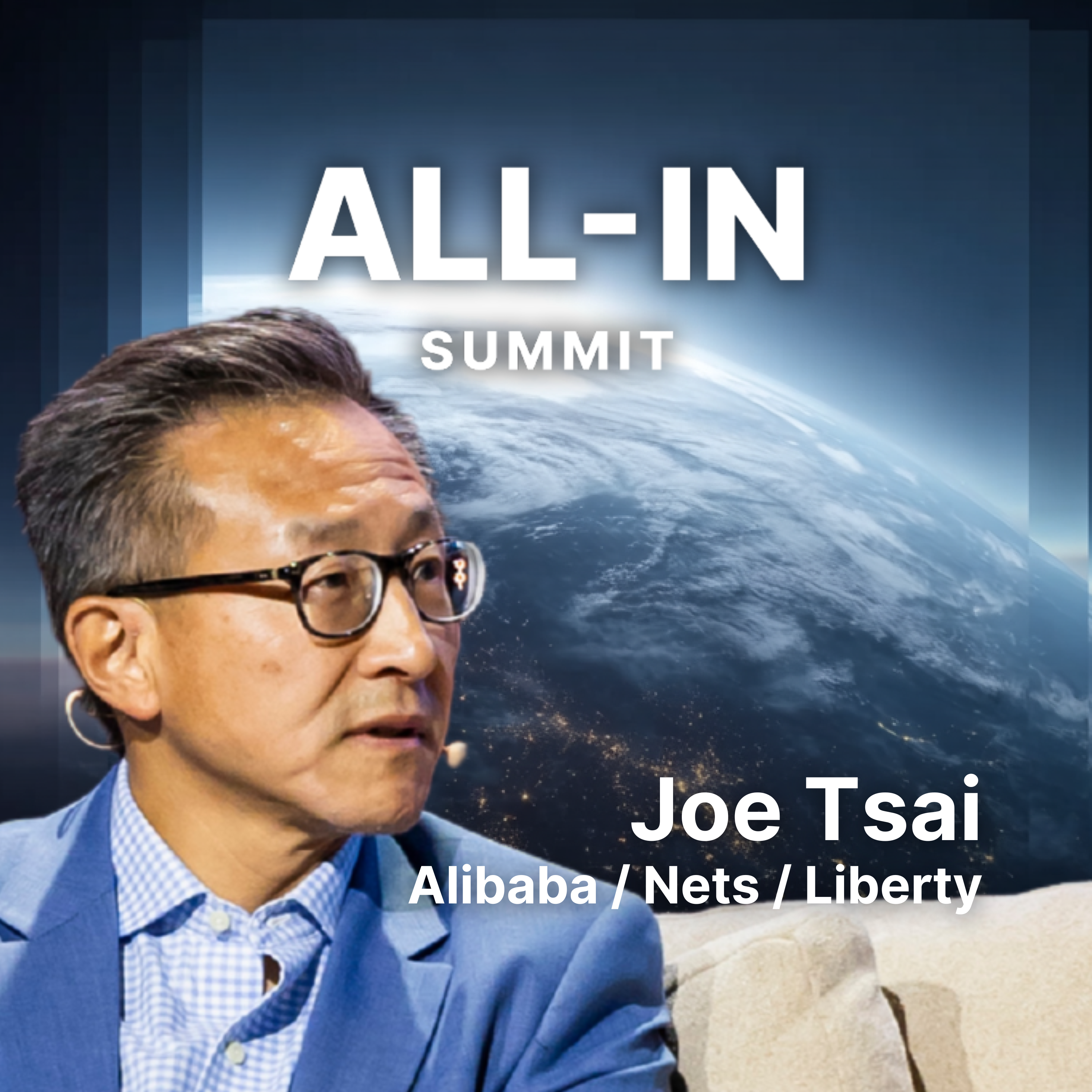
Joe Tsai reframes the US-China 'AI race' as a marathon won by adoption speed, not model size. He notes China’s focus on open source and smaller, specialized models (e.g., for mobile devices) is designed for faster proliferation and practical application. The goal is to diffuse technology throughout the economy quickly, rather than simply building the single most powerful model.
China's developer community isn't just adopting new AI agent technologies; they are doing so with extreme speed and creativity. This "craze" is fueled by a palpable fear of missing out (FOMO), leading to novel applications like AI agent dating apps and a frenzy of startup activity.
Unlike in the U.S., Chinese AI companies face a significant hurdle to profitability due to a cultural expectation that online services should be free. This forces companies like Alibaba and ByteDance into massive, costly giveaways to attract users. If one service starts charging, users will quickly migrate to free alternatives, making sustainable monetization a far greater challenge.

Despite leading in frontier models and hardware, the US is falling behind in the crucial open-source AI space. Practitioners like Sourcegraph's CTO find that Chinese open-weight models are superior for building AI agents, creating a growing dependency for application builders.

While the tech world focuses on the rivalry between OpenAI and Anthropic, the larger strategic threat comes from China. Chinese tech companies are deploying their classic playbook of flooding the market with AI models that are 90% as good for 10% of the price, a strategy the podcast dubs 'Temu AI.'

Unlike Western cloud providers, Chinese tech giants like ByteDance and Alibaba are directly integrating and offering hosted versions of agentic AI like OpenClaw. This reflects a hyper-competitive environment that drives faster, more aggressive adoption of the new personal AI agent trend in China.