Get your free personalized podcast brief
We scan new podcasts and send you the top 5 insights daily.
Fujifilm's transformation into healthcare was not an abrupt leap from consumer photography, but an evolutionary transition grounded in its early chemical capabilities. Just two years after launching photographic film in 1934, the company developed X-ray film. That foundation expanded into diagnostic hardware like CT, MRI, and endoscopy, which later enabled strategic diversification into prevention and biopharmaceutical manufacturing spanning over ten billion dollars in investments.
Related Insights
Roche's new sequencer, Alzheimer's test, and mass spectrometer aren't isolated projects. They form a cohesive strategy to provide tools across the entire patient journey—from risk assessment and screening to definitive diagnosis and recurrence monitoring.
Fujirebio's transition from oncology to neurodegenerative diseases was not built from scratch. It was accelerated by acquiring Innogenetics, a Belgian company that had already spent two decades researching Alzheimer's biomarkers. This "buy vs. build" strategy enabled a rapid and expert entry into a new therapeutic area.

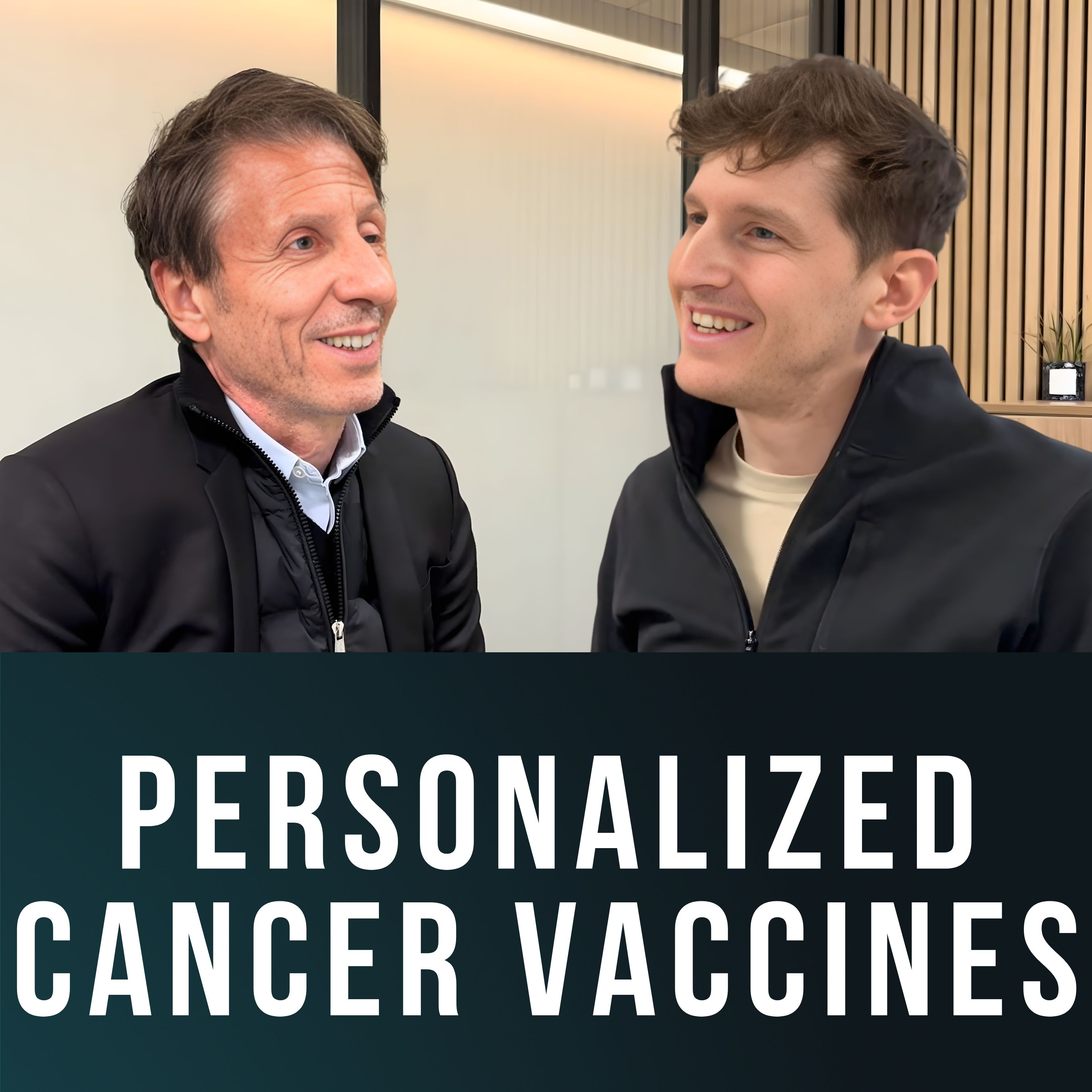
Transgene pivoted from "off-the-shelf" to individualized cancer vaccines not by starting over, but by leveraging its deep, four-decade-long expertise in viral vectors and payload integration. This highlights how legacy know-how can be a critical asset in strategic company shifts.
By partnering with Fujifilm Cellular Dynamics (FCDI), the company that developed its core technology, Kenai avoids a costly and risky tech transfer process. FCDI's existing facility can handle both clinical and future commercial scale-up, a significant operational and financial advantage.

Strategic investors like Sanofi and AbbVie invest in early-stage biotechs not just for financial return, but to monitor disruptive technologies. This gives them a seat at the table to observe innovations that could render their own multi-billion dollar franchises obsolete in the next decade.

Chandra Dev Mehta explains how Hexion uses M&A to pivot from a traditional chemical company into a 'technology focused chemicals as a service' business. This strategic use of acquisitions helps them escape the challenges of the commodity sector by adding a recurring service and technology layer to their offerings.

Roche’s massive global footprint of diagnostic instruments makes them the default partner for pharma companies developing companion diagnostics. This expands the test menu on their platforms, which in turn makes the instruments indispensable for labs, creating a powerful, self-reinforcing competitive advantage.
The pharmaceutical industry risks repeating Kodak's failure of inventing but ignoring a disruptive technology. For Kodak, it was digital photography; for pharma, it's AI. The industry possesses vast amounts of data (the new 'film'), but the real danger lies in failing to embrace the AI-driven intelligence layer that can interpret and act on it.

Exor is strategically entering the healthcare sector not through a large acquisition, but by taking significant minority stakes in companies like Philips and Institut Mérieux. This gives them a "front row seat" to learn the industry, build knowledge, and establish credibility for a long-term pivot.
![Exor: Fiat Crisis to Ferrari Glory - [Business Breakdowns, EP.229] thumbnail](https://megaphone.imgix.net/podcasts/81a71ab6-9e6b-11f0-8aff-7bd806e17203/image/1c411f84b9b949374f0accaa0a5ff38a.jpg?ixlib=rails-4.3.1&max-w=3000&max-h=3000&fit=crop&auto=format,compress)
FCDI launched multiple clinical-stage companies (Century, Opsis, Kenai) by providing a proven iPSC technology backbone. This "platform and spinout" model allows new ventures to focus on clinical development rather than early platform discovery, increasing their chances of success and attracting partners.