Get your free personalized podcast brief
We scan new podcasts and send you the top 5 insights daily.
Anekha Sokhal highlights that when major news outlets like Reuters and Bloomberg report conflicting facts, like ship counts, the discrepancy itself represents actionable signal. Conflicting reports reveal underlying market uncertainty, giving commodity traders unique arbitrage opportunities rather than just being discarded as noisy data.

Related Insights
Anekha Sokhal explains that commodity traders miss indirect risks when relying solely on traditional news feeds. Moshi uses an internal graph recommendation engine to connect secondary and tertiary market impacts, like an energy stock move affecting oil, pushing insights traders would otherwise overlook.
When the Strait of Hormuz was reportedly blocked, a financial analyst from Citrini Research flew there to observe traffic firsthand. He discovered media reports were wrong and tankers were still passing, providing his firm an invaluable, high-agency information advantage over the market.

The financial stakes in prediction markets create a powerful incentive for aggregating accurate information quickly, often outpacing traditional journalism for forecasting political or economic outcomes. This reflects a fundamental shift in how truth and information are discovered and valued.

The price of a commodity like oil reported in the news is the "paper price," used for financial trading and subject to political manipulation. This differs from the "street price"—the actual cost to buy a physical unit—which is a truer reflection of supply and demand.

A hedge fund sent an analyst to the Strait of Hormuz, a high-risk area, simply to count the number of ships passing through. This highlights the extreme lengths financial firms will go to for proprietary, primary-source data. In a world of infinite digital information, physical, on-the-ground observation can provide a unique and profitable data point.

Platforms like Polymarket effectively financialize all information. This creates opportunities for arbitrage based on publicly available, but not widely known, data. For example, a person won a large bet on the length of the Super Bowl national anthem by simply timing the rehearsals outside the stadium in the days prior.

Investors often misinterpret the impact of complex regulatory changes, causing price moves based on noise rather than substance. This creates arbitrage opportunities for firms that can accurately differentiate between consequential rules and those that ultimately don't matter.

In the Strait of Hormuz conflict, shipping traffic and oil prices are dictated not by official US or Iranian announcements, but by the risk perception of ship owners and insurers. This shows how market sentiment can be a more powerful force than political rhetoric in determining economic outcomes.
Analysis shows prediction market accuracy jumps to 95% in the final hours before an event. The financial incentives for participants mean these markets aggregate expert knowledge and signal outcomes before they are widely reported, acting as a truth-finding mechanism.
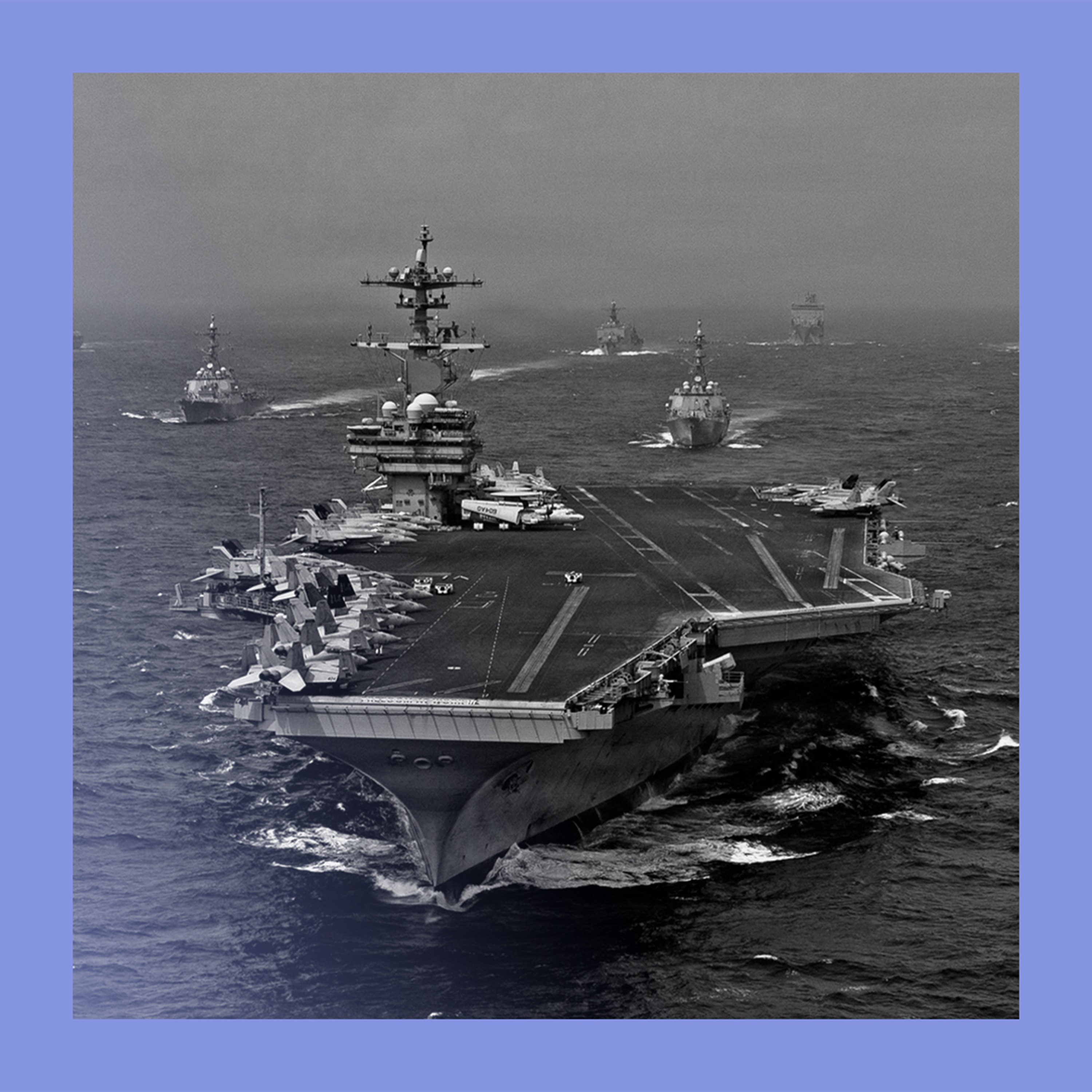
Amidst government propaganda and media noise, the most reliable short-term signal for global markets is the physical flow of ships through the Strait of Hormuz. This tangible metric cuts through the uncertainty of geopolitical rhetoric.