Get your free personalized podcast brief
We scan new podcasts and send you the top 5 insights daily.
Ridd says the whole startup is a never-ending storytelling exercise, and being both designer and founder makes storytelling the source. Kyle adds you have to convince yourself something is true, which is hard for designers trained to hold two truths at once.
Related Insights
Founders often memorize fixed startup pitches and get stuck inside unchanging narratives despite operating in rapidly shifting environments. Frerichs defines narrative intelligence as a continuous three-step cycle: owning where one is today, authoring the next milestone through narrative reframing, and taking immediate action steps despite uncertainty. This real-time evolution prevents leaders from clinging to outdated stories when dealing with new audiences or technological shifts.

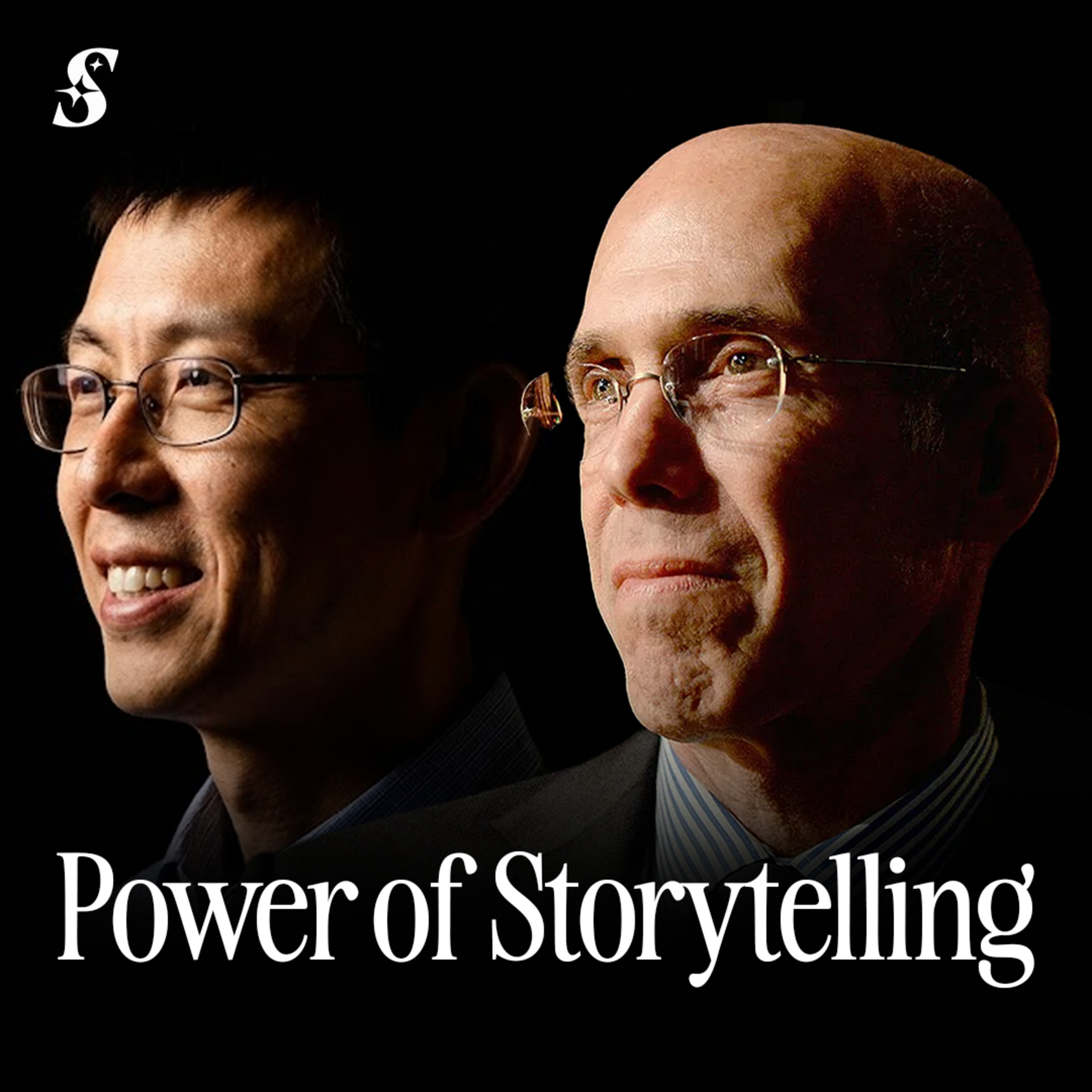
DreamWorks co-founder Jeffrey Katzenberg argues that successful businesses are built on compelling narratives. Storytelling is essential for recruiting top talent, securing investment, and acquiring customers, making it a foundational skill for any leader, not just a creative department's job.
Storytelling is inextricably linked to strategic thinking. If a founder struggles to articulate their company's narrative in a simple, compelling way, it's often because the underlying strategy is weak or inconsistent. The difficulty isn't in the telling, but in the story itself.

Effective creative output, especially in digital products, blends system design (interface, usability) with storytelling (embedded narrative). Organizations must foster structural equality and mutual respect between these two types of thinkers—systematic and narrative—to achieve greatness.

Kyle says founders can design how they treat people, brand messaging, fundraising, and bootstrapping instead of following someone else's playbook. He works backward from a company he is proud of, where people want to work and use the product, not from a trillion-dollar outcome.
Matias says storytelling is not just for fundraising. Founders must sell constantly to A-plus hires, pharma partners, and public-market analysts, and they need to transfer genuine excitement rather than merely polish slides. He calls it a critical, permanent founder skill because every stakeholder has other options.

Founders often neglect crafting their company's story because it doesn't feel like "work." However, this narrative is the direct, written articulation of the company's evolving strategy and fundamental "why." It's not a secret document; it should be shared with everyone—recruits, investors, and customers—to ensure alignment and provide direction.

CEO Derek Adams describes his difficult but necessary transition from an engineer focused on objective problems to a CEO who paints a compelling vision. This involves shifting from communicating technical challenges to inspiring belief in future possibilities, a crucial skill for attracting investors and talent.

At Alphabet's X, the primary role of storytelling isn't marketing but creating an 'architecture of understanding.' A compelling narrative must lay out a plausible, step-by-step path to the goal. This provides a clear hypothesis and a set of milestones that the team can then systematically test and disprove.

Before launching a product, founders must first achieve product-market fit for their narrative. The story is the initial "product" that must resonate with employees, investors, and customers. If the story fails to capture attention and belief, the actual product will struggle to gain traction.
