Get your free personalized podcast brief
We scan new podcasts and send you the top 5 insights daily.
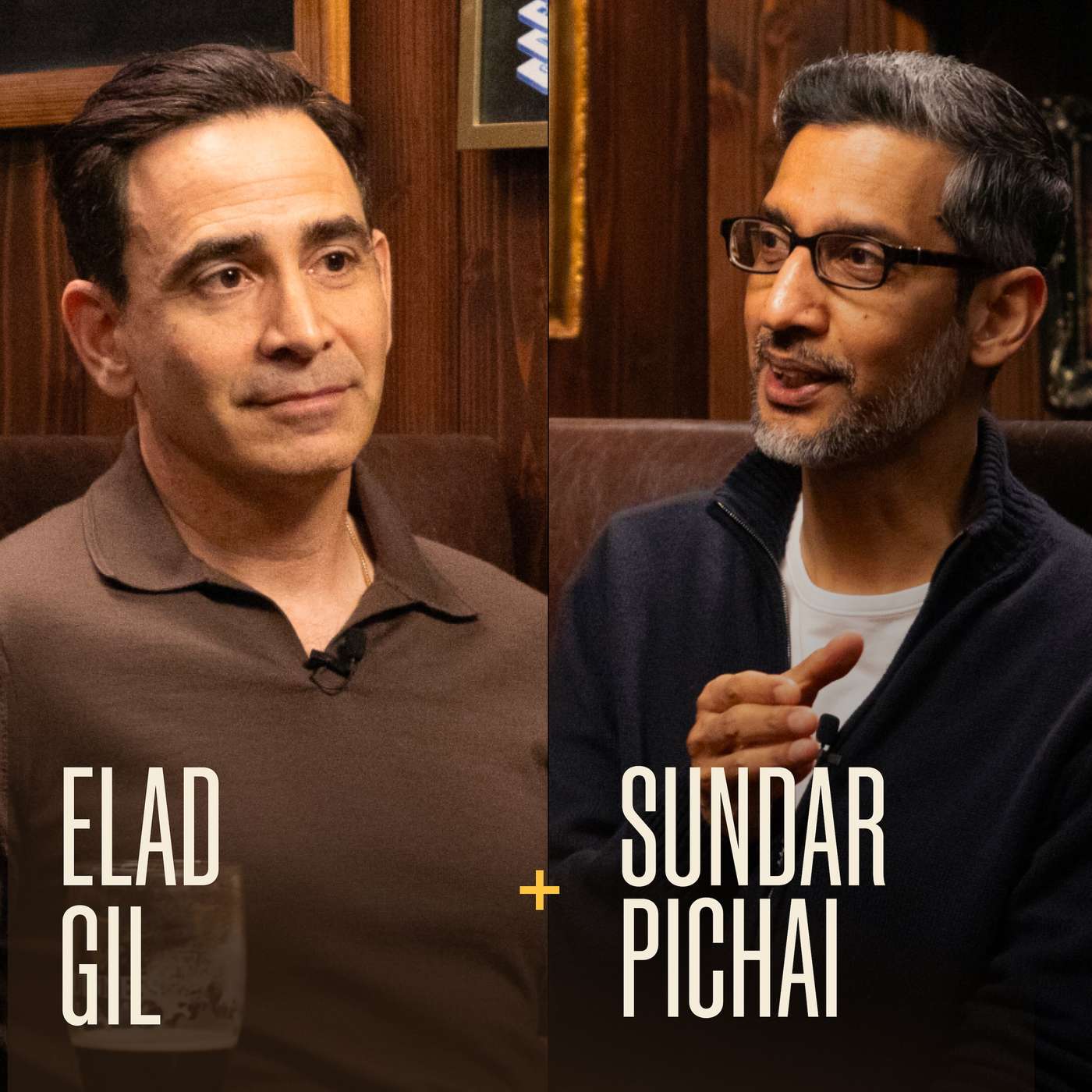
When pressed on a timeline for AGI, Sundar Pichai argues the specific date is a distraction. He believes the critical factor is the accelerating rate of progress, stating society must prepare now for increasingly powerful systems, regardless of when they meet the definition of AGI.

Related Insights
Pichai dismisses the narrative that Google's culture is less focused on AGI than competitors. He argues it's a semantic difference, pointing to their massive capital expenditure increase (from ~$30B to ~$180B) and deep history with top AI researchers as undeniable proof of their commitment to the AI curve.
Silicon Valley insiders, including former Google CEO Eric Schmidt, believe AI capable of improving itself without human instruction is just 2-4 years away. This shift in focus from the abstract concept of superintelligence to a specific research goal signals an imminent acceleration in AI capabilities and associated risks.
There's a stark contrast in AGI timeline predictions. Newcomers and enthusiasts often predict AGI within months or a few years. However, the field's most influential figures, like Ilya Sutskever and Andrej Karpathy, are now signaling that true AGI is likely decades away, suggesting the current paradigm has limitations.

Sundar Pichai asserts that public fear of AI is not a branding issue to be solved with better marketing. He sees the anxiety as a rational response to a technology causing rapid, profound societal change and feels it's the industry's responsibility to address these deep concerns.
Sundar Pichai shares his working definition of Artificial General Intelligence (AGI), developed with DeepMind CEO Demis Hassabis. He describes it as a system that can comprehensively perform a wide range of tasks, including cognitive ones, in a way that is comparable to human ability.
Demis Hassabis, CEO of Google DeepMind, warns that the societal transition to AGI will be immensely disruptive, happening at a scale and speed ten times greater than the Industrial Revolution. This suggests that historical parallels are inadequate for planning and preparation.
Criticizing AI developers for being a few months off on predictions is a distraction. The underlying trend is one of exponential growth. Like criticizing Elon Musk's Mars timeline while ignoring his historic rocket launches, it's a failure to grasp the scale and direction of the technological shift that is already happening.

A consensus is forming among tech leaders that AGI is about a decade away. This specific timeframe may function as a psychological tool: it is optimistic enough to inspire action, but far enough in the future that proponents cannot be easily proven wrong in the short term, making it a safe, non-falsifiable prediction for an uncertain event.

Sundar Pichai forecasts that 2027 will be a "big year" where agentic AI workflows move beyond engineering and profoundly shift core business functions like financial forecasting. He envisions a crossover point where the AI-generated process becomes the default, with humans moving into a verification role.
Driven by rapid advances in AI agents, top tech CEOs are now publicly predicting the arrival of Artificial General Intelligence (AGI) or superintelligence within the next 2-5 years. This is a significant acceleration from previous estimates that often cited a decade or more.
