Get your free personalized podcast brief
We scan new podcasts and send you the top 5 insights daily.
The SmartStop trial represents a paradigm shift by using a chemotherapy-free drug combination as an initial induction treatment. This "iconoclastic" design challenges the decades-old R-CHOP standard, using initial response to guide subsequent chemotherapy intensity. This approach could de-escalate treatment for strong responders, personalizing therapy and potentially reducing long-term toxicity.

Related Insights
The standard practice of a 6-8 cycle chemotherapy induction followed by maintenance wasn't a deliberate trial design. It evolved organically from patient intolerance to cumulative toxicities like neuropathy, a limitation newer, less toxic drugs like TDXD don't necessarily share.

After years of treatment intensification, a new focus in metastatic hormone-sensitive prostate cancer is de-escalation. Trials like ADREAM are evaluating planned treatment interruptions for patients with excellent responses, aiming to provide 'treatment-free intervals' that improve quality of life without sacrificing efficacy.

Traditional non-inferiority trials for reducing treatment are difficult to fund and execute. A proposed paradigm shift is to use superiority trial designs, where the burden of proof is on demonstrating that a higher dose or longer duration of therapy is actually better than a de-escalated approach.
Experts view R-mini-CHOP, the standard for older/unfit DLBCL patients, as a poor benchmark that urgently needs to be replaced. Promising chemo-free or chemo-light regimens, like the R-Polo-Glofitamab combination, are seen as the future, aiming to improve outcomes in this vulnerable population without harsh toxicities.

A 15-year follow-up of a SWOG clinical trial shows a significant portion of follicular lymphoma patients treated with R-CHOP remain disease-free. This challenges the long-held belief that the disease is incurable, shifting the paradigm towards a curative intent.

The next frontier in CSCC isn't just about new drugs, but about optimizing existing ones. A key research area is determining the minimum number of immunotherapy doses required for an optimal response—potentially just one or two—to limit toxicity, reduce treatment burden, and personalize care for high-risk patients.
The innovative Triple Switch trial treats all patients with a doublet therapy and then uses their PSA response at six months to guide further treatment. Patients whose PSA fails to reach a nadir are then randomized to receive docetaxel chemotherapy, testing a strategy of early intensification based on a real-time biological response rather than upfront risk stratification.
The ALENA trial, studying adjuvant alectinib for ALK-positive lung cancer, uniquely omitted platinum-based chemotherapy from its investigational arm. Its overwhelming success challenges the long-standing practice of using chemotherapy alongside targeted agents in the adjuvant setting and raises the question of whether it's necessary at all for this population.

To mitigate long-term toxicity from TDXD, oncologists are proposing an "induction/maintenance" approach. Patients receive TDXD for an initial period to achieve maximal response, then switch to a less toxic maintenance regimen for a "chemotherapy holiday," improving quality of life.
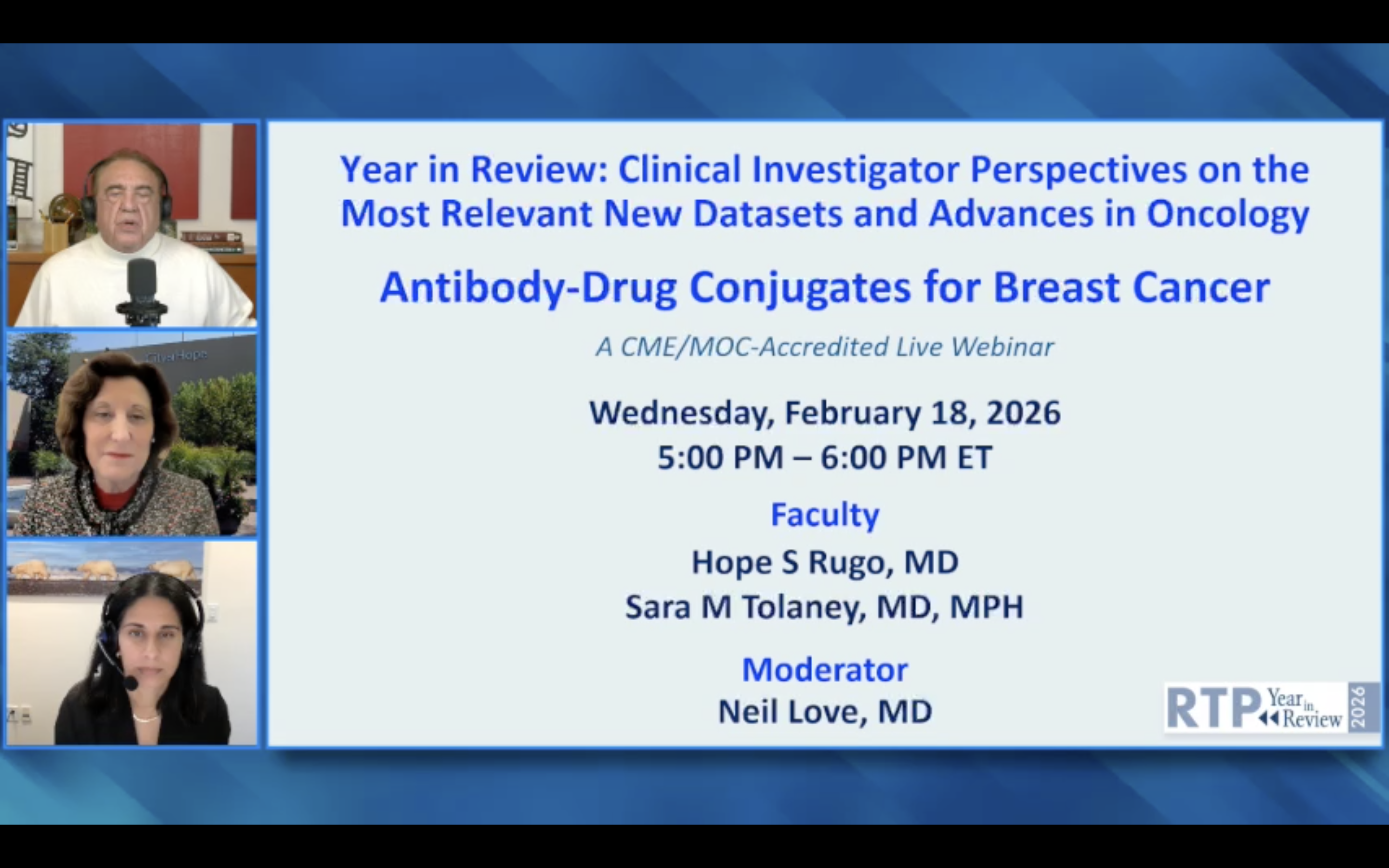
For MSI-high gastric cancer, a sophisticated first-line approach is to start with combination chemo-immunotherapy (e.g., FOLFOX + nivolumab) but with a pre-planned, low threshold to discontinue chemotherapy after a few cycles. This strategy aims to achieve a rapid response while minimizing chemotherapy toxicity.
