Get your free personalized podcast brief
We scan new podcasts and send you the top 5 insights daily.
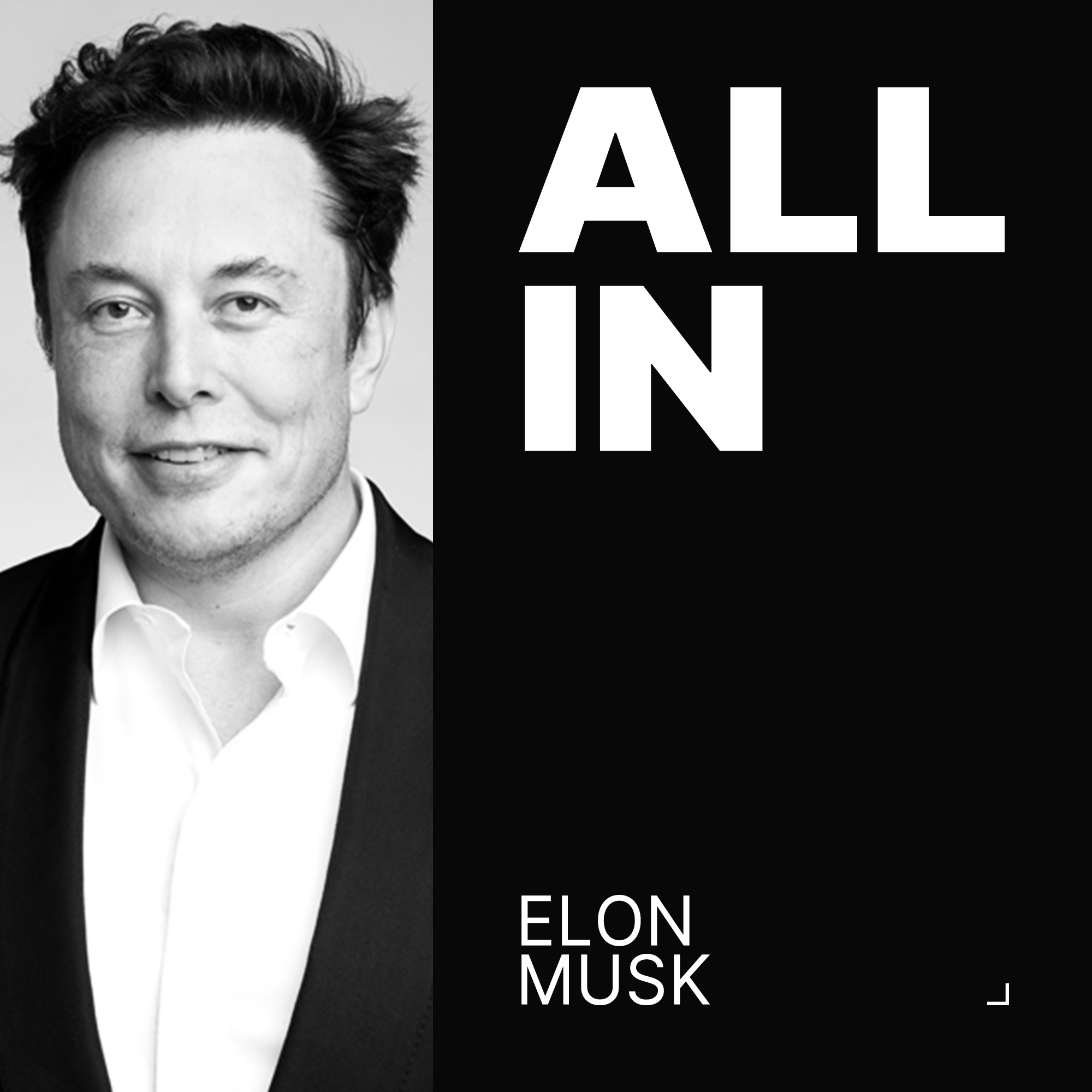
Musk argues that pursuing terrestrial fusion is trivial compared to harnessing energy from the "giant free one in the sky"—the sun. Since the sun is a massive, maintenance-free fusion reactor that provides abundant energy, focusing on solar is the only logical path at scale.
Related Insights
From a first-principles perspective, space is the ideal location for data centers. It offers free, constant solar power (6x more irradiance) and free cooling via radiators facing deep space. This eliminates the two biggest terrestrial constraints and costs, making it a profound long-term shift for AI infrastructure.
![Gavin Baker - Nvidia v. Google, Scaling Laws, and the Economics of AI - [Invest Like the Best, EP.451] thumbnail](https://megaphone.imgix.net/podcasts/d97fee14-d4d7-11f0-8951-8324b640c1c1/image/d3a8b5ecbf3957de5b91f278a191c9ff.jpg?ixlib=rails-4.3.1&max-w=3000&max-h=3000&fit=crop&auto=format,compress)
While solar panels are inexpensive, the total system cost to achieve 100% reliable, 24/7 coverage is massive. These "hidden costs"—enormous battery storage, transmission build-outs, and grid complexity—make the final price of a full solution comparable to nuclear. This is why hyperscalers are actively pursuing nuclear for their data centers.
Base's core thesis is that the shift to solar and battery storage is inevitable not because of ESG trends, but because it represents the lowest marginal cost to add power to the grid. This economic argument is more fundamental and compelling than climate narratives alone.
The two largest physical costs for AI data centers—power and cooling—are essentially free and unlimited in space. A satellite can receive constant, intense solar power without needing batteries and use the near-absolute zero of space for cost-free cooling. This fundamentally changes the economic and physical limits of large-scale computation.

Musk refutes resource scarcity arguments against a sustainable future. He notes that Earth's most common elements are iron and oxygen, with abundant silicon (sand). This means the core materials for iron-phosphate batteries and solar panels are not a limiting factor for global-scale deployment.
Fusion reactors on Earth require massive, expensive vacuum chambers. Zephyr Fusion's core insight is to build its reactor in space, leveraging the perfect vacuum that already exists for free. This first-principles approach sidesteps a primary engineering and cost hurdle, potentially making fusion a more commercially viable energy source.

Despite the narrative of a transition to clean energy, renewables like wind and solar are supplementing, not replacing, traditional sources. Hydrocarbons' share of global energy has barely decreased, challenging the feasibility of net-zero goals and highlighting the sheer scale of global energy demand.

Rejecting both alarmism and denial, Musk estimates the serious consequences of climate change are on a 50-year timeline, not an immediate one. This perspective justifies a steady, deliberate transition toward sustainable energy rather than panicked, drastic measures.
The astronomical power and cooling needs of AI are pushing major players like SpaceX, Amazon, and Google toward space-based data centers. These leverage constant, intense solar power and near-absolute zero temperatures for cooling, solving the biggest physical limitations of scaling AI on Earth.
The global energy transition is also a geopolitical race. China is strategically positioning itself to dominate 21st-century technologies like solar and EVs. In contrast, the U.S. is hampered by a legacy mindset that equates economic growth with fossil fuels, risking its future competitiveness.
