Get your free personalized podcast brief
We scan new podcasts and send you the top 5 insights daily.
In a 2022 STAT video, Helen Branswell said misinformation and political muckraking made the pandemic worse. She described a balancing act: deciding when not to amplify something untrue, because even trying to poke holes in false information still disseminates it. She said it was hard to know when to ignore a claim and move on.
Related Insights
The modern information landscape is so saturated with noise, deepfakes, and propaganda that discerning the truth requires an enormous investment of time and energy. This high "cost" leads not to believing falsehoods, but to a general disbelief in everything and an inability to form trusted opinions.

While nudging people to focus on accuracy can reduce misinformation sharing for many, new data suggests this approach is ineffective for those with extreme political identities. For these individuals, the need to protect their group identity is stronger than the motivation to be accurate.

The ability to label a deepfake as 'fake' doesn't solve the problem. The greater danger is 'frequency bias,' where repeated exposure to a false message forms a strong mental association, making the idea stick even when it's consciously rejected as untrue.

Top journalists like Dana Bash demonstrate a powerful skill: forcefully challenging falsehoods in real-time without disrespect. This approach maintains credibility and effectively exposes a subject's weaknesses, a crucial talent in an era of rampant misinformation.

The persistence of election fraud claims isn't accidental; it follows a classic disinformation strategy. By relentlessly repeating a lie, it transitions from outrageous to normalized and eventually becomes self-evident truth for a large segment of the population, undermining democratic foundations.
Higgins criticizes the common approach of trying to solve misinformation by simply removing it. This "supply-side" fix is ineffective because the root cause is a "demand-side" issue: a public that distrusts institutions and actively seeks alternative narratives in online spaces.
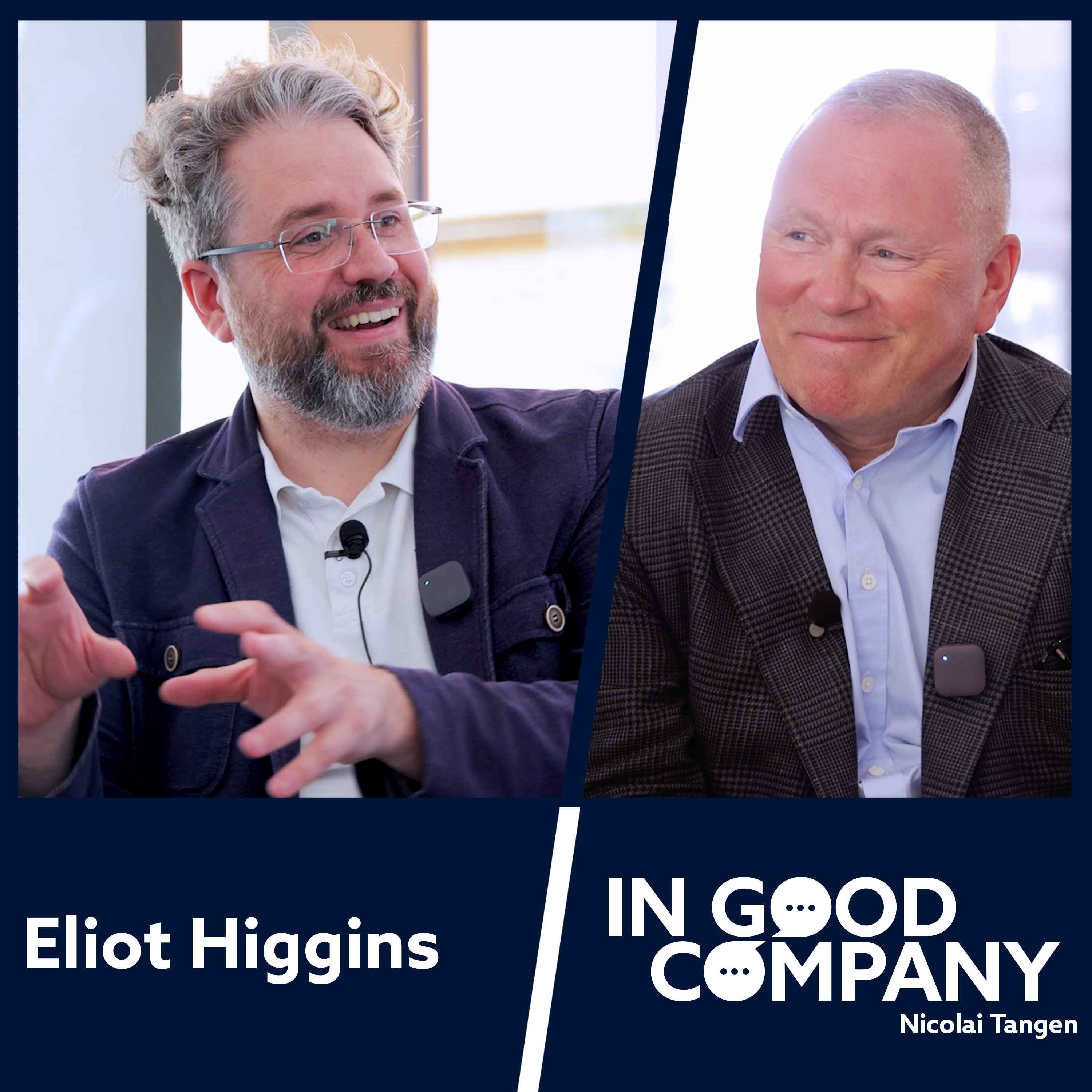
The overwhelming volume of fake online content creates a 'liar's dividend' where casting doubt on real events is easy. This has expanded beyond politics to become a core cultural mechanism, allowing people to reject any reality that conflicts with their worldview by simply labeling it as fake.

The problem with AI has evolved beyond 'garbage in, garbage out.' Today's systems can rapidly ingest misinformation from public sources and present it as fact, creating a feedback loop. This means bad information is not only used for poor decisions but is actively amplified and distributed faster than ever before.

Scott Galloway argues influential platforms like Joe Rogan's podcast and Spotify have a duty to scale fact-checking to match their reach. He posits their failure to do so during the COVID pandemic recklessly endangered public health by creating false equivalencies between experts and misinformation spreaders, leading to tragic, real-world consequences.

Journalists find that simply debunking false scientific claims often backfires, reinforcing skepticism. A more effective strategy is to investigate and expose who financially or politically benefits from spreading the misinformation. This shifts the debate from the facts themselves to the credibility and agenda of the source.