Get your free personalized podcast brief
We scan new podcasts and send you the top 5 insights daily.
The existence of the Direct-to-Consumer (D2C) e-commerce sector is a direct result of Meta's advertising platform. This demonstrates that advertising can be an input for economic growth, creating entirely new markets and businesses, rather than simply being a fixed percentage of GDP or a cost center.

Related Insights
Meta is projected to surpass Google in ad revenue because it fundamentally understands entertainment, while Google's DNA is utilitarian and unsocial. Google failed at social media because its culture lacks an intuitive feel for it. In contrast, Mark Zuckerberg excels at identifying, acquiring (Instagram), and copying (Reels) engaging products that capture attention and, consequently, ad dollars.

Instead of selling AI directly to consumers, Meta provides AI tools to its 15 million business advertisers. This makes ads smarter and more effective, increasing ad revenue. This profitable ad machine then funds Meta's massive, long-term AI ambitions, creating a powerful flywheel.

While the market seeks revenue from novel AI products, the first significant financial impact has come from using AI to enhance existing digital advertising engines. This has driven unexpected growth for companies like Meta and Google, proving AI's immediate value beyond generative applications.

Unlike competitors, Meta has a built-in verification machine for its generative AI. It can generate millions of ad variations and measure their real-world effectiveness (clicks and purchases) instantly, creating a powerful feedback loop to improve its models based on direct economic outcomes.
![Ben Thompson on Big Tech, China, and the AI Boom Running Out of Money - [Invest Like the Best, EP.487] thumbnail](https://megaphone.imgix.net/podcasts/b0356202-9aa0-11f1-b3c3-6bc8a0cf3d6f/image/772d31a372a483035b6fc678729cae0b.jpg?ixlib=rails-4.3.1&max-w=3000&max-h=3000&fit=crop&auto=format,compress)
For new brands, directly allocating advertising budgets to platforms like Meta can yield a better return than hiring traditional ad agencies. These platforms' powerful algorithms and reach can develop more effective campaigns than human-led creative teams, democratizing access to high-quality advertising.

Unlike enterprise tools that require slow adoption cycles, Meta can instantly deploy AI model improvements into its ad-serving system. This creates an immediate, measurable revenue lift, giving it a significant advantage in monetizing AI breakthroughs without a complex go-to-market strategy.

Countering criticism of ad-driven "slop," the podcast highlights that profits from Google and Meta's ad businesses fund their massive R&D in AI and AR/VR. This reframes advertising as the primary societal mechanism for bankrolling capital-intensive, frontier science like the pursuit of AGI.

Meta's core moat is its ability to solve the classic advertiser's dilemma: knowing which half of their ad spend works. By providing granular data on impressions, conversions, and ROI, it created what Pat Dorsey called the perfect advertising platform.
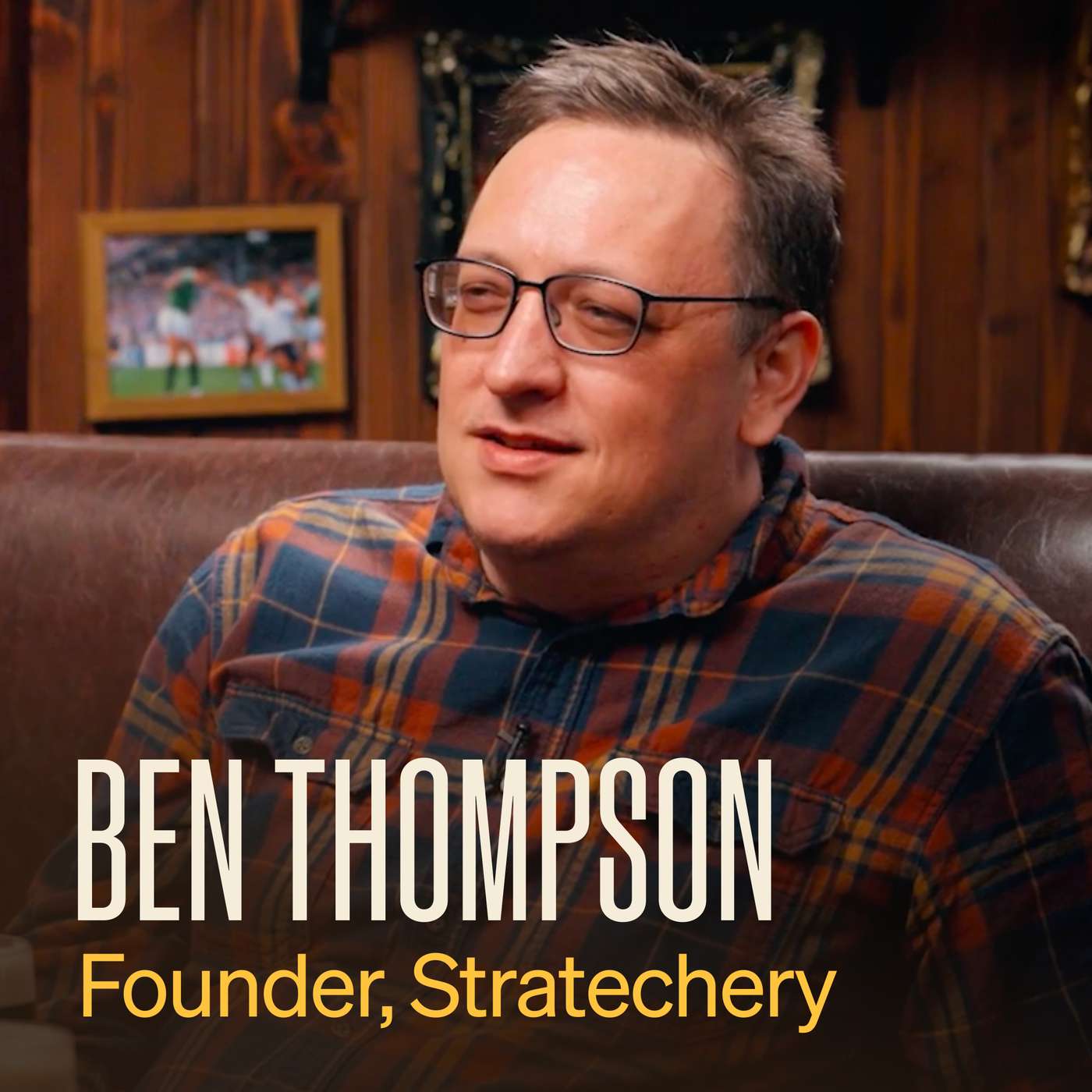
Ben Thompson reframes advertising not as a necessary evil but as a fundamental societal good. It enables small businesses to reach global markets and provides consumers with valuable product discovery and free access to high-quality services, creating immense consumer surplus.
Unlike enterprise software companies facing slow adoption cycles, Meta can immediately deploy AI advancements into its advertising platform. A better ad-placing model can be A/B tested and rolled out globally instantly, turning AI breakthroughs into revenue without the typical friction of "diffusion" into an organization.
