Get your free personalized podcast brief
We scan new podcasts and send you the top 5 insights daily.
Instead of selling AI directly to consumers, Meta provides AI tools to its 15 million business advertisers. This makes ads smarter and more effective, increasing ad revenue. This profitable ad machine then funds Meta's massive, long-term AI ambitions, creating a powerful flywheel.

Related Insights
While the market seeks revenue from novel AI products, the first significant financial impact has come from using AI to enhance existing digital advertising engines. This has driven unexpected growth for companies like Meta and Google, proving AI's immediate value beyond generative applications.

Meta's acquisition of AI agent company Manus may be focused on serving advertisers, not end-users. The goal is to let businesses state a high-level objective, like acquiring a customer, and have AI agents automate the entire funnel from ad creation to final sale, streamlining operations for Meta's true customers.

Unlike enterprise tools that require slow adoption cycles, Meta can instantly deploy AI model improvements into its ad-serving system. This creates an immediate, measurable revenue lift, giving it a significant advantage in monetizing AI breakthroughs without a complex go-to-market strategy.

Critics argue AI revenue must grow exponentially to justify investment. However, for incumbents like Meta, this isn't net-new revenue. It's a massive internal budget shift from established products to new AI features, redirecting existing user engagement and spend rather than creating a market from scratch.

While the market awaits new AI-native products from Meta, its real AI success is in its core business. A 9% CPM increase in a weak economy indicates its ad-serving algorithm's effectiveness improved by double digits in a single quarter, a massive financial win.
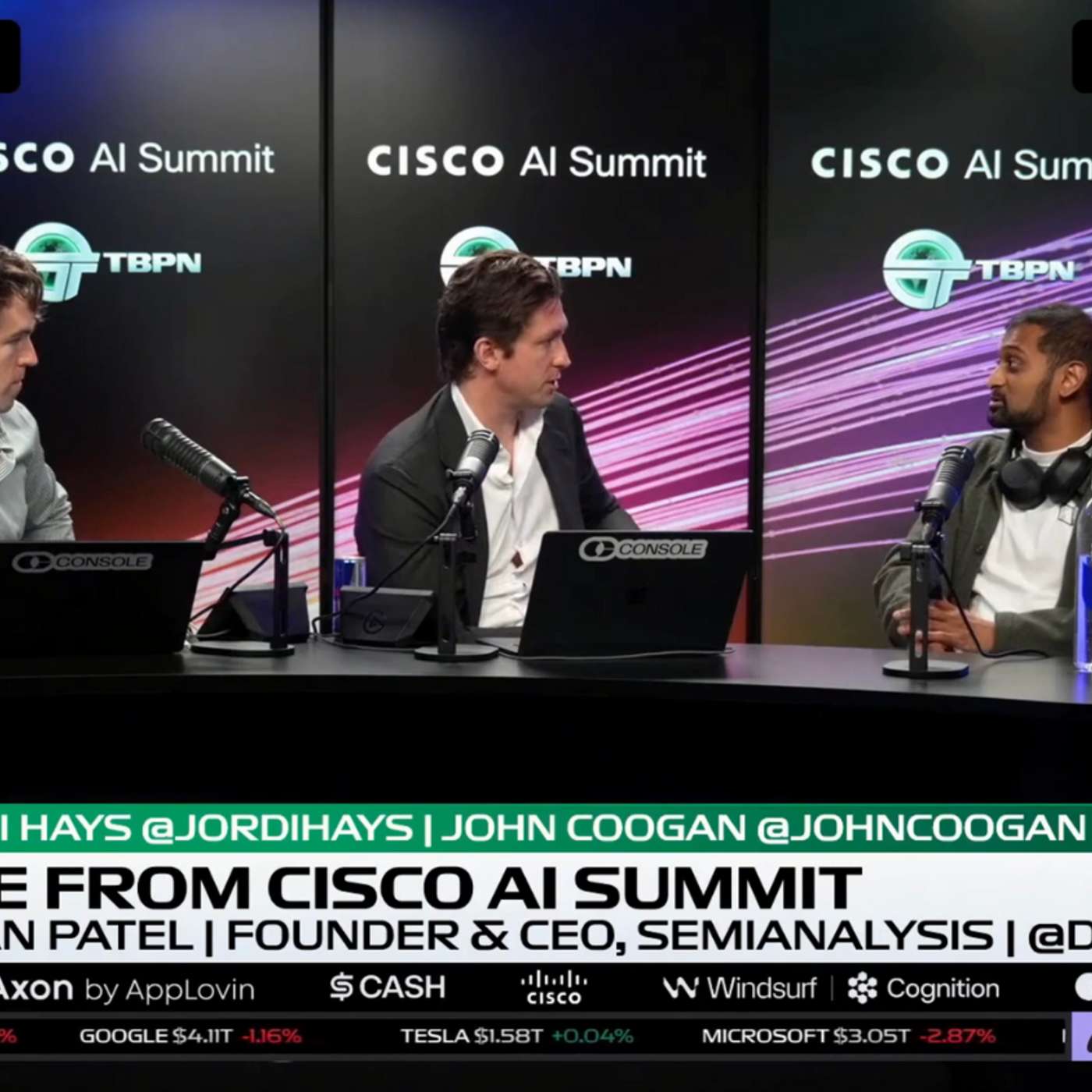
Countering criticism of ad-driven "slop," the podcast highlights that profits from Google and Meta's ad businesses fund their massive R&D in AI and AR/VR. This reframes advertising as the primary societal mechanism for bankrolling capital-intensive, frontier science like the pursuit of AGI.

Seemingly small, quarterly AI improvements to Meta's ad platform (e.g., a 5% conversion bump) have a compounding effect. Performance marketers reinvest these gains back into the platform, creating a flywheel that reaccelerates revenue growth, explaining the stock's recent surge despite a mature business.

UFC President and Meta board member Dana White revealed the company is paying top AI talent salaries averaging $65 million. He justifies this by comparing AI's strategic value for entrepreneurs to that of Google Maps for navigation, signaling Meta's deep investment in AI as a core, business-building utility for its users.

The power of Meta's AI-driven ad improvements lies in their compounding effect. Small quarterly boosts in ROAS (return on ad spend) are not one-off wins; performance marketers immediately reinvest these returns, creating an accelerating growth flywheel that fuels Meta's re-accelerated revenue growth.

Unlike enterprise software companies facing slow adoption cycles, Meta can immediately deploy AI advancements into its advertising platform. A better ad-placing model can be A/B tested and rolled out globally instantly, turning AI breakthroughs into revenue without the typical friction of "diffusion" into an organization.
