Get your free personalized podcast brief
We scan new podcasts and send you the top 5 insights daily.
The Adobe CMO's pivotal career moment was joining an unproven mobile payments team at Visa. While colleagues whispered it was a poor choice, taking a calculated risk on an emerging technology was the best decision she ever made. It launched her career into the tech sector, proving that outlier bets can have the biggest payoffs.

Related Insights
Aspiring leaders can build significant innovation capital by leading unglamorous but potentially high-impact projects. Microsoft's Satya Nadella championed the unpopular server business, which became the cloud, illustrating how betting on a contrarian vision can propel a career.
Adobe's CMO advocates for a "jungle gym" career path, not a ladder. She personally accepted roles with lower titles to acquire necessary experience in emerging areas. This strategy of prioritizing skill acquisition over linear progression is crucial for long-term executive growth in a rapidly changing field like marketing.
The most potent advice for career growth is to take more risks. This includes moving across the country for an opportunity or even taking a job that appears to be a step down in title or pay if it aligns better with your long-term goals. The potential upside of such calculated risks often outweighs the downside.

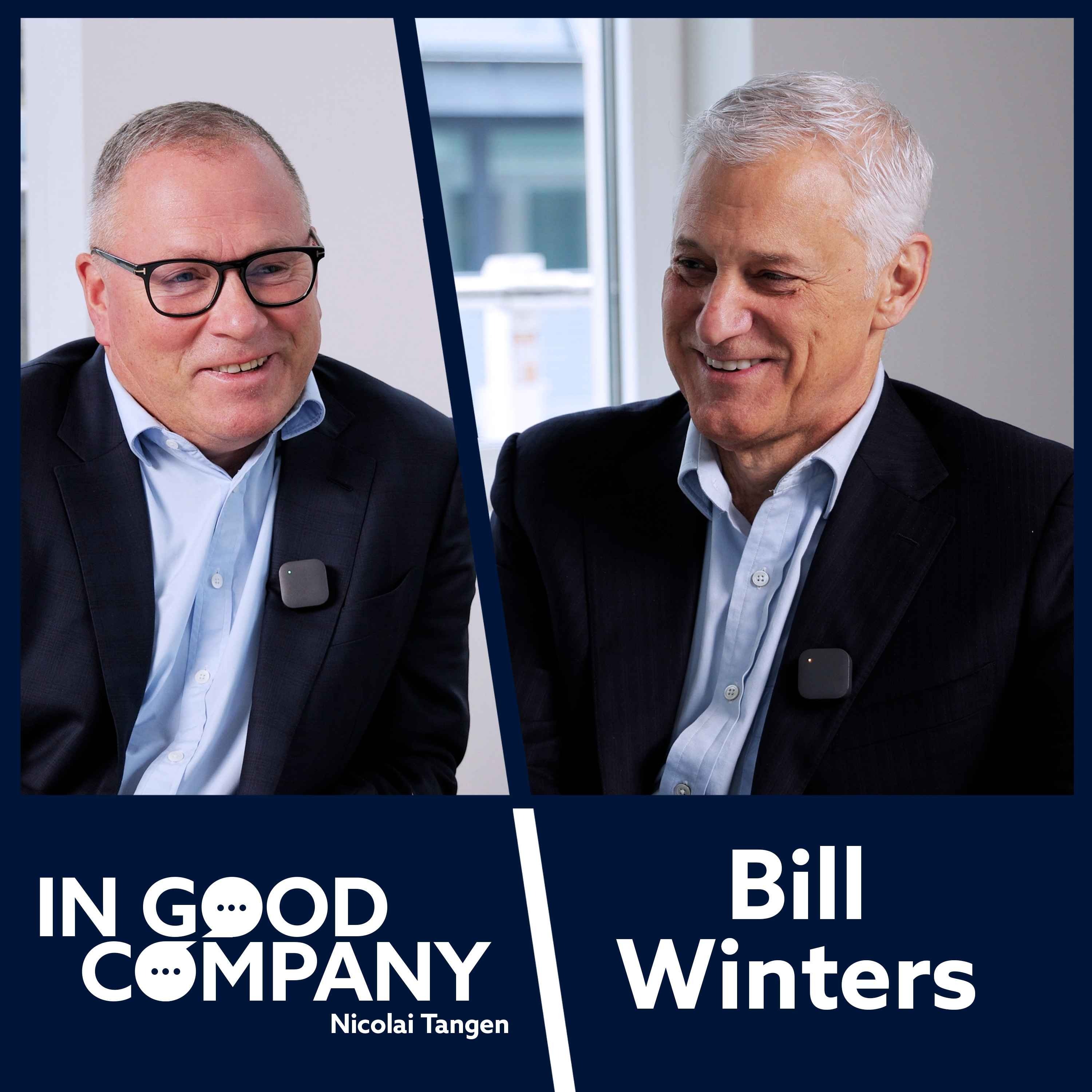
Bill Winters credits his success to taking calculated risks at key career junctures, like leaving a comfortable job for a struggling bank. He advises young professionals to choose the 'reckless route' when faced with a fork in the road, as recovering from failure is easiest early in one's career.
The "disrupt or be disrupted" mantra extends to personal careers. Lara Balazs pivoted from a pre-law track by taking unconventional steps—volunteering for free to gain marketing experience while working a night shift to pay rent. This grit and willingness to reinvent her own path was foundational to her success.

David Rubenstein's successful second act as a TV interviewer wasn't a planned career move calculated with consultants. It emerged organically from a simple need to make his firm's investor events less boring. This highlights how the most transformative professional opportunities often arise from solving unexpected problems, not from a formal strategic plan.

Pivotal career moments often require reaching a point of conviction where you're willing to risk your job to advocate for the right decision. This "screw it" mentality is not about recklessness but about having such deep domain knowledge that you feel compelled to make the difficult call.

A creative director describes getting fired as "brilliant" because the failed role introduced him to direct marketing just as it was becoming a dominant force. This mistake proved more valuable than succeeding in a traditional, less relevant field, leading to more learning and better connections.

Amoo-Gottfried considers leaving his prime role on the Nike account to launch an agency in Ghana his riskiest but most formative career move. The experience of building from scratch in a challenging environment fundamentally changed his capabilities as a leader and operator.
Despite becoming SpaceX's seventh employee, Gwen Shotwell hesitated for weeks, seeing the unproven startup as a significant risk. Her realization that "the trying part was the most important" highlights the crucial mindset shift required to bet on early-stage ventures, even for future top executives.