Get your free personalized podcast brief
We scan new podcasts and send you the top 5 insights daily.
To build a data advantage against giants like Meta, AppLovin bought gaming studios not to enter the gaming business, but to create a closed loop for gathering proprietary data. This data was used to train its recommendation engine, and the studios were later divested.

Related Insights
AppLovin represents advertisers on its demand-side platform while also operating the publisher marketplace where ads are sold. This vertical integration, where the company competes within the system it runs, creates potential conflicts of interest and regulatory risks similar to those that led to antitrust action against Google.
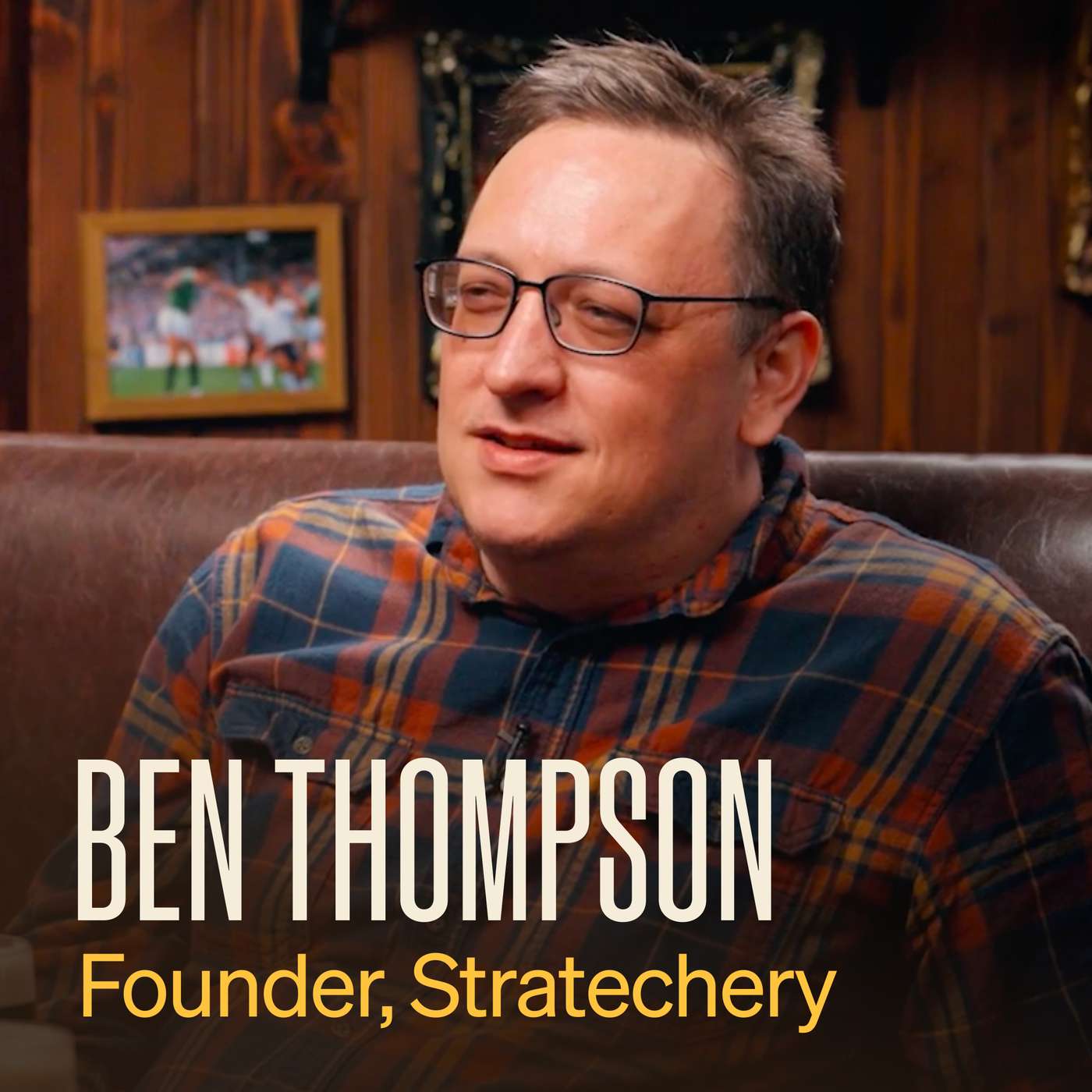
Ben Thompson argues AI apps should adopt a Meta-style advertising model based on deep user understanding, rather than Google-style contextual ads tied to prompts. This avoids conflicts of interest and surfaces products users didn't know they needed, creating more value for both users and advertisers.
OpenAI's potential $100B advertising business has a unique moat. It can combine search-like query intent (what users want, like Google) with deep conversational context (who users are, like Meta). This fusion of data types creates a powerful targeting capability that neither search nor social platforms possess alone.

The complex ad tech landscape can be boiled down to three viable business models. A company must either 1) own a first-party surface with coveted users (Google), 2) become the best at delivering a specific, measurable result (Applovin), or 3) be the exclusive demand aggregator for large advertisers (The Trade Desk).
![Gokul Rajaram - Lessons from Investing in 700 Companies - [Invest Like the Best, EP.456] thumbnail](https://megaphone.imgix.net/podcasts/a35cb364-fc94-11f0-a24d-836fa963ece3/image/f64963c59af651cbb2d022f3a0dd7199.jpg?ixlib=rails-4.3.1&max-w=3000&max-h=3000&fit=crop&auto=format,compress)
With public data exhausted, AI companies are seeking proprietary datasets. After being rejected by established firms wary of sharing their 'crown jewels,' these labs are now acquiring the codebases of failed startups for tens of thousands of dollars as a novel source of high-quality training data.
A publisher's rich first-party audience data is a unique asset best leveraged for high-value, direct-sold ad campaigns. Integrating this data into programmatic platforms dilutes its value and competitive advantage by exposing it to a broader ecosystem.

Tech platforms consistently outperform publishers in advertising because their proprietary data is fundamentally better. They possess an extraordinary depth of behavioral information, such as 'four finger scrolling speed,' which allows for predictive targeting that the fragmented open web cannot replicate. This data advantage is the core driver of their market dominance.
The company's initial app to find friends' games "stunk," but its core recommendation engine had a very high response rate. This technology was salvaged and became the foundation for the entire AppLovin advertising business, proving value can be found in failed projects.
In the current M&A landscape, data-centric startups are more valuable than application-layer companies. Acquirers, particularly large tech firms, need proprietary data sets to train, run, and customize their AI models. This demand makes companies with unique data assets highly attractive takeover targets, with some seeing a tenfold increase in inquiries.
By acquiring Catalina's four decades of deterministic purchase intelligence, Infilion can now link digital ad exposure to actual in-store sales in real-time, moving beyond inference to truth-based optimization for CPG brands.