Get your free personalized podcast brief
We scan new podcasts and send you the top 5 insights daily.
Elon Musk's massive investment in TerraFab reflects a belief that the scarcity of AI chips and compute is not a temporary bottleneck but a decade-long strategic crisis. This justifies an unprecedented level of vertical integration to avoid being dependent on a limited number of suppliers like TSMC for critical components.

Related Insights
Beyond acquiring massive compute, Elon Musk's xAI is building its own natural gas power plant. This represents a deep vertical integration strategy to control the power supply—the ultimate bottleneck for AI infrastructure—gaining a significant operational advantage over competitors reliant on public grids.

Intel has struggled to secure demand-side commitments for its US-based fabs. Elon Musk's partnership for his TeraFab project, encompassing SpaceX, xAI, and Tesla, provides a massive, consistent customer. This anchor demand is the critical missing piece for Intel to de-risk its expansion and compete with TSMC.

AI software models advance every few months, creating exponential demand. However, the hardware infrastructure like chip fabs operates on two-to-four-year development cycles. This timeline disconnect between software's rapid pace and hardware's slow build-out creates a persistent supply crunch that money alone cannot instantly solve.
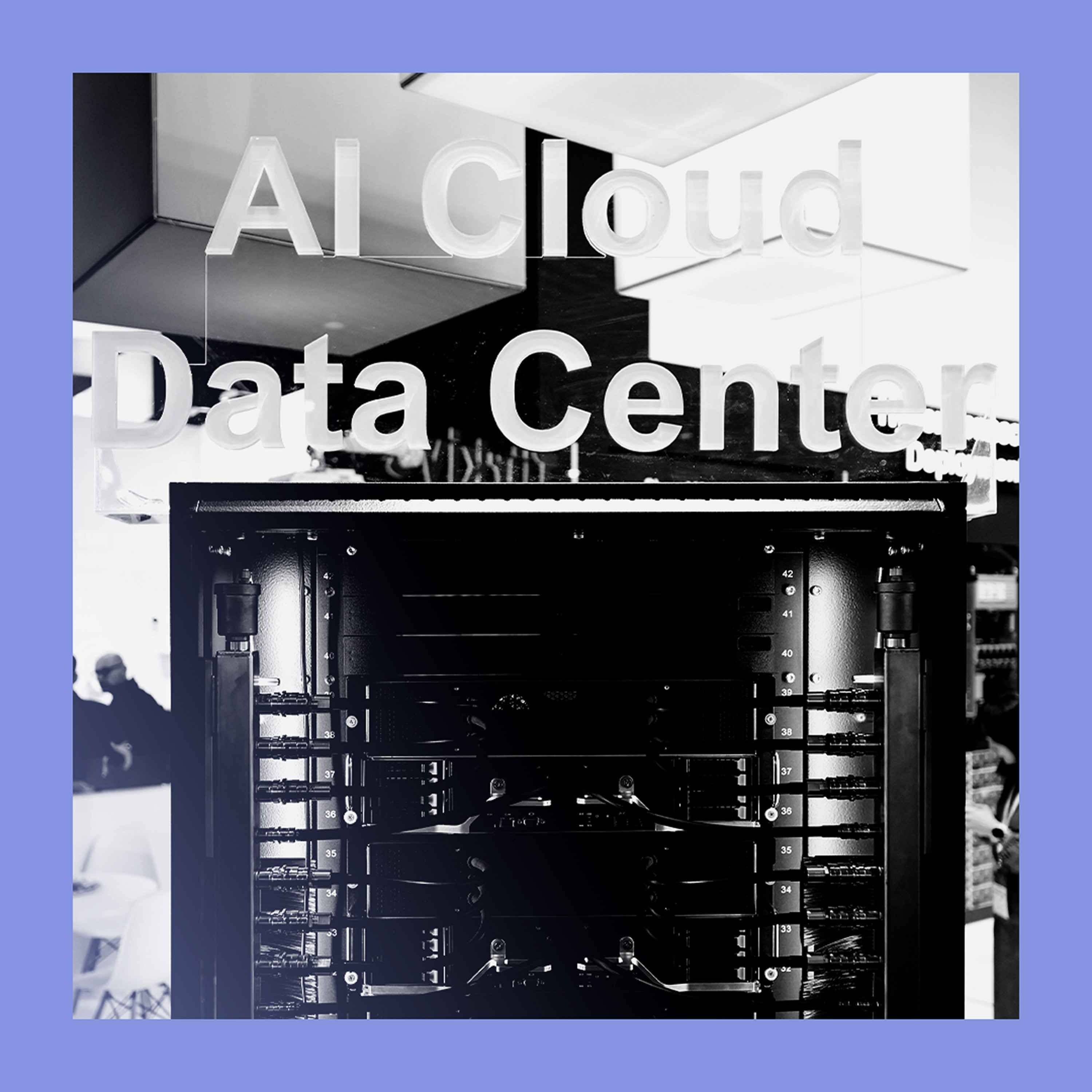
Musk states that designing the custom AI5 and AI6 chips is his 'biggest time allocation.' This focus on silicon, promising a 40x performance increase, reveals that Tesla's core strategy relies on vertically integrated hardware to solve autonomy and robotics, not just software.

Elon Musk is shifting his AI strategy from model development to infrastructure dominance. By providing compute to Anthropic and massively scaling his TeraFab chip project, he's betting that controlling the physical supply chain is a more defensible long-term position in the AI race than competing on models alone.
Beyond its massive output, TerraFab embodies Musk's strategy to combat the inefficiencies that plague large-scale operations. By vertically integrating and designing for recursive improvement, he is creating a model for how to overcome the "disease of scale" that stifles innovation in most hyperscaled companies.

In an AI race defined by physical constraints like data centers and fabs, Elon Musk's proven ability to build massive hardware infrastructure (e.g., Gigafactories) is a decisive advantage. While competitors focus on software, Musk's core competency in "building stuff" in the physical world allows SpaceX to scale its compute faster than anyone.

Intel has struggled because major chip designers are locked into TSMC. The partnership with Musk's SpaceX, XAI, and Tesla provides a massive, committed buyer. This solves Intel's "demand-side" problem, de-risking its investment in leading-edge domestic manufacturing and creating a credible alternative to TSMC.

Unlike past tech booms with short-lived tightness, the current AI infrastructure shortage is intensifying, evidenced by unprecedented multi-year supply commitments extending to 2030. This signals deep, long-term conviction from the world's largest companies that the demand is durable.

The AI compute constraint is not just a chip shortage but a systemic bottleneck involving land, permits, electricity, and construction. This environment massively favors incumbent tech giants with huge non-AI cash flows, as they are the only ones who can fund the hundreds of billions in capital expenditures needed to build out supply.