Get your free personalized podcast brief
We scan new podcasts and send you the top 5 insights daily.
Unlike past tech booms with short-lived tightness, the current AI infrastructure shortage is intensifying, evidenced by unprecedented multi-year supply commitments extending to 2030. This signals deep, long-term conviction from the world's largest companies that the demand is durable.

Related Insights
Unlike past cycles driven solely by new demand (e.g., mobile phones), the current AI memory super cycle is different. The new demand driver, HBM, actively constrains the supply of traditional DRAM by competing for the same limited wafer capacity, intensifying and prolonging the shortage.

AI software models advance every few months, creating exponential demand. However, the hardware infrastructure like chip fabs operates on two-to-four-year development cycles. This timeline disconnect between software's rapid pace and hardware's slow build-out creates a persistent supply crunch that money alone cannot instantly solve.
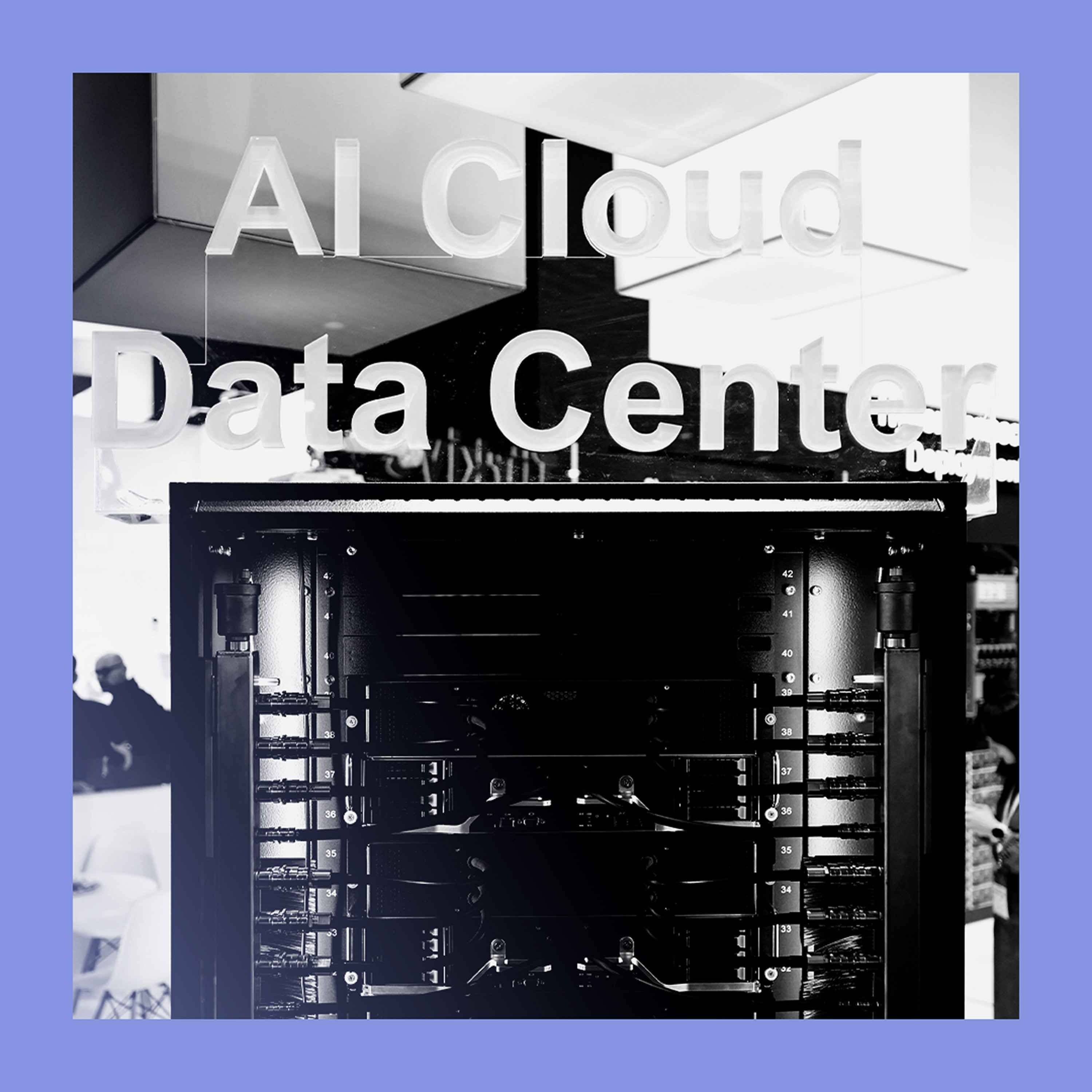
The focus in AI has evolved from rapid software capability gains to the physical constraints of its adoption. The demand for compute power is expected to significantly outstrip supply, making infrastructure—not algorithms—the defining bottleneck for future growth.

Unlike the speculative "dark fiber" buildout of the dot-com bubble, today's AI infrastructure race is driven by real, immediate, and overwhelming demand. The problem isn't a lack of utilization for built capacity; it's a constant struggle to build supply fast enough to meet customer needs.

The semiconductor supply chain has extremely long lead times. Even with unprecedented demand signals for AI hardware, new memory fabrication plants ordered today will not come online until 2027 or 2028. This multi-year lag guarantees that supply bottlenecks and high prices for components like DRAM will persist.
![Dylan Patel - The Infinite Demand for Tokens, Claude Mythos, and Supply Constraints - [Invest Like the Best, EP.468] thumbnail](https://megaphone.imgix.net/podcasts/ceb34422-3ec7-11f1-97a5-8bd036d5980c/image/e8a75bd4ab83f059c746a594afd471a8.jpg?ixlib=rails-4.3.1&max-w=3000&max-h=3000&fit=crop&auto=format,compress)
Unlike the dot-com bubble's finite need for fiber optic cables, the demand for AI is infinite because it's about solving an endless stream of problems. This suggests the current infrastructure spending cycle is fundamentally different and more sustainable than previous tech booms.

The focus on GPUs for AI overlooks a critical bottleneck: a growing CPU shortage. AI agents rely heavily on CPUs for orchestration tasks like tool calls, database queries, and web searches. This hidden demand is causing hyperscalers to lock in multi-year CPU supply contracts.

Unlike railroads or telecom, where infrastructure lasts for decades, the core of AI infrastructure—semiconductor chips—becomes obsolete every 3-4 years. This creates a cycle of massive, recurring capital expenditure to maintain data centers, fundamentally changing the long-term ROI calculation for the AI arms race.

The AI supply crunch extends beyond advanced processors. The industry faces critical shortages of basic components like electrical transformers and switches, with lead times stretching three to five years. This creates a less obvious but significant bottleneck for building the necessary data center infrastructure.
The intense demand for memory chips for AI is causing a shortage so severe that NVIDIA is delaying a new gaming GPU for the first time in 30 years. This demonstrates a major inflection point where the AI industry's hardware needs are creating significant, tangible ripple effects on adjacent, multi-billion dollar consumer markets.