Get your free personalized podcast brief
We scan new podcasts and send you the top 5 insights daily.
Drawing from his experience selling factory automation in the early 1980s that replaced thousands of workers, Roepers offers a long-term perspective on today's AI fears. He notes that despite 40+ years of massive productivity gains through automation, human society continually reinvents itself, leading to full employment.

Related Insights
Analysis of past technological shifts, like the decline in agricultural labor and the invention of spreadsheets, shows that disruption typically creates new job categories and diversifies the labor market. Productivity gains lead to entirely new services and roles, rather than simply causing mass unemployment.

Pessimism about AI-driven job losses overlooks historical precedent. The transition from an agricultural to an industrial economy caused massive job displacement but ultimately created far more new jobs. Similarly, AI will likely generate new, currently unimaginable roles and industries.

Contrary to common belief, new research suggests the Industrial Revolution's new technologies spread too slowly to cause immediate, widespread job loss. Wages held steady despite rapid population growth, a historically positive outcome. This provides a data-backed counter-narrative to fears of rapid, AI-driven unemployment, suggesting a more gradual transition is likely.
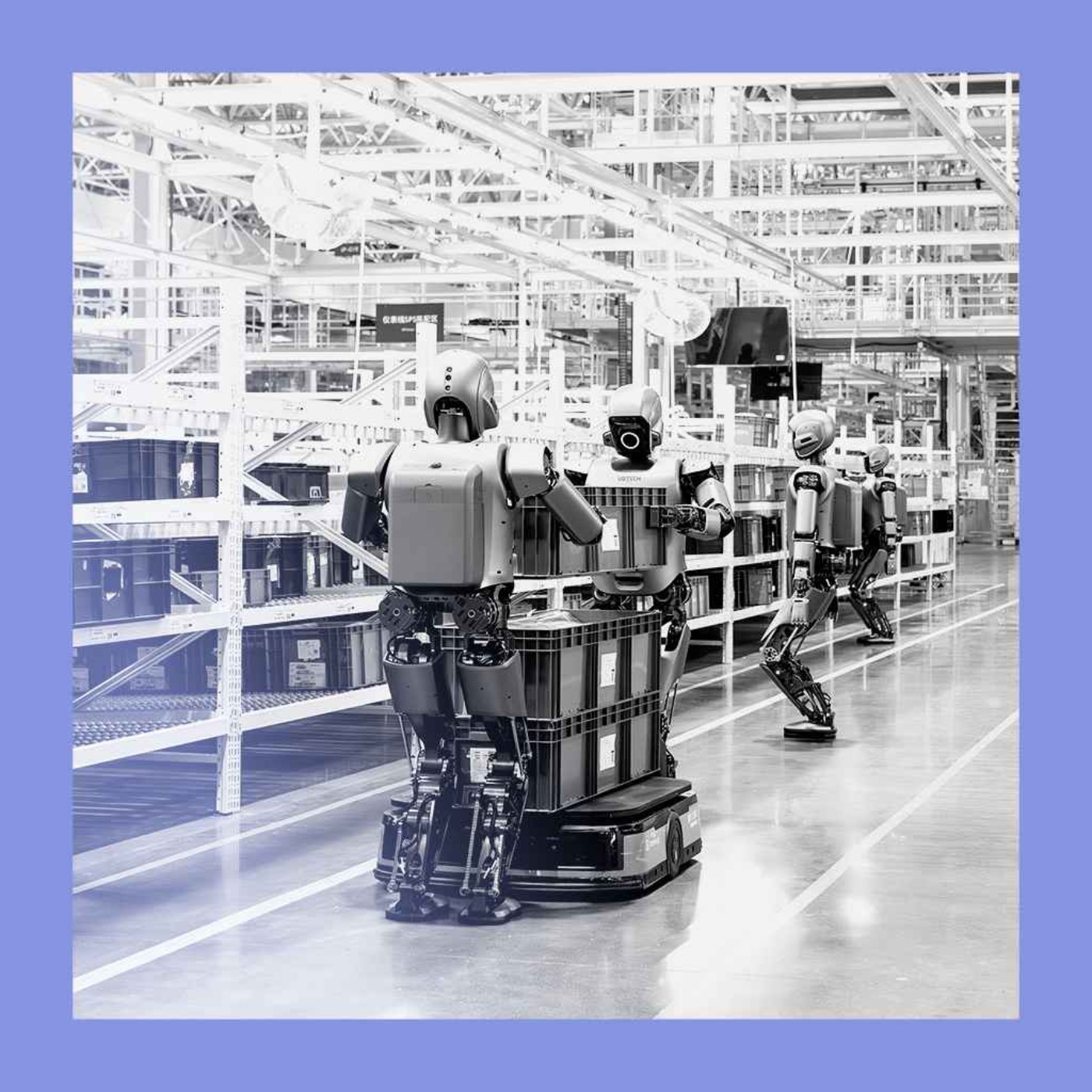
Fears of mass unemployment from AI overlook a key economic principle: human desire is not fixed. As technology makes existing goods and services cheaper, humans invent new things to want. The Industrial Revolution didn't end work; it just created new kinds of jobs to satisfy new desires.

Like the internet and mobile, AI will automate many jobs. However, this automation historically unlocks new types of work that don't exist yet. While there's short-term frictional pain, the long-term trend repeated over 200 years is job creation and increased prosperity.

Current fears that AI will eliminate all jobs are not new, mirroring panics during the mainframe and PC eras. Historically, these technologies drove massive productivity gains and created new industries rather than destroying the workforce, suggesting a similar outcome for AI.

The fear that AI will replace all jobs ignores history. Technology has consistently eliminated drudgery (e.g., manual farming, factory work) while creating new, unpredictable industries that cater to newly created human wants. AI will accelerate this process, allowing people to focus on more creative and interpersonal pursuits.

Even if AI triples productivity growth, the resulting job churn would only equal that of 1870-1930. That period is historically remembered as one of vast opportunity and creation of new industries, suggesting fears of a jobless future are misplaced.
The narrative that AI will eliminate jobs mirrors identical fears during the mainframe revolution of the 1960s and the PC revolution of the 1980s. Historically, such technologies have always increased human productivity and created more, higher-value jobs. The "this time is different" argument has consistently been proven wrong.

The fear of AI-driven mass unemployment is a classic economic fallacy. Like past technologies, AI is a tool that raises the marginal productivity of individual workers. More productive workers don't work less; they take on more ambitious projects and create new kinds of jobs, increasing the overall demand for labor.