Get your free personalized podcast brief
We scan new podcasts and send you the top 5 insights daily.
The entire system is the computer. The demand for AI compute creates downstream constraints and innovation opportunities in everything from co-packaged optics to the efficiency of power plant components. The AI supply chain is far broader than just semiconductors and data centers.

Related Insights
The AI supply chain is crunched not just by obvious components like TSMC wafers and HBM memory. A significant, often overlooked bottleneck is rack manufacturing—including high-speed cables, connectors, and even sheet metal—which are "sneaky hard" due to extreme power, heat, and signal integrity demands.

The AI industry's primary constraint is shifting from chip manufacturing to energy generation and grid capacity. Building power infrastructure is far slower and more complex than producing semiconductors, creating a significant long-term growth bottleneck.

The growth of AI is constrained not by chip design but by inputs like energy and High Bandwidth Memory (HBM). This shifts power to component suppliers and energy providers, allowing them to gain leverage, demand equity, and influence the entire AI ecosystem, much like a central bank controls money.

Unlike past tech cycles with a single constraint, the AI boom is constrained by numerous interdependent bottlenecks at once: power, transmission, memory, optical components, and skilled labor. Solving one piece (e.g., memory supply) doesn't fix the overall systems-level challenge, making the problem uniquely complex.

The AI industry's growth constraint is a swinging pendulum. While power and data center space are the current bottlenecks (2024-25), the energy supply chain is diverse. By 2027, the bottleneck will revert to semiconductor manufacturing, as leading-edge fab capacity (e.g., TSMC, HBM memory) is highly concentrated and takes years to expand.

The primary constraint on AI scaling isn't just semiconductor fabrication capacity. It's a series of dependent bottlenecks, from TSMC's fabs to the limited number of EUV machines from ASML, and even further down to ASML's own specialized suppliers for components like lenses and glass.

While chip production typically scales to meet demand, the energy required to power massive AI data centers is a more fundamental constraint. This bottleneck is creating a strategic push towards nuclear power, with tech giants building data centers near nuclear plants.

The AI supply crunch extends beyond advanced processors. The industry faces critical shortages of basic components like electrical transformers and switches, with lead times stretching three to five years. This creates a less obvious but significant bottleneck for building the necessary data center infrastructure.
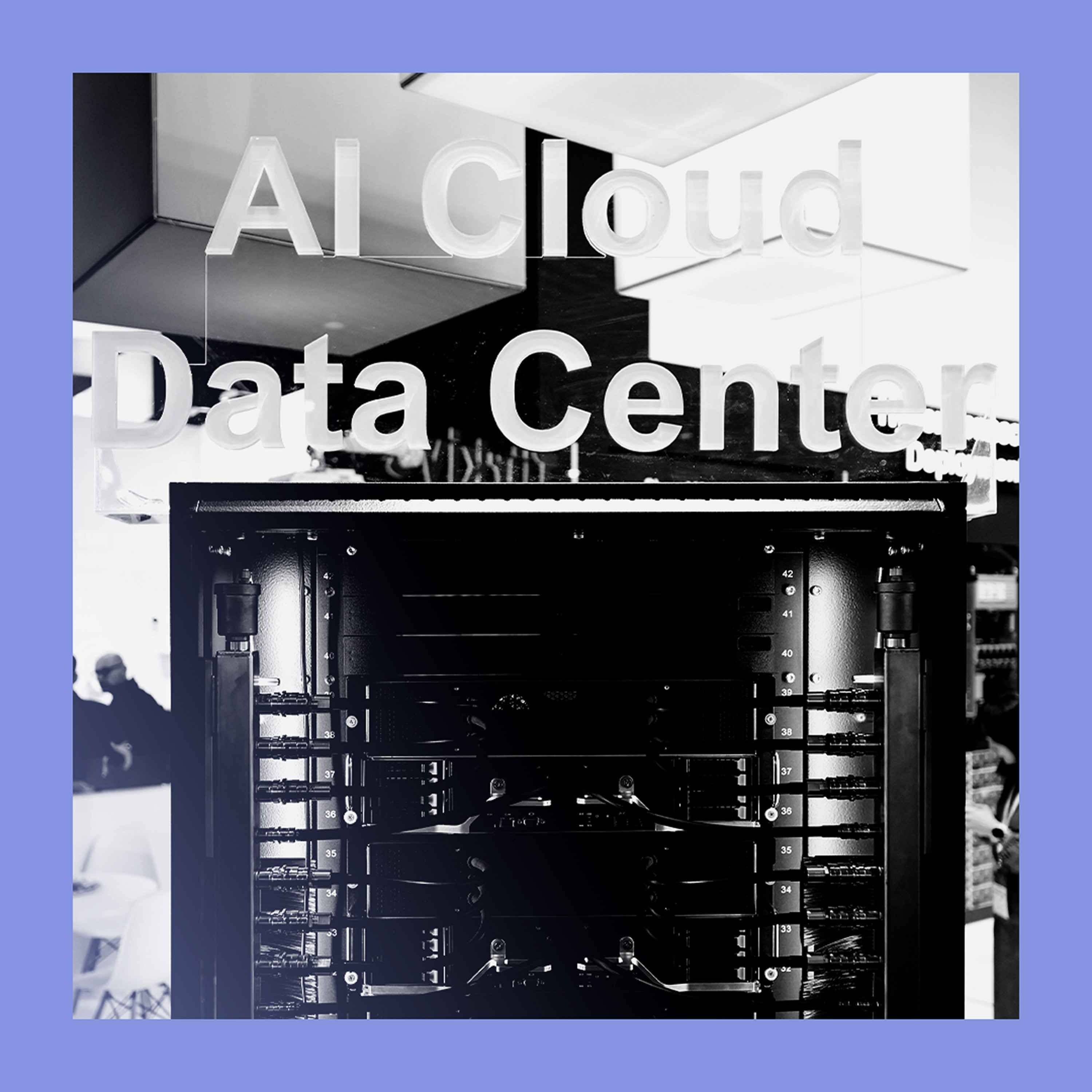
Jensen Huang argues that hardware supply chain issues like fab capacity are solvable 2-3 year problems once a clear demand signal exists. The real, long-term chokepoints for the AI industry are downstream factors like restrictive energy policies and shortages of skilled trade labor.

As hyperscalers build massive new data centers for AI, the critical constraint is shifting from semiconductor supply to energy availability. The core challenge becomes sourcing enough power, raising new geopolitical and environmental questions that will define the next phase of the AI race.