Get your free personalized podcast brief
We scan new podcasts and send you the top 5 insights daily.
Renowned gene therapy pioneer Jim Wilson was forced to spin out ultra-rare disease programs into a new company after his initial venture failed to attract VC funding. This demonstrates that even elite scientific leadership cannot overcome investor disinterest in this segment without powerful, predictable government incentives like transferable priority review vouchers.

Related Insights
In stark contrast to the US, Chinese investors are accelerating funding for early-stage cell and gene therapies, which now account for 29% of seed/Series A rounds. These firms are specifically backing technologies like NK cell therapies, which have fallen out of favor in the West, creating a divergent global innovation strategy.

An ideologically driven and inconsistent FDA is eroding investor confidence, turning the U.S. into a difficult environment for investment in complex biologics like gene therapies and vaccines, potentially pushing innovation to other countries.
The Orphan Drug Act successfully incentivized R&D for rare diseases. A similar policy framework is needed for common, age-related diseases. Despite their massive potential markets, these indications suffer from extremely high failure rates and costs. A new incentive structure could de-risk development and align commercial goals with the enormous societal need for longevity.

In the rare disease space, success hinges on deep patient community engagement. Smaller, nimbler biotechs often excel at creating these essential personal ties, giving them a significant advantage over larger pharmaceutical companies.
A massive disconnect exists where scientific breakthroughs are accelerating, yet the biotech market is in a downturn, with many companies trading below cash. This paradox highlights structural and economic failures within the industry, rather than a lack of scientific progress. The core question is why the business is collapsing while the technology is exploding.
The biotech ecosystem is a continuous conveyor belt from seed funding to IPO, culminating in acquisition by large biopharma. The recent industry-wide stall wasn't a failure of science, but a halt in M&A activity that backed up the entire system.

The success of Praxis's small molecule for a genetic epilepsy presents a strategic alternative to cell and gene therapies. In an era where complex modalities face funding, safety, and commercial hurdles, advanced small molecules offer a viable and potentially more practical path for treating genetic disorders.

Venture capital for US seed and Series A cell and gene therapy companies has collapsed from a historical high of 17-21% of deals to only 7% this year. The sharp decline is driven by a confluence of factors including patient deaths, persistent manufacturing challenges, and growing regulatory uncertainty.
The path for biotech entrepreneurs is a long slog requiring immense conviction. Success ("liftoff") isn't just a clinical trial result, but achieving self-sustaining profitability and growth. This high bar means founders may need to persevere through years of market indifference and financing challenges.

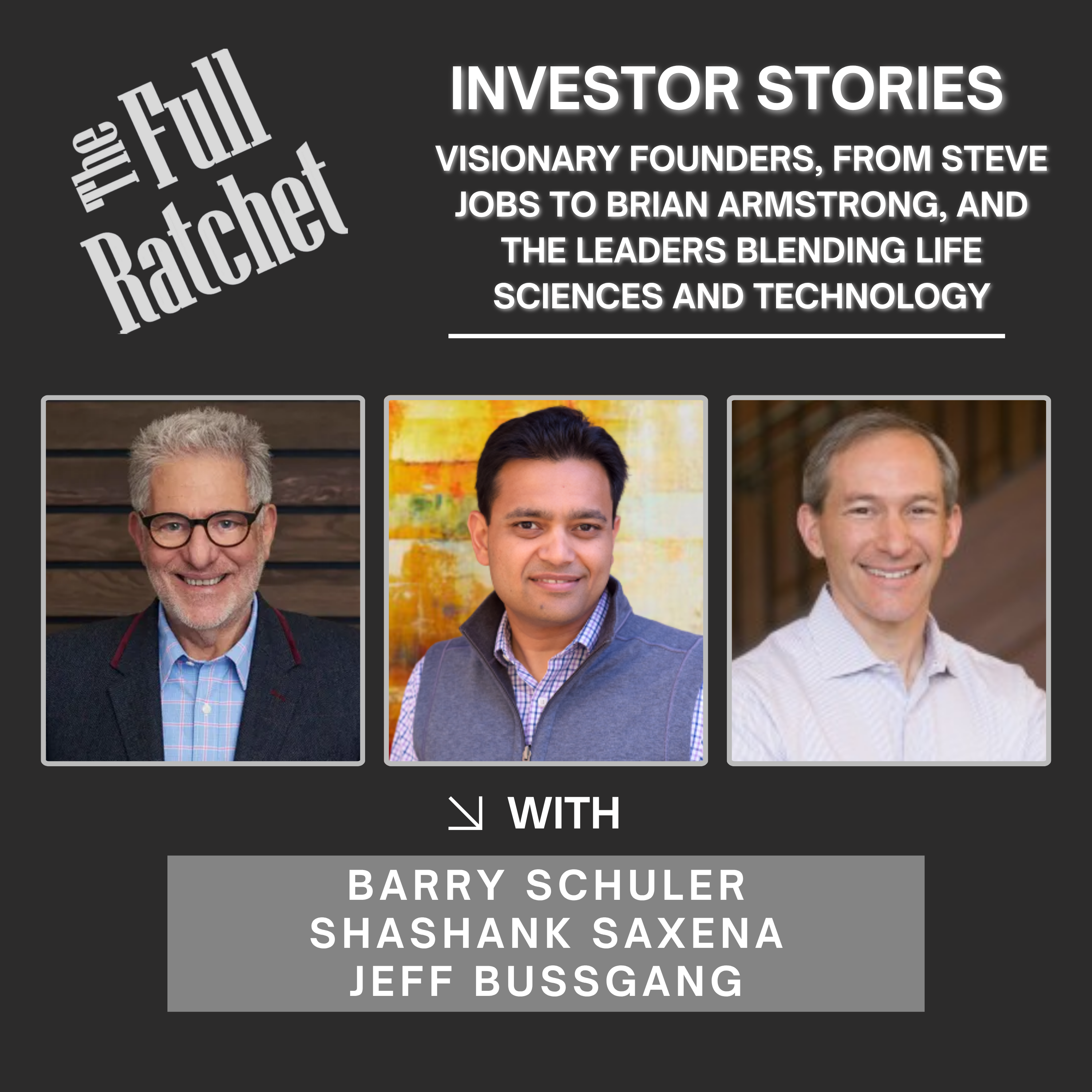
DFJ Growth Partner Barry Shuler details their strategy of avoiding herd investments by focusing on 'life tech'—the intersection of life sciences and technology. This contrarian approach allows them to back brilliant but lesser-known visionaries in emerging fields like population genomics, where they see immense potential.