Get your free personalized podcast brief
We scan new podcasts and send you the top 5 insights daily.
AI research startup Consensus focuses its tools on automating tedious parts of science, like searching for papers, rather than trying to create a fully autonomous AI scientist. They believe the core of scientific discovery—connecting disparate ideas and human collaboration—will remain a uniquely human task.

Related Insights
AIs excel at exploring millions of problems at a surface level (breadth), a scale humans cannot match. Human experts provide the depth needed to tackle the difficult "islands" AIs identify. Science must shift from its current depth-focused model to one that first uses AI to map entire fields and clear away low-hanging fruit.
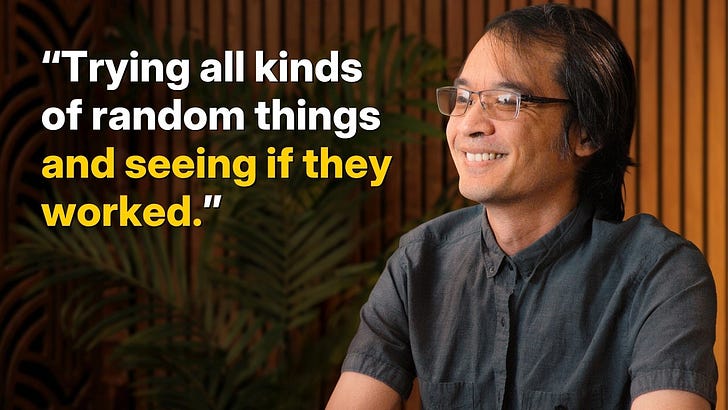
The physics breakthrough provides a scalable template for AI-assisted research. The model involves AI identifying patterns and generating hypotheses from data, with human experts then responsible for rigorous validation and ensuring consistency. This is augmented, not autonomous, science.

Google is moving beyond AI as a mere analysis tool. The concept of an 'AI co-scientist' envisions AI as an active partner that helps sift through information, generate novel hypotheses, and outline ways to test them. This reframes the human-AI collaboration to fundamentally accelerate the scientific method itself.

A key part of OpenAI's 'takeoff' strategy is building an automated AI researcher. This system is designed to perform the full end-to-end workflow of a human research scientist autonomously. The goal is to dramatically accelerate the cycle of AI improvement, with humans providing high-level direction and oversight.
Contrary to sci-fi visions, the immediate future of AI in science is not the fully autonomous 'dark lab.' Prof. Welling's vision is to empower human domain experts with powerful tools. The scientist remains crucial for defining problems, interpreting results, and making final judgments, with AI as a powerful collaborator.

In high-stakes fields like pharma, AI's ability to generate more ideas (e.g., drug targets) is less valuable than its ability to aid in decision-making. Physical constraints on experimentation mean you can't test everything. The real need is for tools that help humans evaluate, prioritize, and gain conviction on a few key bets.

AI's true power in science isn't autonomous discovery, but process compression. It acts as an expert guide, allowing motivated individuals to navigate complex fields like drug discovery and assemble workflows that once required multiple specialized teams, blurring the line between professional research and individual effort.

Recognizing that scientists require varying levels of control, the system's autonomy can be dialed up or down. It can function as a simple experiment executor, a collaborative partner for brainstorming, or a fully autonomous discovery engine. This flexibility is designed to support, not replace, the human scientist.
The "AI vs. Dog Cancer" story shows that current AI's power is not autonomous discovery, but its ability to act as a research assistant, enabling motivated non-experts to orchestrate complex scientific projects by finding and coordinating with human experts.
Generative AI is not viewed as a standalone solution for drug discovery. Alloy's perspective is that its primary value is in enhancing and automating existing workflows. The model requires a 'lab in the loop' and 'human in the loop,' where AI assists scientists by making them more efficient and improving data analysis, rather than replacing the core wet lab process.
