Get your free personalized podcast brief
We scan new podcasts and send you the top 5 insights daily.
Unlike enterprise software that forces businesses into a standardized box, Palantir's goal is to create 'malleable software.' This approach embraces complexity and helps companies enhance their unique competitive advantages rather than making them more similar.

Related Insights
Previously, enterprise software was a rigid system that domain experts had to work around. Palantir's Ted Mabrey says today's adaptive AI makes it possible for the most knowledgeable people—like a factory floor manager—to directly shape the technology, turning it into their personal "Ironman suit" and making their expertise scalable.

Most enterprise software fits clients into a predefined box, promoting similarity. Palantir operates on the principle of making clients 'more different.' Its software is designed to enhance a company's unique competitive advantages—their alpha, not beta—by building an ontology that reflects their specific reality, rather than a generic industry template.
![Shyam Sankar - Celebrating Heretics - [Invest Like the Best, EP.462] thumbnail](https://megaphone.imgix.net/podcasts/9dee904c-1bbf-11f1-a1a6-0b200fdaa525/image/57910f03f82ede99259c53f5e5404f6a.jpg?ixlib=rails-4.3.1&max-w=3000&max-h=3000&fit=crop&auto=format,compress)
Traditional SaaS is like a ready-made shirt—cheap and fast, but ill-fitting. The founder argues AI makes custom-fit software that adapts to each enterprise's unique processes cheaper and faster to deploy than one-size-fits-all SaaS, disrupting the entire software stack.

The rise of AI services companies like Invisible and Palantir, which build custom on-prem solutions, marks a reversal of the standardized cloud SaaS trend. Enterprises now prioritize proprietary, custom AI applications to gain a competitive edge.

The one-size-fits-all SaaS model is becoming obsolete in the enterprise. The future lies in creating "hyper-personalized systems of agility" that are custom-configured for each client. This involves unifying a company's fragmented data and building bespoke intelligence and workflows on top of their legacy systems.

Alex Karp argues that the future of enterprise software is not about forcing companies into standardized SaaS workflows. Instead, AI's true power lies in creating custom systems that amplify a company's unique "tribal knowledge" and operational data, turning their specific processes into a competitive advantage that no other enterprise can replicate.

Unlike typical software companies that build addictive products or simply fulfill requests, Palantir's approach is to anticipate and build what its partners *ought* to want in the future. This radical, value-driven strategy builds deep trust and creates an indispensable long-term position with the client.
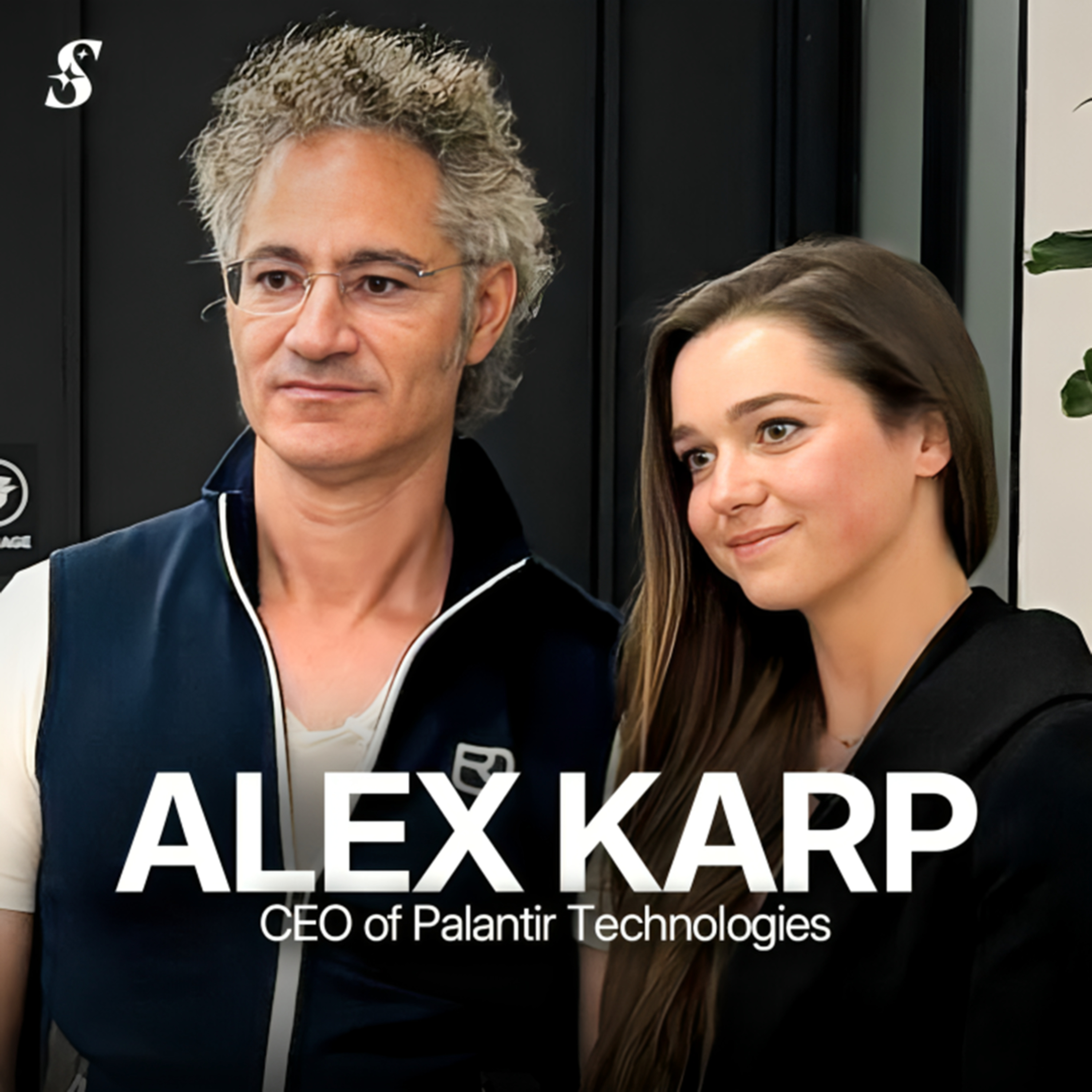
The "SaaS apocalypse" will target "beta" software—tools that make companies more similar to their competitors. Conversely, "alpha" software—platforms that allow a company to express its unique strategy and competitive advantage—will thrive as AI makes customization and differentiation easier.

Palantir's success stems from its "anti-playbook" culture. It maintains a flat, meritocratic structure that feels like a startup despite its size. This environment fosters original thinking and rewards those who excel outside of rigid, conventional frameworks, turning traditionally undervalued traits into strengths.
Karp's pitch at Davos suggests that traditional enterprise SaaS, which standardizes processes across companies, destroys competitive advantage. Palantir’s strategy is to build semi-custom systems that amplify a company's unique "tribal knowledge," betting that differentiation, not commodification, is the future of enterprise software value.