Get your free personalized podcast brief
We scan new podcasts and send you the top 5 insights daily.
Nick Mowbray, the self-made billionaire founder of ZURU Toys, exhibits extreme agency. As one of the largest individual shareholders of Tesla, he and his brother flew to California and installed their own cameras on buildings overlooking the Fremont factory to monitor production, demonstrating an obsessive, hands-on approach.

Related Insights
Elon Musk's newly approved trillion-dollar pay package is less about the money and more about securing 25% voting control of Tesla. He views Tesla's future not in cars but in humanoid robots, and he sought this control to direct the development of this potentially world-changing technology.
Employees at large companies who independently work nights and weekends on projects outside the roadmap, driven by customer obsession, are exhibiting the key traits of a founder. This behavior, while potentially disruptive to their team, signals a strong, innate entrepreneurial drive ready to be unleashed.

Tesla's most profound competitive advantage is not its products but its mastery of manufacturing processes. By designing and building its own production line machinery, the company achieves efficiencies and innovation cycles that competitors relying on third-party equipment cannot match. This philosophy creates a deeply defensible moat.

While China bans many US tech giants, it welcomed Tesla. A compelling theory suggests this was a strategic move to observe and learn Tesla's methods for mass-producing EVs at scale, thereby accelerating the development of domestic champions like BYD, mirroring its past strategy with Apple's iPhone.

Founders like James Dyson and Yvon Chouinard represent the "anti-business billionaire." They are obsessed with product quality and retaining control, often making decisions that seem financially sub-optimal in the short term. This relentless focus on creating the best product ultimately leads to massive financial success.

Musk's success stems from his unique ability to attract hyper-intelligent, maniacally driven individuals. These people are drawn to his high-stakes, high-pressure environment, choosing to "burn out under Musk" rather than be bored elsewhere, creating an unparalleled human capital advantage.

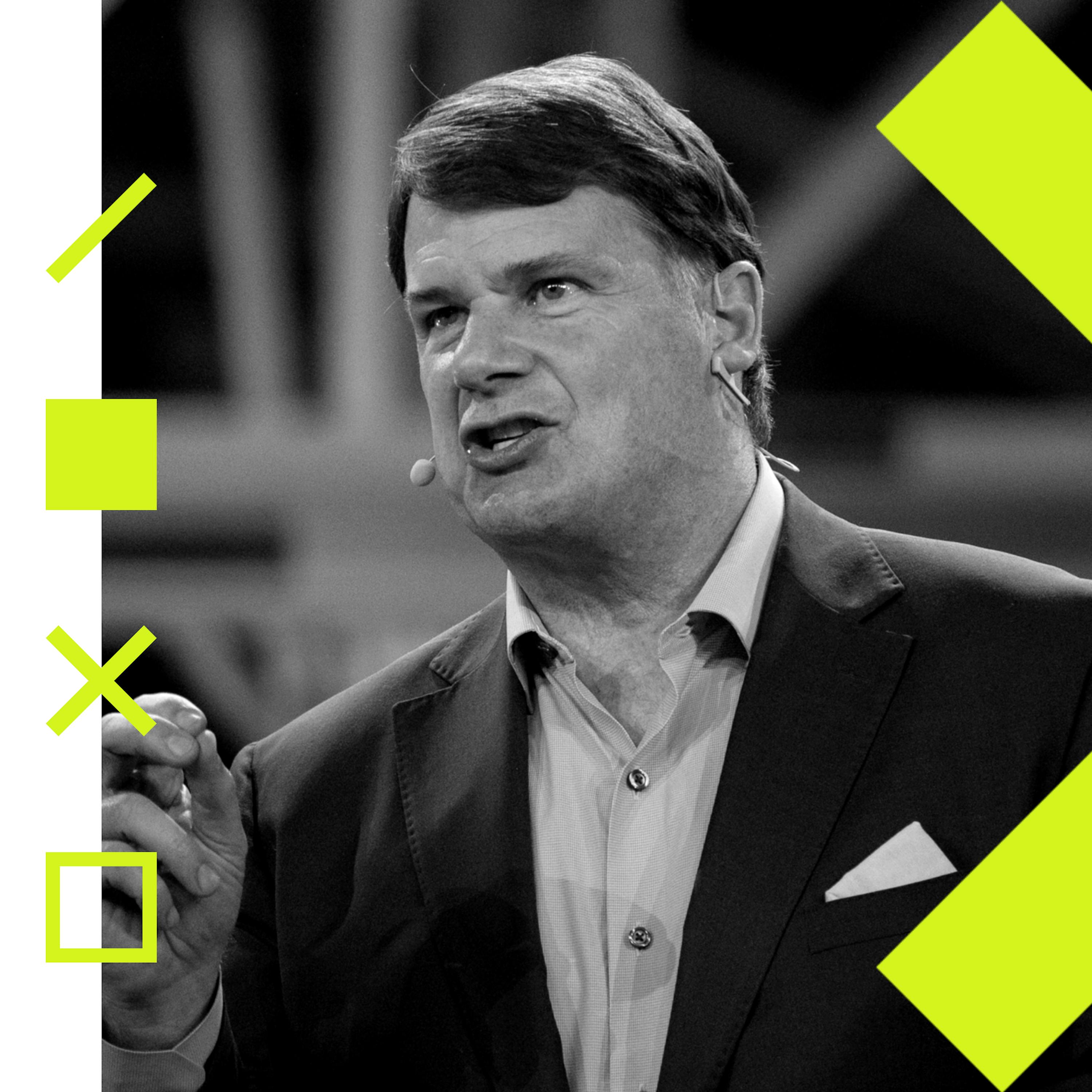
Ford CEO Jim Farley relies on "Gemba," a Japanese principle of "go and see with your own eyes." For a major EV strategy shift, he personally inspected a torn-down competitor's car, counting fasteners and examining the wiring loom to understand the manufacturing gap firsthand before making a decision.
Musk's decisions—choosing cameras over LiDAR for Tesla and acquiring X (Twitter)—are part of a unified strategy to own the largest data sets of real-world patterns (driving and human behavior). This allows him to train and perfect AI, making his companies data juggernauts.

Beyond technology, Tesla's durable advantage is its 'capacity to suffer'—a willingness, driven by Elon Musk, to endure extreme hardship like 'manufacturing hell' to solve problems. This allows the company to pursue innovations that more risk-averse competitors would abandon.
Contrary to the model of steady weekly hours, Elon Musk’s effectiveness may come from a different pattern: identifying critical problems and applying short, intense bursts of obsessive micromanagement (e.g., 100-hour weeks sleeping on the factory floor) before pulling back.
