Get your free personalized podcast brief
We scan new podcasts and send you the top 5 insights daily.
A unique advantage of the ADC datopotamab deruxtecan is its non-myelosuppressive profile. This makes it an especially attractive option for patients whose bone marrow is compromised or 'tired' after receiving intensive prior chemotherapy, a common real-world clinical scenario not always captured in trials.

Related Insights
Trastuzumab deruxtecan (TDXD) and datopotamab deruxtecan (Dato-DXd) share the same cytotoxic payload, yet Dato-DXd has a much lower rate of interstitial lung disease (ILD). This indicates the toxicity is driven by the antibody-antigen interaction, not the payload itself.
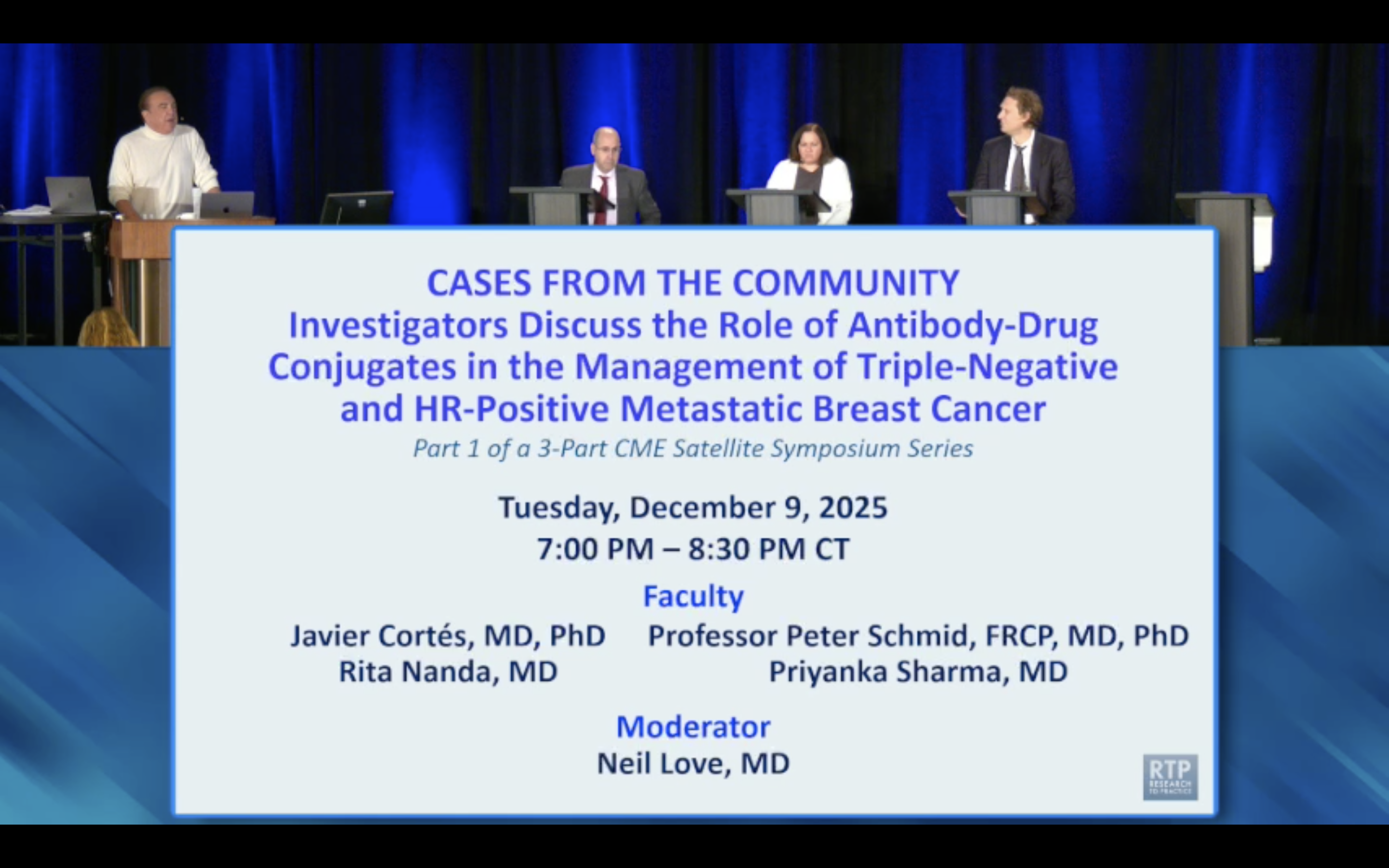
The modern pipeline of antibody-drug conjugates in solid tumors has largely moved away from older microtubule toxin payloads (like DM4 or MMAE). The majority of ADCs currently in development, and the focus of clinical excitement, utilize camptothecin-based payloads, specifically topoisomerase-1 inhibitors like deruxtecan, reflecting a major technological evolution in the field.

When choosing between sacituzumab govitecan (SG) and datopotamab deruxtecan (Datto-DXd), oncologists prioritize the differing side effect profiles (diarrhea/neutropenia vs. stomatitis/ocular) and administration schedules (weekly infusions vs. every three weeks) to match patient lifestyle and comorbidities, rather than focusing solely on efficacy.
For elderly patients with locally advanced cancer who are not candidates for surgery, an ADC with an every-three-week schedule, like datopotamab, can provide an excellent balance of efficacy and tolerability. This approach can achieve local disease control and maintain quality of life, with dose and schedule modifications further improving safety.
Though TROP2 antibody-drug conjugates share a mechanism, their adverse event profiles differ significantly. Datopotamab-deruxtecan commonly causes stomatitis, while Sacituzumab govitecan is associated with high rates of neutropenia, necessitating drug-specific management.

When choosing between TROP2-directed ADCs like sacituzumab govitecan and datopotamab deruxtecan, the decision often hinges on side effect profiles and scheduling convenience, not superior efficacy. Datopotamab has more oral/ocular issues but is given every three weeks, while sacituzumab causes more neutropenia and requires visits two out of every three weeks.

Despite both being Trop-2 targeted antibody-drug conjugates, Sacituzumab Govitecan and Datopotomab duroxotein have distinct side effects due to different linkers and payloads. Sacituzumab causes neutropenia and diarrhea, while Datopotomab is linked to stomatitis and ocular issues, requiring unique management strategies.

A key principle for clinicians is that an antibody-drug conjugate's adverse events are primarily dictated by its linker-payload (e.g., deruxtecan, vedotin), not its specific antibody target. This allows for anticipating toxicities like neuropathy or GI issues based on the payload class, creating a predictable framework for management across different ADCs.
Clinicians can confidently reduce the dose of Datopotamab-deruxtecan to manage toxicity. Phase 1 data demonstrates a compelling efficacy signal even at a 4 mg/kg dose level, reassuring oncologists that dose reduction is a viable strategy to maintain treatment without sacrificing benefit.
Clinical trial data shows that despite specific toxicities, antibody-drug conjugates (ADCs) can be better tolerated overall than standard chemotherapy. For example, trials for both sacituzumab govitecan and dato-DXd reported fewer patients discontinuing treatment in the ADC arm compared to the chemotherapy arm.