Get your free personalized podcast brief
We scan new podcasts and send you the top 5 insights daily.
OpenAI maintained its technological lead over Google primarily due to total organizational conviction in artificial general intelligence. While Google hesitated and debated internally whether to even utter the term AGI, OpenAI made massive capital and compute bets before feasibility was obvious.

Related Insights
Google regained its competitive edge after co-founder Sergey Brin returned from retirement, spurred by embarrassment over Google trailing OpenAI. Combining Brin's founder-driven authority with Demis Hassabis's intense drive to win allowed Google to bypass internal bureaucracy and accelerate model training.
Google holds a paradoxical position in the AI race. While it leads legacy tech giants like Apple and Microsoft in AI model building and application, it still trails dedicated AI labs like OpenAI and Anthropic in releasing cutting-edge models.
Brad Lightcap joined OpenAI because he saw the potential of scaling laws. The realization that bigger models predictably improve transformed the AI challenge from a conceptual puzzle into a matter of scaling compute, which became the company's core early conviction.

When OpenAI started, the AI research community measured progress via peer-reviewed papers. OpenAI's contrarian move was to pour millions into GPUs and large-scale engineering aimed at tangible results, a strategy criticized by academics but which ultimately led to their breakthrough.

OpenAI and Microsoft operate with a clear, economically-focused definition of AGI: a system outperforming humans at most economically valuable work. In contrast, Google's leadership admits they are still 'working on' a definition. This ambiguity reveals a lack of unified strategic direction and focus compared to its rivals.
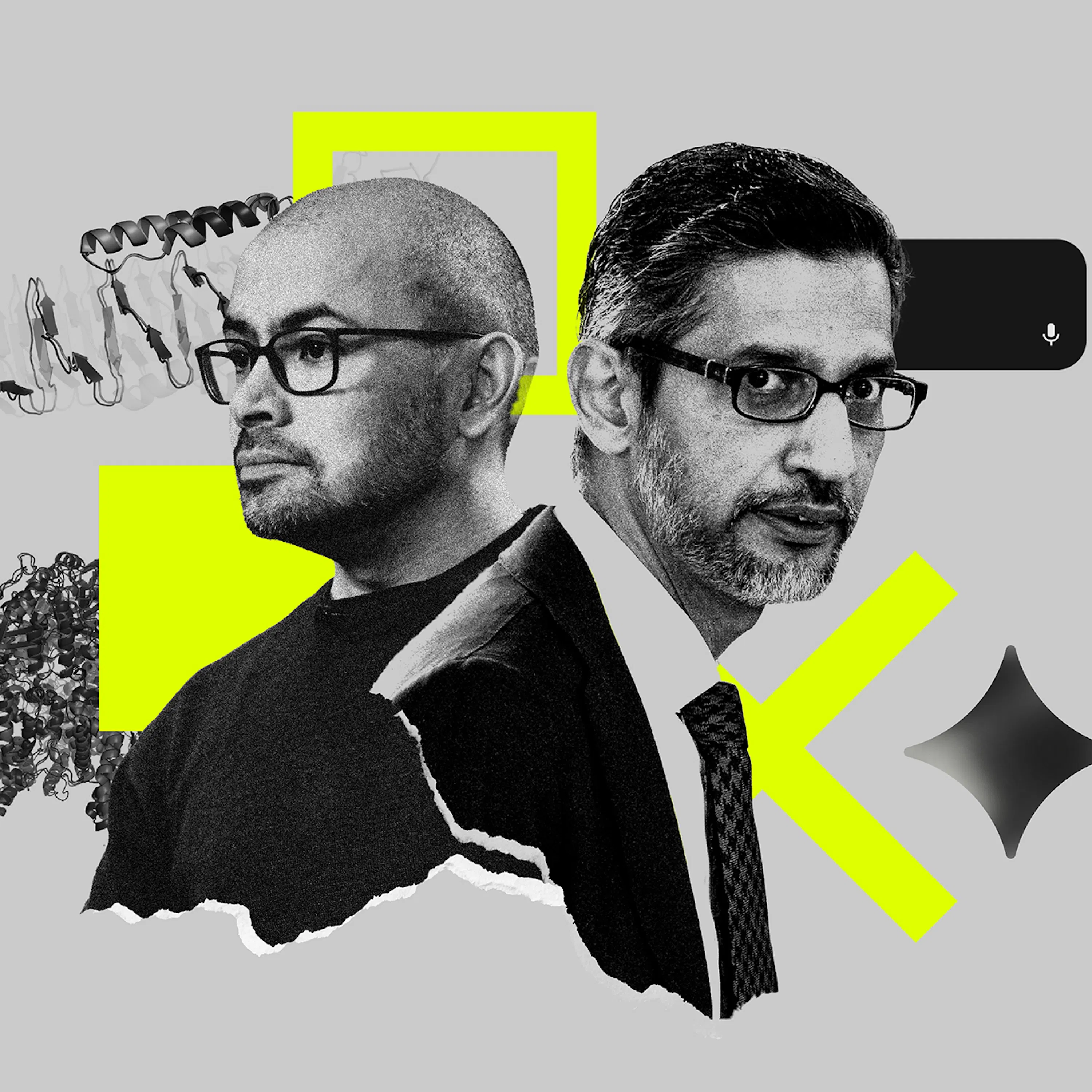
OpenAI is now reacting to Google's advancements with Gemini 3, a complete reversal from three years ago. Google's strengths in infrastructure, proprietary chips, data, and financial stability are giving it a significant competitive edge, forcing OpenAI to delay initiatives and refocus on its core ChatGPT product.
Google's direction is pulled between two philosophies. CEO Demis Hassabis favors a long-term, "world models" path to AGI, while a faction reportedly led by Sergey Brin pushes to compete directly with OpenAI and Anthropic on immediate applications like AI coding agents. This internal tension manifests as a confusing product roadmap.

The enormous financial losses reported by AI leaders like OpenAI are not typical startup burn rates. They reflect a belief that the ultimate prize is an "Oracle or Genie," an outcome so transformative that the investment becomes an all-or-nothing, existential bet for tech giants.

Google invented critical components of the modern AI stack, including the transformer and mesh TensorFlow, but surrendered its lead due to internal skepticism about AGI. Conversely, frontier labs succeeded primarily because early founders possessed fanatical belief, allowing them to amass capital, compute, and focus despite mainstream academic derision.

OpenAI's creation wasn't just a tech venture; it was a direct reaction by Elon Musk to a heated debate with Google's founders. They dismissed his concerns about AI dominance by calling him "speciesist," prompting Musk to fund a competitor focused on building AI aligned with human interests, rather than one that might treat humans like pets.
