Get your free personalized podcast brief
We scan new podcasts and send you the top 5 insights daily.
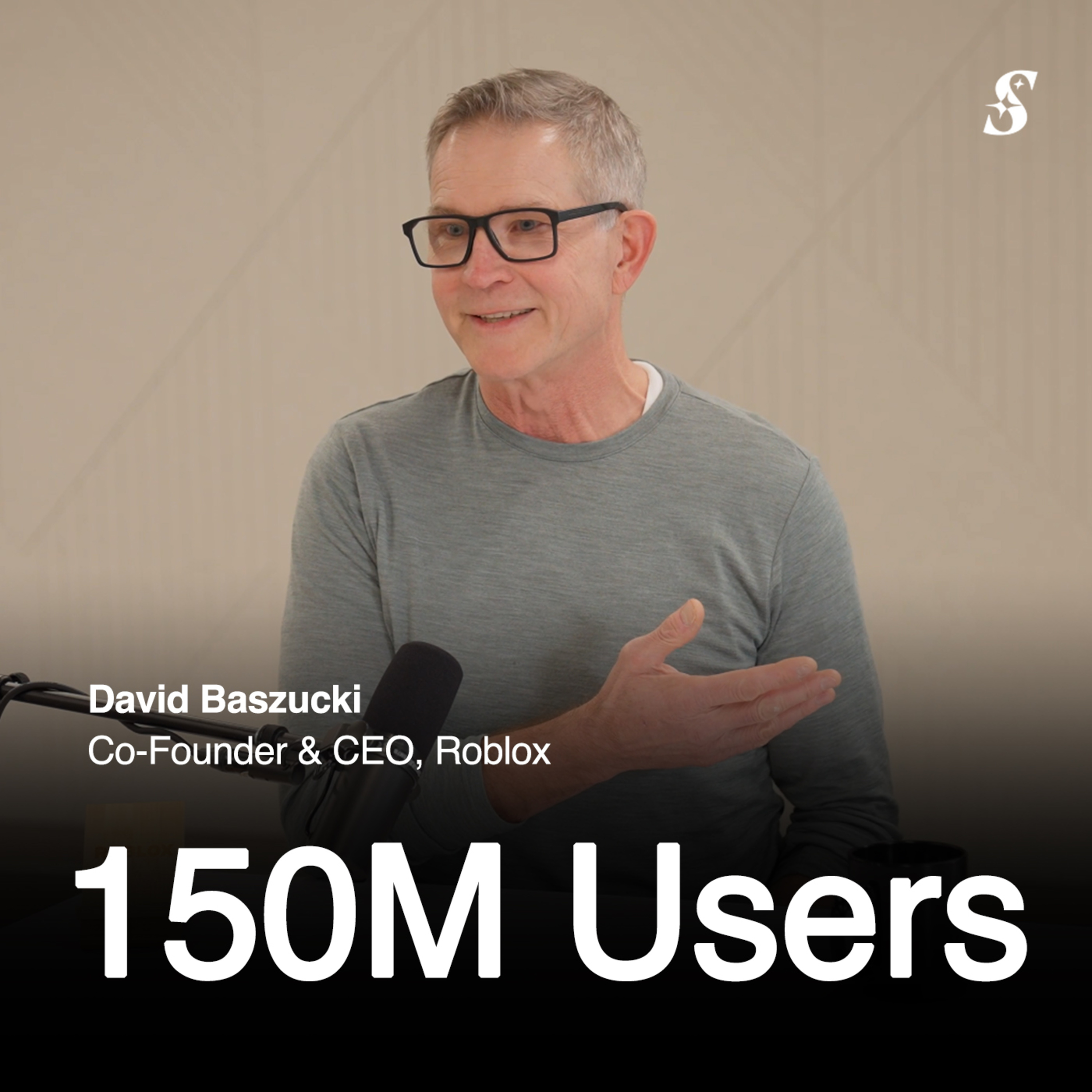
From its inception, Roblox prioritized making in-game objects functional, a concept they term "4D." This means objects run on a physics simulator, allowing for emergent behavior (e.g., a wheel properly falling off a car) rather than just being static 3D models.
Related Insights
Elevate web interactions beyond standard animations by adapting real-time physics techniques from game development. Using libraries like "Wiggle Bones," designers can create dynamic, responsive objects (like the Amy balloons) that feel alive, providing a signature "fidget toy" experience that canned animations can't replicate.

Roblox's CEO identifies the central challenge for large-scale virtual worlds not as physics simulation, but as efficiently synchronizing the state and memory of thousands of simultaneous players. This deep infrastructure problem is where new AI and data representation breakthroughs are most needed.

Roblox CEO Dave Bazooki articulated the company's grand ambition: to expand from its current 3% share to capture 10% of the entire global gaming market. This strategy positions Roblox not as a single game but as a foundational platform for creators, similar to an operating system for interactive experiences.

The user experience of Roblox games belies the immense technical infrastructure underneath. The platform runs on its own custom cloud with over 40 data centers, hundreds of thousands of servers, and more than 400 proprietary AI models to manage its massive scale.
Roblox CEO Dave Baszucki maintains a two-decade-old vision of building a "holodeck." This long-term, stable goal allows the company to frame new technologies like AI as powerful tools to accelerate that vision, rather than as disruptive forces that require a strategic pivot.
Instead of saving gameplay as video (raster data), Roblox intends to store its entire history as vector data. This would allow any event to be replayed and "re-shot" from any camera angle, creating a uniquely powerful dataset for training AI and enabling new user experiences.
Roblox balances its ambitious long-term "holodeck" vision with a culture of rapid, weekly iterations. This "get stuff done" approach breaks down monumental goals into manageable, consistent progress, preventing the long-term vision from becoming an intimidating, un-actionable dream.
To maintain relevance across generations, Roblox focuses on a simple but difficult technical specification: thousands of photorealistic people interacting in real-time. This resilient foundation allows the content to evolve with trends while the core engineering mission remains constant.
Roblox's leadership frames their total addressable market beyond the $200 billion gaming industry. They are building for the "human co-experience market," viewing their platform as a new communication medium akin to a sci-fi holodeck where people share experiences.
Dave Baszucki posits that as photorealistic 4D simulation improves, it will become the primary communication medium. Standard video conferencing will become a "legacy analog mode," a down-sampled version of a richer, more interactive 4D experience that offers superior features like spatial audio.