Get your free personalized podcast brief
We scan new podcasts and send you the top 5 insights daily.
The debate over government's size can be framed using political philosophy. 'Negative freedom' is freedom *from* state interference (e.g., censorship). 'Positive freedom' is the capability to achieve one's potential, requiring state support for basics like education and health to enable true flourishing.
Related Insights
Top-down mandates from authorities have a history of being flawed, from the food pyramid to the FDA's stance on opioids. True progress emerges not from command-and-control edicts but from a decentralized system that allows for thousands of experiments. Protecting the freedom for most to fail is what allows a few breakthrough ideas to succeed and benefit everyone.

Making misinformation illegal is dangerous because human progress relies on being wrong and correcting course through open debate. Granting any entity the power to define absolute 'truth' and punish dissent is a hallmark of authoritarianism that freezes intellectual and societal development.

The most effective government role in innovation is to act as a catalyst for high-risk, foundational R&D (like DARPA creating the internet). Once a technology is viable, the government should step aside to allow private sector competition (like SpaceX) to drive down costs and accelerate progress.
Contrary to popular belief, Nordic countries are not socialist. They operate on a capitalist framework with private markets. Their extensive social safety nets are funded by extremely high taxes on everyone, including the middle and lower classes—a model fundamentally different from socialism's state ownership of production.

Political messaging focused on 'equity' and villainizing wealth often backfires. Most voters don't begrudge success; they want access to economic opportunity for themselves and their families. A winning platform focuses on enabling personal advancement and a fair shot, not on what is described as a 'patronizing' class warfare narrative.

The U.S. generates 25% of global GDP and holds 45% of science Nobel prizes with under 5% of the world's population. This is not an accident but a direct outcome of a system prioritizing individual liberty. This freedom acts as a gravitational pull for global talent and enables the 'permissionless innovation' that drives economic and scientific breakthroughs.
The dominant economic model pursues endless growth, often at a human or planetary cost. Donut Economics reframes the goal entirely: create economies that allow humanity to thrive by meeting essential needs while respecting planetary boundaries, irrespective of continuous GDP growth.

Effective political propaganda isn't about outright lies; it's about controlling the frame of reference. By providing a simple, powerful lens through which to view a complex situation, leaders can dictate the terms of the debate and trap audiences within their desired narrative, limiting alternative interpretations.

A cultural shift toward guaranteeing equal outcomes and shielding everyone from failure erodes economic dynamism. Entrepreneurship, the singular engine of job growth and innovation, fundamentally requires the freedom to take huge risks and accept the possibility of spectacular failure.
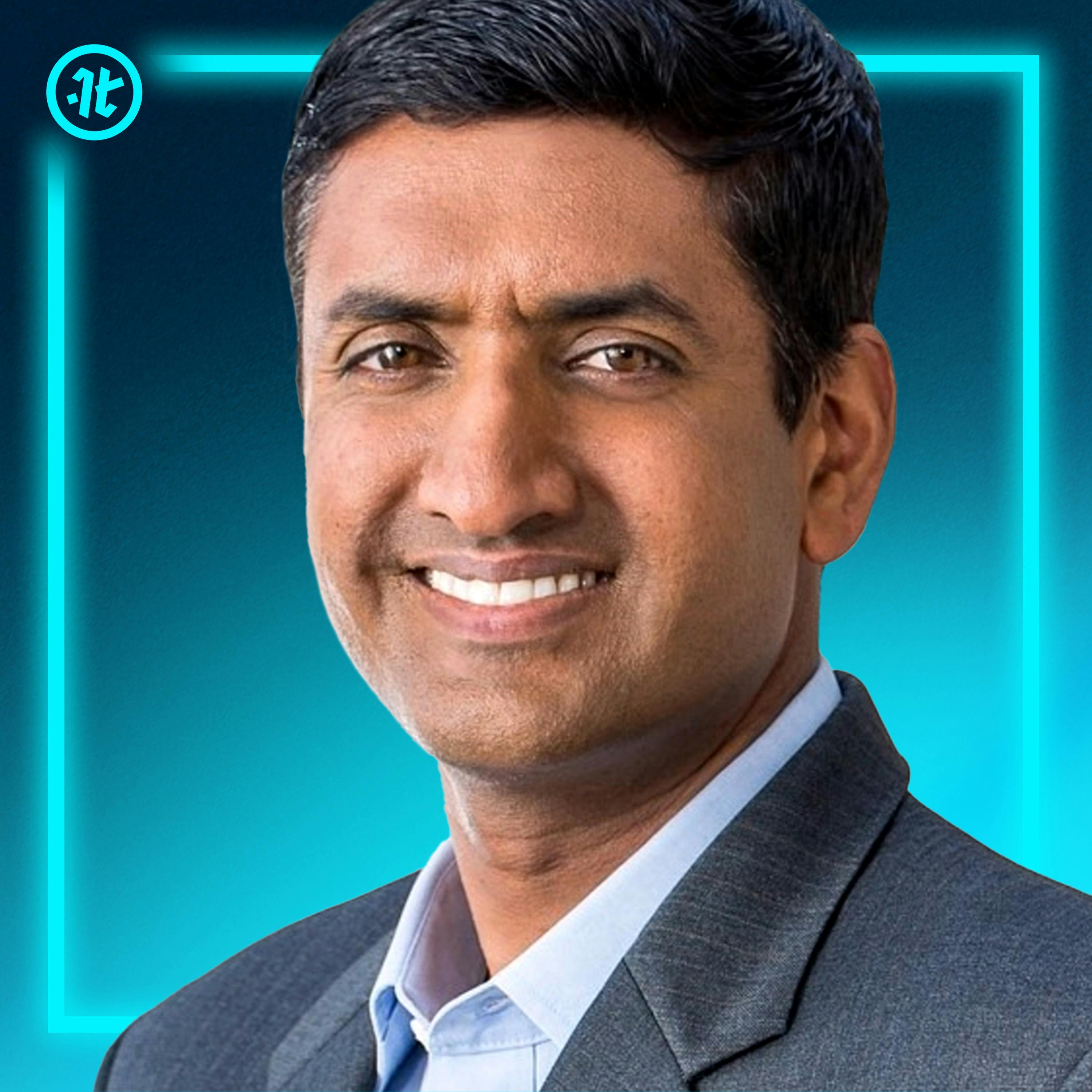
Congressman Ro Khanna argues that not all deficit spending is equal. Spending on programs like healthcare and education can be justified as 'productive investments' if their long-term rate of return for society is higher than the initial cost, distinguishing them from non-productive spending.