Get your free personalized podcast brief
We scan new podcasts and send you the top 5 insights daily.
The most valuable and defensible investment opportunities often lie in areas that are critical for human progress but are culturally taboo, like primate testing for biotech. These markets are starved of capital due to fear of public perception, creating a vacuum for investors willing to withstand criticism.

Related Insights
Limited Partners often place life science investments in a unique category between donating to a cause and investing for pure financial gain. They understand it is a high-risk venture but value the potential for significant societal impact alongside returns, diversifying their portfolio's purpose.

Investor Ariel Poler defines his impact not by what he does, but by what wouldn't get done without him. He deliberately seeks nascent or overlooked fields like human augmentation, where his capital and mentorship provide unique, incremental value, rather than joining the crowd in popular sectors like AI.

Most VCs are emotionally uncomfortable underwriting stigmatized markets like addiction. This creates a significant opportunity for investors with personal experience or deep conviction. These overlooked markets harbor alpha because the lack of investor competition suppresses valuations and allows for outsized returns.

True investment courage isn't just writing the first check; it's being willing to invest again in a category after a previous investment failed. Many investors become biased and write off entire sectors after a single bad experience, but enduring VCs understand that timing and team make all the difference.

The fund backs underfunded, high-risk ideas that others pass on. The goal isn't just to find a unicorn; it's to contribute to science by definitively disproving a hypothesis. A failure is viewed as "crossing out a wrong answer" for the entire field.

Investors often reject ideas in markets where previous companies failed, a bias they call "scar tissue." This creates an opportunity for founders who can identify a key change—like new AI technology or shifting consumer behavior—that makes a previously impossible idea now viable.
Elite VC firms like Founders Fund select for investors, not closeted entrepreneurs. The rare transition from investor to founder isn't a career pivot but a response to a moral imperative. It happens when an investor identifies a critical, neglected problem that they are uniquely qualified to solve, making it "wrong to not go do that."
![Scott Nolan - SpaceX, Founders Fund, and Rebuilding American Uranium Enrichment - [Invest Like the Best, EP.467] thumbnail](https://megaphone.imgix.net/podcasts/5edee546-3776-11f1-b41d-a76759576e87/image/908aaa6e87baf2b3d364892c4b7f9fd8.jpg?ixlib=rails-4.3.1&max-w=3000&max-h=3000&fit=crop&auto=format,compress)
Traditional VCs are constrained by the need for every investment to potentially return the entire fund. This creates "scope paralysis," preventing them from investing in smaller, niche markets that could be highly profitable but don't fit the unicorn model.
The focus on AI among institutional investors is so absolute that promising non-AI companies risk "dying of neglect" and being unable to secure follow-on funding. This creates a potential opportunity gap for angel investors to fund valuable businesses in overlooked sectors.

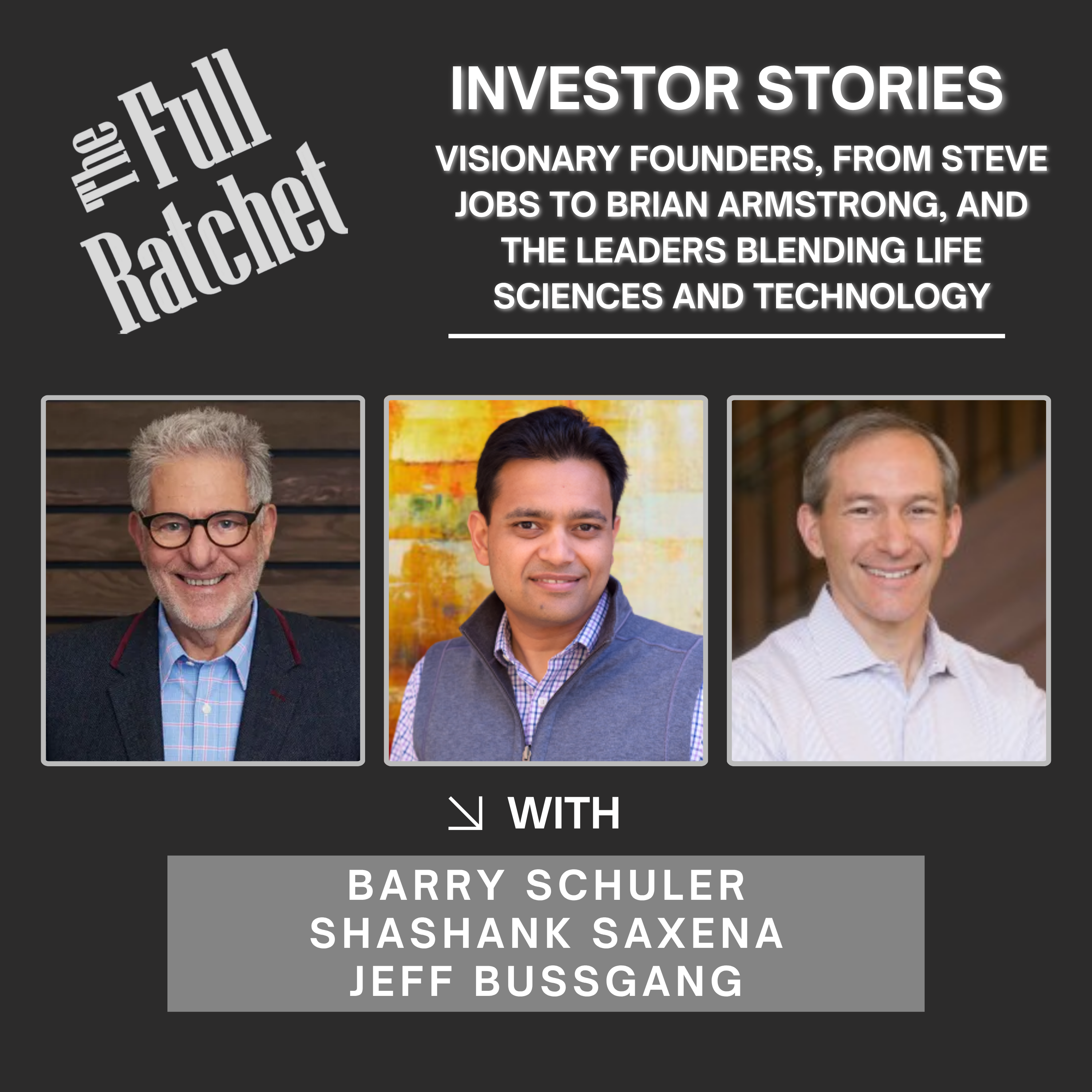
DFJ Growth Partner Barry Shuler details their strategy of avoiding herd investments by focusing on 'life tech'—the intersection of life sciences and technology. This contrarian approach allows them to back brilliant but lesser-known visionaries in emerging fields like population genomics, where they see immense potential.