Get your free personalized podcast brief
We scan new podcasts and send you the top 5 insights daily.
A key clinical nuance in CLL is that not all prognostic markers are static. The IGHV mutation status remains unchanged, requiring a one-time test. However, chromosomal abnormalities like deletion 17p can evolve, necessitating re-evaluation at each relapse to guide subsequent therapy choices and adapt the treatment strategy.

Related Insights
Non-covalent BTK inhibitors like pirtobrutinib are currently approved for use after covalent BTK inhibitors fail. Moving them to the frontline setting, as studied in BRUIN-313, disrupts the established treatment pathway and creates uncertainty for managing relapsed disease, as the standard 'next step' is removed.
Menin inhibitors achieve high rates of MRD-negative remissions. However, the median duration is very short (4-6 months), suggesting current MRD assays may not adequately capture residual disease and that "MRD negativity" is not a reliable predictor of long-term benefit for this drug class.
The BRUIN-313 trial successfully compared pirtobrutinib to bendamustine-rituximab (BR). However, BR is no longer the frontline standard of care. This 'straw man' comparator makes it difficult to position pirtobrutinib against current preferred treatments like other BTK inhibitors or venetoclax regimens, limiting immediate clinical applicability.
Experts believe molecular tests like Decipher and PTEN status are superior to simply counting bone lesions for guiding treatment. While not yet standard practice for all decisions, this represents a significant shift towards using underlying tumor biology to determine therapy, like adding docetaxel.

The InVigor11 study was the first to show that detecting recurrence via a ctDNA test before it's visible on scans is not just a prognostic sign, but an actionable clinical state. Intervening with therapy at this early stage was proven to improve patient outcomes, establishing a new paradigm for cancer surveillance.
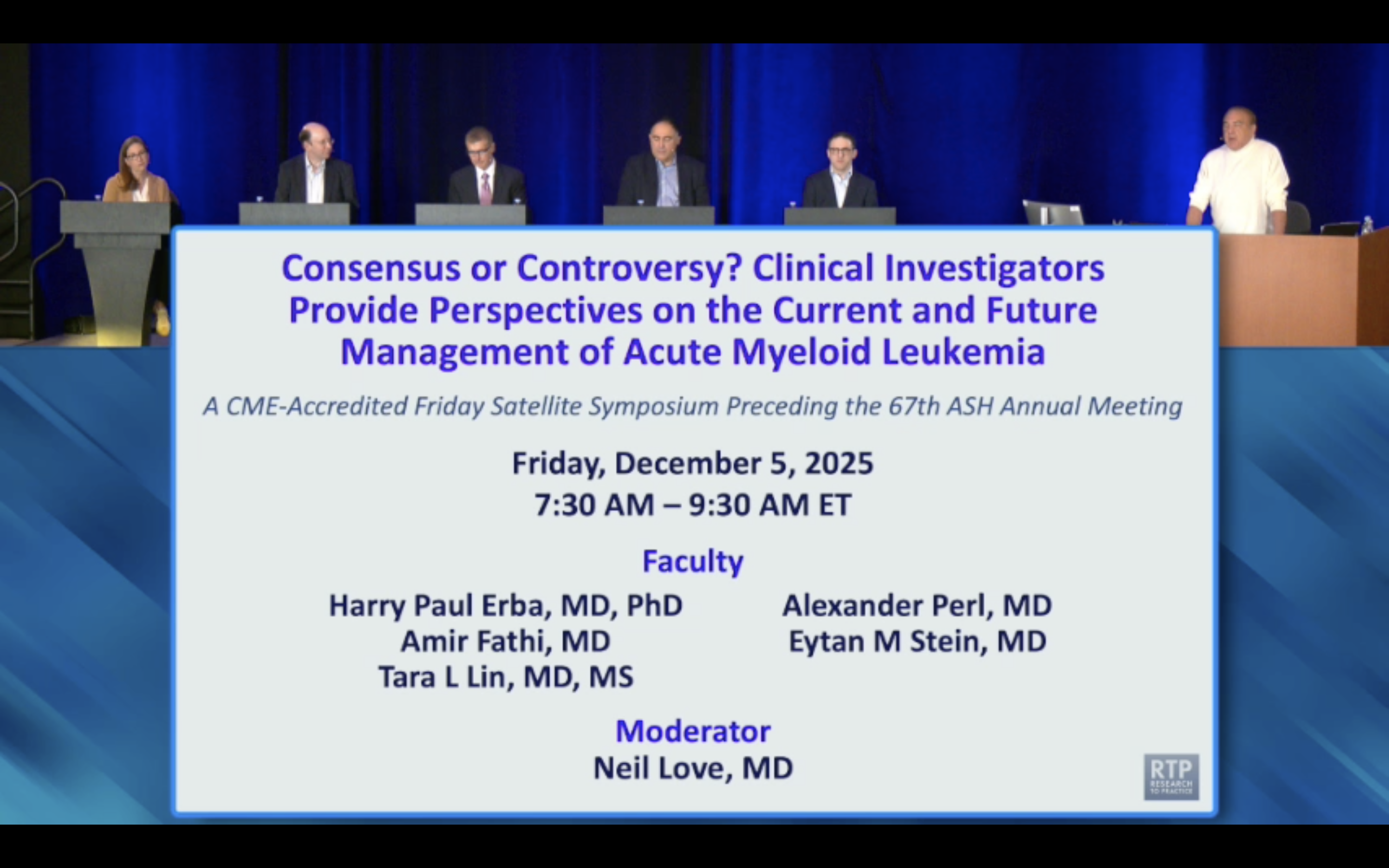
The NCI-supported MyeloMatch trial is pioneering a new standard for AML diagnostics, providing comprehensive genomic, FISH, and karyotype analysis within 72 hours. This rapid turnaround allows for immediate risk stratification and assignment to appropriate clinical trials.
A significant criticism of the pivotal KEYNOTE-564 trial is that only half the patients in the control arm received standard-of-care immunotherapy upon relapse. This lack of subsequent optimal treatment complicates the interpretation of the overall survival benefit, raising questions about its true magnitude.
Experts warn against over-interpreting a single negative ctDNA test after surgery, clarifying that these patients still face a significant 25-30% risk of recurrence. The biomarker's true prognostic power comes from serial testing that shows a patient remains persistently negative over time.
The interpretation of ctDNA is context-dependent. Unlike in the adjuvant setting, in the neoadjuvant setting, remaining ctDNA positive post-treatment signifies that the current therapy has failed. These high-risk patients need a different therapeutic approach, not an extension of the ineffective one.
While a positive ctDNA test clearly signals the need for adjuvant therapy, a negative result is less actionable for deciding initial treatment. The key prognostic value comes from being *serially* undetectable over time, information that is not available when the immediate post-surgery treatment decision must be made.