Get your free personalized podcast brief
We scan new podcasts and send you the top 5 insights daily.
The NAPOLI-3 trial was significant not just for its clinical results, but for its real-world applicability. By successfully enrolling a broad population from community clinics, including patients up to 85 years old, it proved that a more intensive three-drug regimen is a feasible and effective frontline option outside of specialized academic centers.

Related Insights
Instead of starting all three drugs in a triplet combination simultaneously, a more effective clinical approach is to introduce them sequentially. By starting one drug, then adding the second, and finally the third over a period of weeks or months, clinicians can more easily identify the source of any toxicities, leading to better management and improved patient compliance.

The development of regimens like SAVE (oral decitabine, venetoclax, revumenib) demonstrates that complex, effective combination therapies for acute leukemia can be administered entirely orally. This marks a paradigm shift towards more convenient, less burdensome treatment that reduces time in the hospital or clinic.
The TOURMALINE study confirmed that pairing the checkpoint inhibitor Durvalumab with various gemcitabine-based chemo combinations (not just cisplatin) is safe and effective in biliary tract cancer. This provides crucial real-world evidence supporting clinical flexibility beyond the rigid protocols of pivotal trials.
Adding obinutuzumab to acalabrutinib/venetoclax (triplet therapy) deepens responses but led to higher death rates in trials, partly due to COVID-19. This makes it a high-risk, high-reward strategy that experts reserve for younger, healthier patients with high-risk disease who prioritize coming off therapy.
While the Paradigm study validated HMA-Venetoclax for fit, adverse-risk AML patients, it didn't alter practice at tertiary centers focused on curative transplant. However, it significantly empowered community oncologists by providing a viable, less toxic option beyond just referring patients to a specialty center or hospice.
The rapid and successful rollout of complex bispecific therapies into community settings is primarily driven by enhanced nursing staff skills and protocols for risk stratification. This combination allows for safe outpatient administration, preventing hospital admissions and broadening patient access beyond large academic centers.
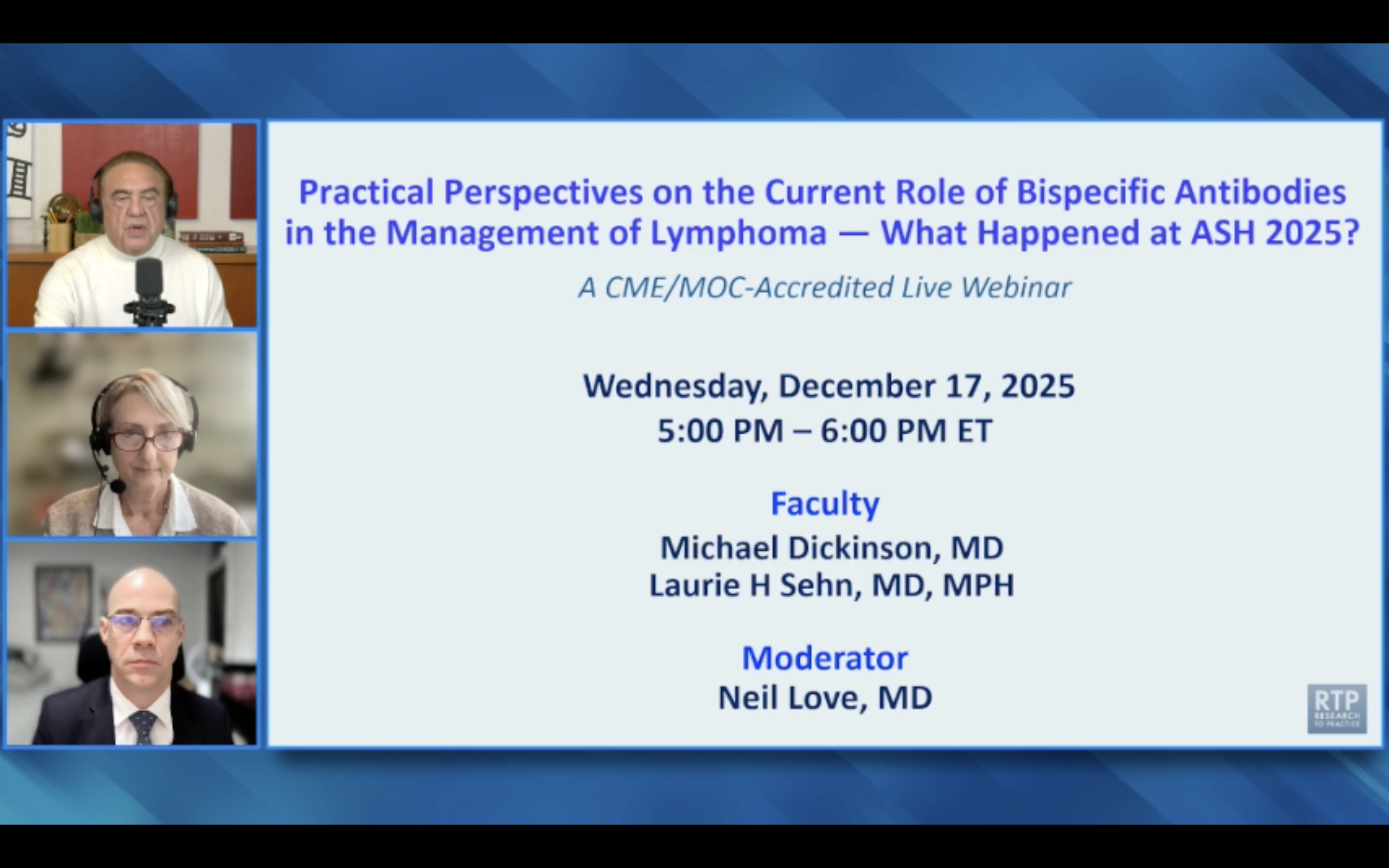
To make clinical trials more representative of real-world SCLC patients, who are often too sick to enroll, a pragmatic approach is emerging. Allowing one initial cycle of stabilizing chemotherapy before trial inclusion is a key strategy to broaden eligibility and gather more relevant data.
The future standard of care for AML could move towards all-oral triplet therapies. Citing promising data from the SAVE trial, the speaker suggests these better-tolerated, outpatient regimens could replace harsh inpatient chemotherapy for many patients, improving quality of life.

Clinicians are pragmatically using novel drug combinations based on safety and early efficacy data from Phase 1b/2 trials like ELEVATE. This practice circumvents the impossibility of running Phase 3 trials for every permutation and is reportedly being covered by insurers, accelerating patient access to new options.
A VA study using real-world data confirms that androgen receptor pathway inhibitors (ARPIs) combined with ADT significantly improve survival in elderly (>75), frail, and high-comorbidity prostate cancer patients. This evidence directly addresses clinician hesitancy to treat these vulnerable populations with standard-of-care combination therapy.