Get your free personalized podcast brief
We scan new podcasts and send you the top 5 insights daily.
The concept of data centers in space is dismissed as aspirational marketing, not near-term reality. Experts cite three major unsolved challenges: the prohibitive cost to orbit, the need for advances in optical data transfer, and the fundamental physics problem of radiating heat in a vacuum.

Related Insights
Space data centers' viability hinges on a breakeven point where launch costs are outweighed by savings from no permitted land, no need for battery backup (24/7 sun), and 8x more efficient solar panels. Starcloud estimates this economic crossover occurs when launch costs drop to around $500 per kilogram.

From a first-principles perspective, space is the ideal location for data centers. It offers free, constant solar power (6x more irradiance) and free cooling via radiators facing deep space. This eliminates the two biggest terrestrial constraints and costs, making it a profound long-term shift for AI infrastructure.
![Gavin Baker - Nvidia v. Google, Scaling Laws, and the Economics of AI - [Invest Like the Best, EP.451] thumbnail](https://megaphone.imgix.net/podcasts/d97fee14-d4d7-11f0-8951-8324b640c1c1/image/d3a8b5ecbf3957de5b91f278a191c9ff.jpg?ixlib=rails-4.3.1&max-w=3000&max-h=3000&fit=crop&auto=format,compress)
Google's "Project Suncatcher" aims to place AI data centers in orbit for efficient solar power. However, the project's viability isn't just a technical challenge; it fundamentally requires space transport costs to decrease tenfold. This massive economic hurdle, more than technical feasibility, defines it as a long-term "moonshot" initiative.

Projections based on SpaceX's launch cost reductions indicate that deploying AI data centers in space will become as economical as building them on Earth by 2035. This transforms a science fiction concept into a near-term business reality, driven by advantages like superior cooling and unlimited solar power.

Skepticism around orbital data centers mirrors early doubts about Starlink, which was initially deemed economically unfeasible. However, SpaceX drastically reduced satellite launch costs by 20x, turning a "pipe dream" into a valuable business. This precedent suggests a similar path to viability exists for space-based AI compute.

While launch costs are decreasing and heat dissipation is solvable, the high failure rate of new chips (e.g., 10-15% for new NVIDIA GPUs) and the inability to easily service them in space present the biggest challenge for orbital data centers.
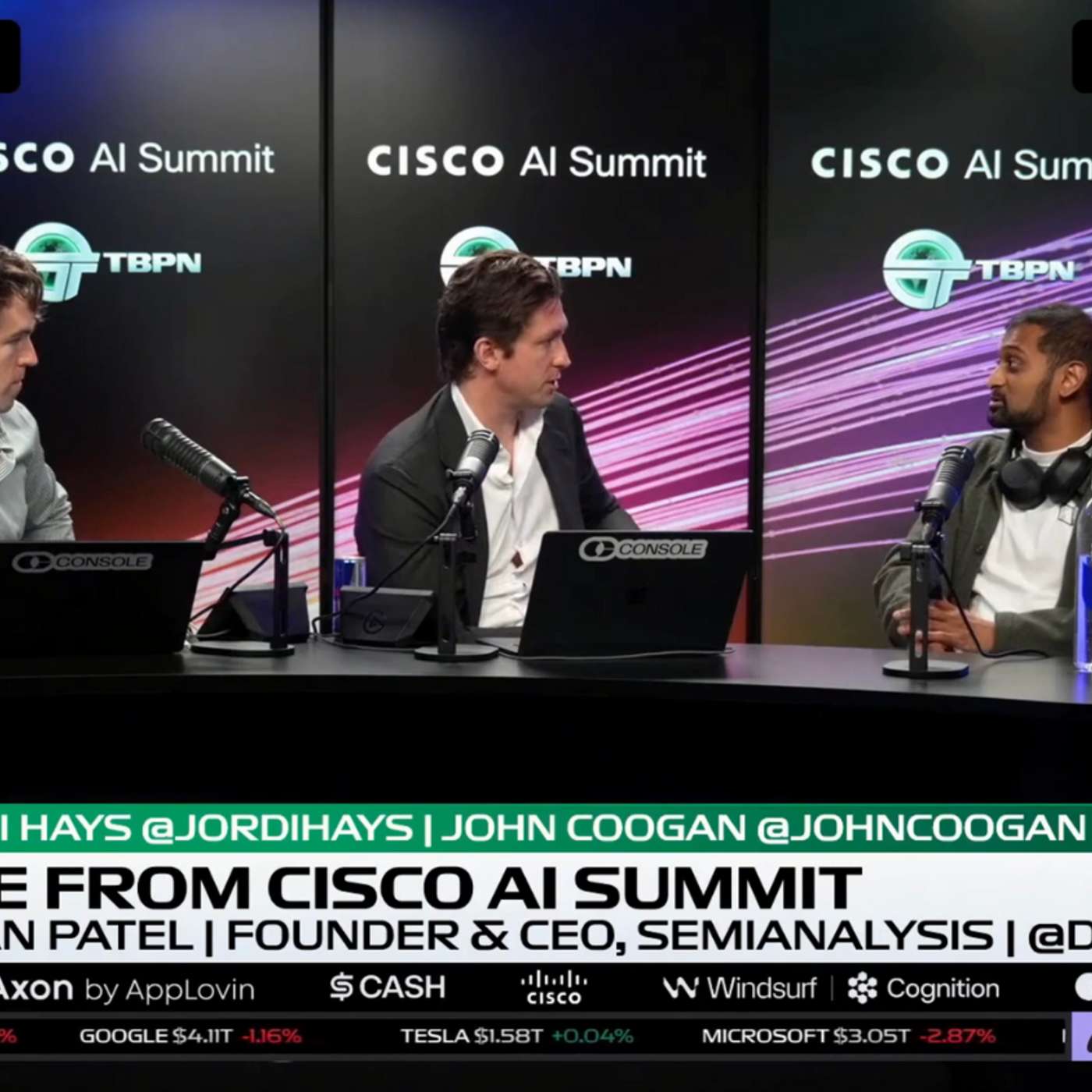
In a world where semiconductor manufacturing is the ultimate bottleneck, the value of a GPU is highest the moment it's produced. The six-plus month delay required to test, launch, and reassemble a data center in space represents an immense opportunity cost, making it an impractical strategy for now.

While space offers abundant solar power, the common belief that cooling is "free" is a misconception. Dissipating processor heat is extremely difficult in a vacuum without a medium for convection, making it a significant material science and physics problem, not a simple passive process.

The exponential growth of AI is fundamentally constrained by Earth's land, water, and power. By moving data centers to space, companies can access near-limitless solar energy and physical area, making off-planet compute a necessary step to overcome terrestrial bottlenecks and continue scaling.
Recent viability for orbital data centers doesn't stem from new server technology, but from SpaceX's Starship rocket. Its success in dramatically lowering the cost of launching mass into orbit is the critical, non-obvious enabler that makes the entire concept economically plausible for the first time.