Get your free personalized podcast brief
We scan new podcasts and send you the top 5 insights daily.
When procuring AI, pharma companies must prioritize vendors who design governance and traceability into their products from day one. Attempting to add compliance layers to a general-purpose tool after implementation is described as a "nightmare" and is a recipe for failure in a regulated environment.

Related Insights
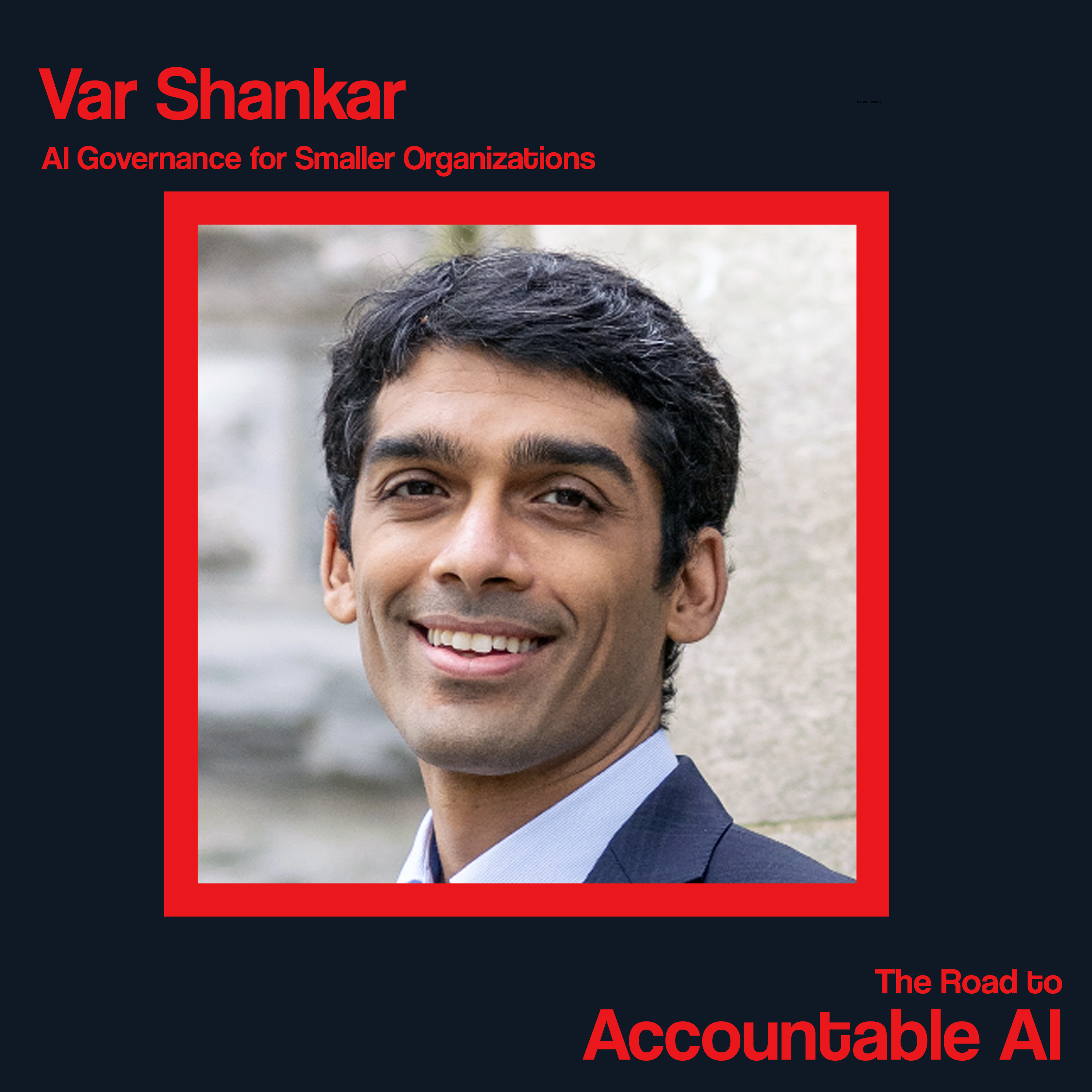
Unlike large enterprises that build AI, smaller organizations primarily buy AI solutions. Their governance should therefore focus on rigorously questioning vendors and clarifying internal roles for oversight, as expertise is often spread thin across a few individuals.
As AI becomes more integrated into pharma, a need for validation will emerge. AI models used for medical affairs or commercial tasks will likely require accreditation from a neutral third party, similar to a 'certified pre-owned' car, to ensure reliability, compliance, and effectiveness.

The intelligence layer of AI is advancing rapidly, but enterprise adoption lags because a crucial control layer is underdeveloped. The next wave of AI development will focus on providing observability, control, and traceability, allowing businesses to audit and course-correct an AI agent's decisions.

Companies believe high-level AI policies and frameworks provide audit protection. However, auditors bypass these to demand granular proof for specific AI-assisted decisions, asking for data lineage, model versions, and human decision trails at a precise moment in time, which is where most governance systems fail.
MLOps pipelines manage model deployment, but scaling AI requires a broader "AI Operating System." This system serves as a central governance and integration layer, ensuring every AI solution across the business inherits auditable data lineage, compliance, and standardized policies.

Chamath's "Software Factory" is a control plane for the entire SDLC, not just a coding tool. It provides governance, auditability, and synchronization from intent to production. This is the level of rigor large, regulated enterprises need, contrasting sharply with simple "vibe coding" assistants.

In high-stakes fields like healthcare, the cost of an AI error is immense. Product leaders must prioritize safety, reliability, and the reproducibility of outcomes. A complete audit trail is non-negotiable, as it enables the reversal of incorrect decisions and ensures accountability.

Simply providing data to an AI isn't enough; enterprises need 'trusted context.' This means data enriched with governance, lineage, consent management, and business rule enforcement. This ensures AI actions are not just relevant but also compliant, secure, and aligned with business policies.

Standalone AI tools often lack enterprise-grade compliance like HIPAA and GDPR. A central orchestration platform provides a crucial layer for access control, observability, and compliance management, protecting the business from risks associated with passing sensitive data to unvetted AI services.
For enterprises, scaling AI content without built-in governance is reckless. Rather than manual policing, guardrails like brand rules, compliance checks, and audit trails must be integrated from the start. The principle is "AI drafts, people approve," ensuring speed without sacrificing safety.
