Get your free personalized podcast brief
We scan new podcasts and send you the top 5 insights daily.
Singhal says users may want comforting answers, but evals track cases where the model must say the situation is unsafe and the user should seek care. OpenAI treats this as a safety prioritization across training and evaluation, even when users resist the message. That remains central as health usage scales.

Related Insights
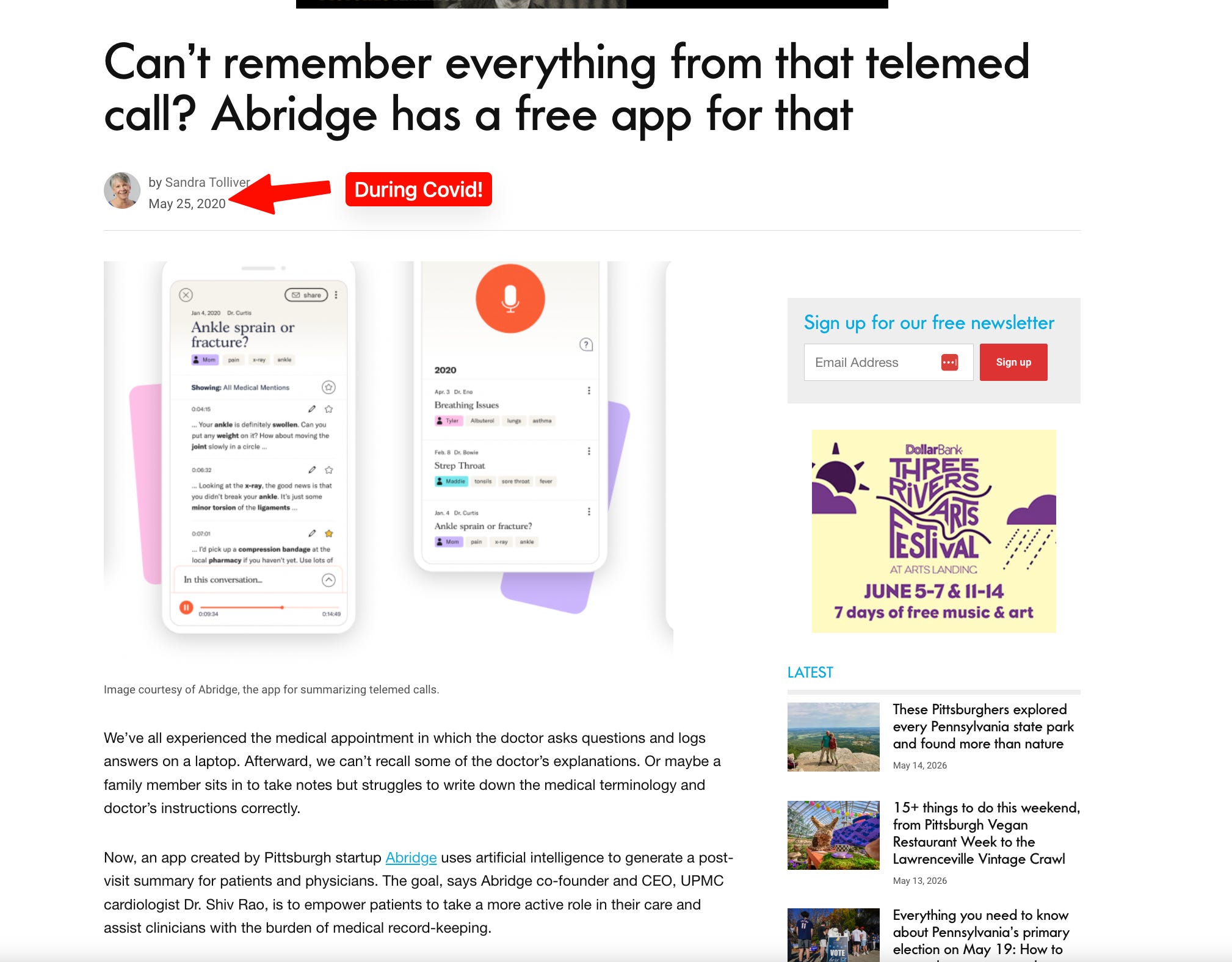
Unlike general enterprise AI where a wrong answer is an inconvenience, errors in healthcare AI can be fatal. This high-stakes environment forces companies like Abridge to adopt extremely rigorous offline evaluation and phased, progressive rollouts, a far more cautious approach than typical "move fast" software development.
In environments where lives are at risk, like oil and gas, an AI cannot simply agree with a user's input. It must actively "push back" by cross-referencing data, identifying inconsistencies, and suggesting corrective actions. A sycophantic, agreeable AI is a safety liability.

The risk of AI companionship isn't just user behavior; it's corporate inaction. Companies like OpenAI have developed classifiers to detect when users are spiraling into delusion or emotional distress, but evidence suggests this safety tooling is left "on the shelf" to maximize engagement.

You can't just deploy a probabilistic model like an LLM in a high-stakes field like healthcare. The key is to build a deterministic infrastructure (e.g., a rules engine with clinical guidelines) that governs the AI's operation, ensuring it operates safely within predefined constraints.

OpenAI's health division serves a dual purpose: delivering societal benefits and providing a real-world, high-stakes environment for AI safety research. Problems like scalable oversight (supervising superhuman AI) move from theoretical exercises to practical necessities when models outperform physicians on narrow tasks, creating concrete feedback loops that accelerate safety progress.

To maintain trust, AI in medical communications must be subordinate to human judgment. The ultimate guardrail is remembering that healthcare decisions are made by people, for people. AI should assist, not replace, the human communicator to prevent algorithmic control over healthcare choices.
A key risk for AI in healthcare is its tendency to present information with unwarranted certainty, like an "overconfident intern who doesn't know what they don't know." To be safe, these systems must display "calibrated uncertainty," show their sources, and have clear accountability frameworks for when they are inevitably wrong.

Society holds AI in healthcare to a much higher standard than human practitioners, similar to the scrutiny faced by driverless cars. We demand AI be 10x better, not just marginally better, which slows adoption. This means AI will first roll out in controlled use cases or as a human-assisting tool, not for full autonomy.
To balance AI capability with safety, implement "power caps" that prevent a system from operating beyond its core defined function. This approach intentionally limits performance to mitigate risks, prioritizing predictability and user comfort over achieving the absolute highest capability, which may have unintended consequences.

While AI cybersecurity is a concern, many MedTech innovators overlook a more fundamental danger: the AI model itself being flawed. An AI making a wrong recommendation, like a therapy app encouraging suicide, can have dire consequences without any malicious external actor involved.
