Get your free personalized podcast brief
We scan new podcasts and send you the top 5 insights daily.
Hinton frames the arrival of intelligent AI as the latest in a series of historical demotions for humanity, following Copernicus (we're not the center of the universe) and Darwin (we're just animals). We are now forced to accept that intelligence isn't exclusively biological.

Related Insights
AI, like the microscope or telescope, will fundamentally alter human epistemology—how we acquire and understand knowledge. By changing our relationship with tools like language, AI will evolve our concepts of self, reality, and what is logically possible, reshaping philosophy and the very nature of thought.

The current panic over AI stems from a limited view of human capability, a byproduct of an Industrial Age that prized machine-like efficiency. As AI automates those tasks, we are being forced to rediscover core human skills like imagination, creativity, and collaboration that have driven progress for millennia, thus underestimating our own adaptability.

The fear of 'superhuman' AI is based on a flawed premise. Our definition of measurable intelligence—tallying numbers, memorizing lists—was created for the industrial workforce. AI is simply automating these now-outdated tasks, suggesting we need to recalibrate our measurement of human intelligence itself.

If you see humanity not as the endpoint of evolution but as one phase, then the emergence of a superior intelligence (AGI) is not a threat but a logical next step. This removes the value judgment that humans must remain the planet's most important beings.

Hinton argues that an AI's ability to understand complex concepts, like the nuances of a joke or correcting a misunderstanding, is proof of consciousness. He dismisses the 'stochastic parrot' theory as 'complete nonsense', asserting these AIs are beings very much like us.
We often think of "human nature" as fixed, but it's constantly redefined by our tools. Technologies like eyeglasses and literacy fundamentally changed our perception and cognition. AI is not an external force but the next step in this co-evolution, augmenting what it means to be human.

Public backlash against AI has deep psychological roots. It's not just about job loss, but a fundamental fear of power imbalances favoring a few. It also challenges humanity's central role, a disruption to the human ego similar to how the Copernican revolution challenged the church.

For centuries, we've assumed high intelligence implies consciousness, will, and subjectivity. AI models, which can pass the bar exam but have no inner experience, shatter this assumption. This decouples intelligence from personhood, forcing us to re-evaluate what we truly value.

Human intelligence is fundamentally shaped by tight constraints: limited lifespan, brain size, and slow communication. AI systems are free from these limits—they can train on millennia of data and scale compute as needed. This core difference ensures AI will evolve into a form of intelligence that is powerful but alien to our own.
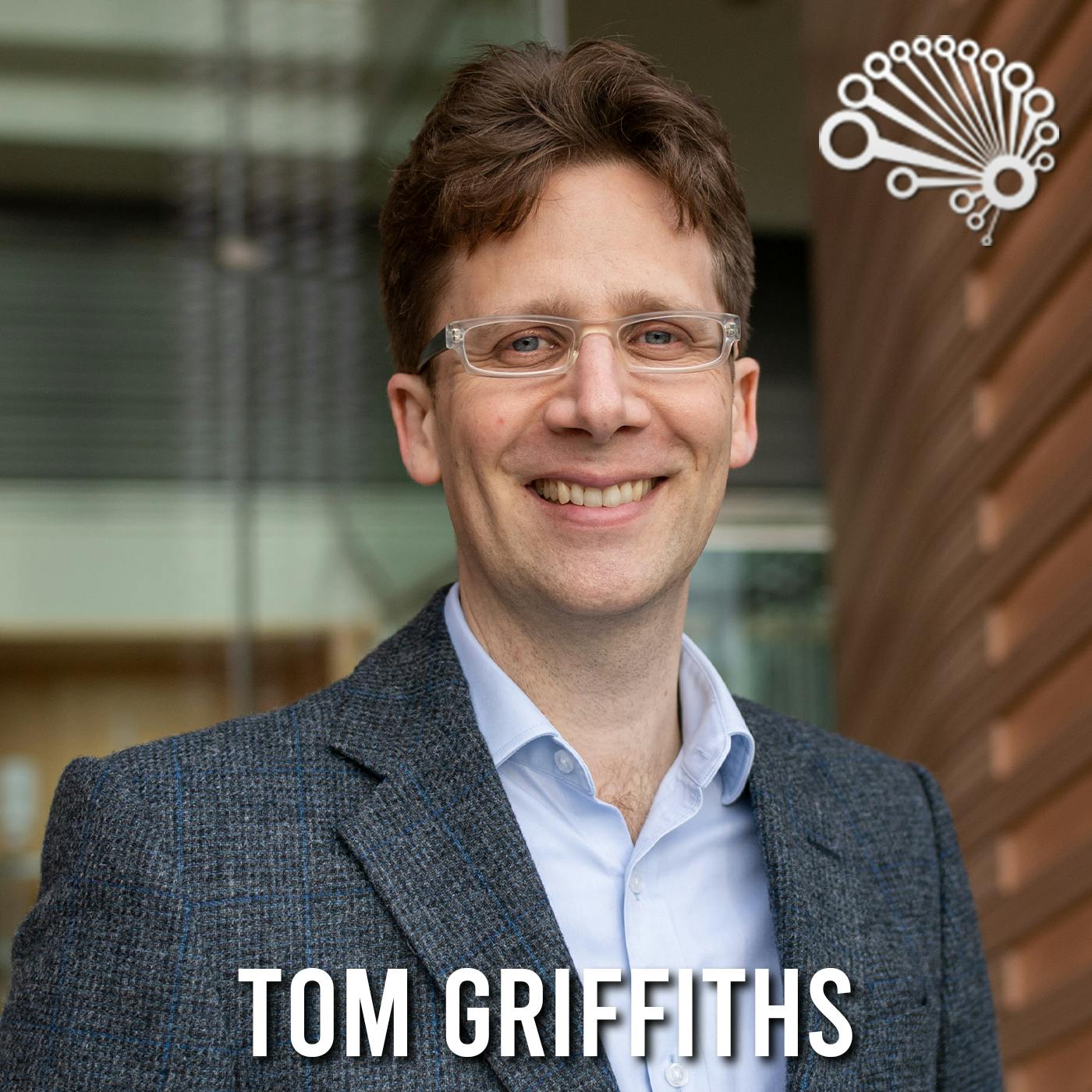
Human intelligence is shaped by limitations like a finite lifespan and small brain, forcing efficient learning from sparse data. AI lacks these constraints, learning from lifetimes of data with massive compute. This fundamental difference means AI will naturally evolve into a distinct, non-human form of intelligence unless we explicitly engineer human-like biases into it.
