Get your free personalized podcast brief
We scan new podcasts and send you the top 5 insights daily.
Current AI models struggle to reliably verify their own mathematical steps. To establish trustworthy proofs, researchers now pair large language models with separate formal software like the Lean language, which verifies the logical validity of generated code against strict mathematical axioms.

Related Insights
Formal proof systems like Lean provide a unique training ground for LLMs. Unlike natural language reasoning, a proof's correctness can be programmatically verified. This creates a strong reward signal for training long-horizon planning and coherence, skills that can generalize to other tasks.
Languages like Lean allow mathematical proofs to be automatically verified. This provides a perfect, binary reward signal (correct/incorrect) for a reinforcement learning agent. It transforms the abstract art of mathematics into a well-defined environment, much like a game of Go, that an AI can be trained to master.

Unlike natural language proofs that require human verification, formal systems like Lean allow for automated, verifiable rewards. This could enable an AI to endlessly extend a mathematical library like Mathlib, exploring a vast tree of logic and potentially discovering novel theories without any human check-ins, similar to how AlphaGo trained itself by playing millions of games.
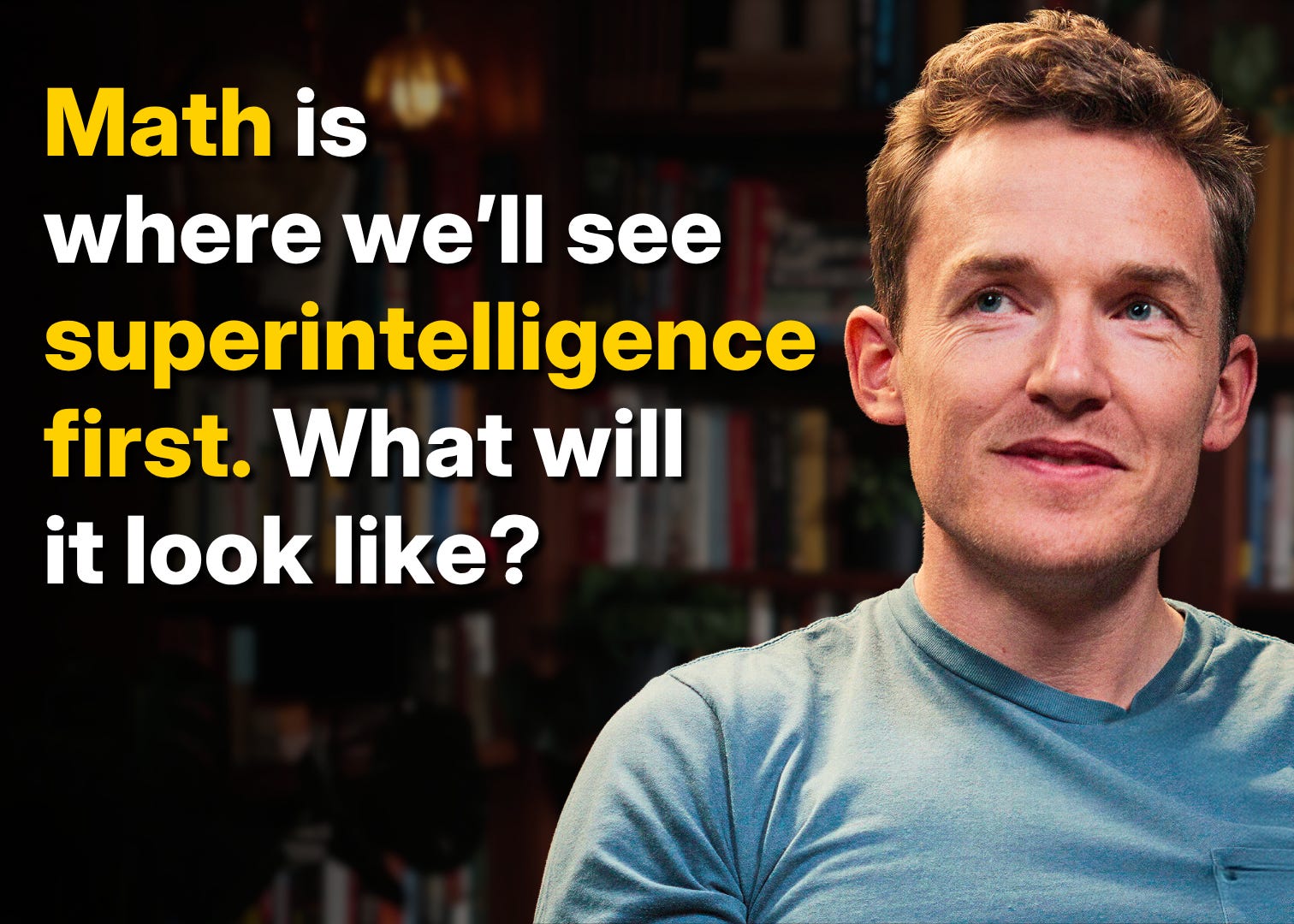
A team successfully formalized and simplified a complex proof from Fields Medalist Peter Scholze using Lean. The tool's interactive feedback guided them, allowing them to refactor and improve the mathematics akin to how a programmer refactors code, even without a complete intuitive grasp of the subject.
A major hurdle for formal methods is the effort required to write proofs. Generative AI is becoming capable of producing proofs in formal languages like Lean, which can then be automatically verified by a machine. This could make verified software development scalable for the first time.

AI models tend to produce short, clever mathematical proofs. This is likely not a sign of elegance, but a limitation. They lack the ability to reliably verify their own correctness over long, complex arguments, so they are constrained to producing outputs that are short enough to be checked by humans or other systems.

Formal verification, the process of mathematically proving software correctness, has been too complex for widespread use. New AI models can now automate this, allowing developers to build systems with mathematical guarantees against certain bugs—a huge step for creating trust in high-stakes financial software.

Simply generating a mathematical proof in natural language is useless because it could be thousands of pages long and contain subtle errors. The pivotal innovation was combining AI reasoning with formal verification. This ensures the output is provably correct and usable, solving the critical problems of trust and utility for complex, AI-generated work.

We have formal languages like Lean for deductive proofs, which AI can be trained on. The next frontier is developing a language to capture mathematical *strategy*—how to assess a conjecture's plausibility or choose a promising path. This would help automate the intuitive, creative part of mathematical discovery.
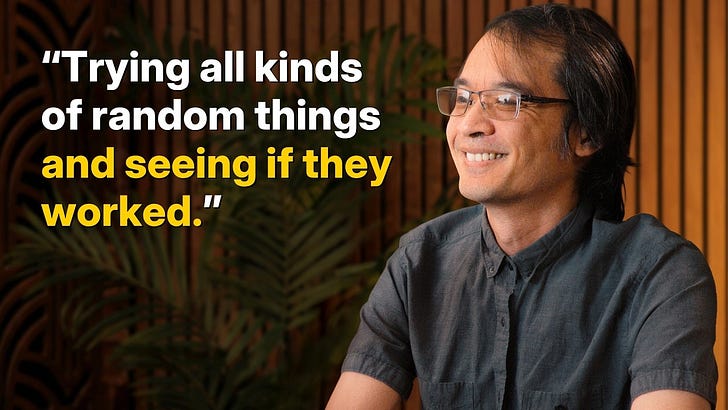
Beyond its use in formal mathematics for proof verification, Lean is a fully-featured, Turing-complete functional programming language. This dual nature allows developers to write standard code, like an autograd engine, and mathematical proofs within the same powerful system.